-
Use Cases
-
Resources
-
Pricing
The Battle of Plassey was a pivotal military engagement fought on June 23, 1757, between the British East India Company, led by Robert Clive, and the forces of the Nawab of Bengal, Siraj-ud-Daulah. The Company's victory, aided by the betrayal of the Nawab's commander Mir Jafar, marked the beginning of British political dominance in India and laid the foundation for nearly two centuries of colonial rule. More Less
Jan 1, 1717
% complete
Mughal Emperor Farrukhsiyar issued a farman in 1717 granting trading privileges to the British East India Company. However, continual friction persisted, as the British complained they were prevented from fully enjoying the benefits of the farman.
Image source: Farrukhsiyar
Jan 1, 1741 - Dec 31, 1751
% complete
From 1741 to 1751, the Marathas under Raghuji Bhonsle invaded Bengal six times, devastating the region and placing enormous pressure on Nawab Alivardi Khan's rule.
Image source: Bengal Subah

Jan 1, 1751
% complete
In 1751, the Marathas signed a peace treaty with the Nawab of Bengal, according to which Mir Habib, a former courtier of Alivardi Khan who had defected to the Marathas, was made provincial governor of Orissa under nominal control of the Nawab of Bengal.
Dec 16, 1740 - Oct 18, 1748
% complete
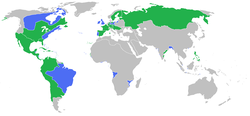
The War of the Austrian Succession (1740–1748) marked the beginning of the power struggle between Britain and France and of European military ascendancy and political intervention in the Indian subcontinent.
Image source: War of the Austrian Succession
Sep 1, 1746
% complete
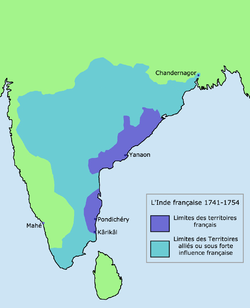
In September 1746, Mahé de La Bourdonnais landed off Madras with a naval squadron and laid siege to the port city, capturing it for France during the Anglo-French conflict in India.
Image source: Siege of Madras
Oct 18, 1748
% complete
The Treaty of Aix-la-Chapelle in 1748 forced Dupleix to yield Madras back to the British in return for Louisbourg and Cape Breton Island in North America, temporarily pausing the Franco-British struggle in India.
Image source: Treaty of Aix-la-Chapelle (1748)
Jun 1, 1751
% complete
In mid-1751, the French candidate for the Nawab's post, Chanda Sahib, laid siege to the British candidate Wallajah's last stronghold at Trichinopoly, where Wallajah was holed up with his British reinforcements.
Image source: Siege of Trichinopoly (1751–1752)
Sep 1, 1751
% complete
On 1 September 1751, 280 Europeans and 300 sepoys under the command of Captain Robert Clive attacked and seized Arcot, the capital of the Carnatic, finding that the garrison had fled the night before. The bold move relieved pressure on Trichinopoly and made Clive's reputation.
Image source: Delhi Gate, Arcot
May 17, 1756 - Feb 10, 1763
% complete
The battle was waged during the Seven Years' War (1756–1763), and, in a mirror of their European rivalry, the French East India Company (La Compagnie des Indes Orientales) sent a small contingent to fight alongside the Nawab against the British.
Image source: Seven Years' War
Jan 1, 1759
% complete
In 1759, the British defeated a larger French garrison at Masulipatam, securing the Northern Circars and further weakening the French position in southern India.
Image source: Machilipatnam
Jan 15, 1761
% complete
The struggle continued in areas of the Deccan and Hyderabad, such as Arcot, Wandewash, Tanjore and Cuddalore, culminating in 1761 when Colonel Coote's forces captured Pondicherry, effectively ending French ambitions in India.
Image source: Siege of Pondicherry (1760)
Feb 10, 1763
% complete
The French were returned Pondicherry in 1763 by way of the Treaty of Paris, but they never again regained their former stature in India, leaving Britain dominant on the subcontinent.
Image source: Treaty of Paris (1763)
Apr 1, 1756
% complete
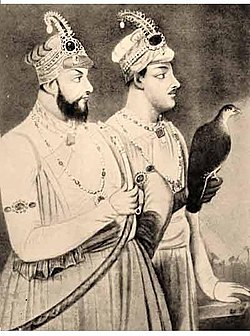
In April 1756, Alivardi Khan died and was succeeded as Nawab of Bengal by his twenty-three-year-old grandson, Siraj-ud-Daulah, whose tensions with the British East India Company soon escalated into open conflict.
Image source: Siraj-ud-Daulah
Aug 16, 1756
% complete
When news of the fall of Calcutta to Siraj-ud-Daulah's forces broke in Madras on 16 August 1756, the Council immediately sent out an expeditionary force under Colonel Clive and Admiral Watson to retake the city.
Image source: Battle of Plassey
Aug 20, 1756
% complete
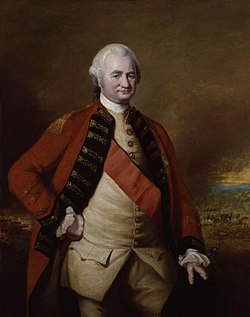
Clive assumed command of the land forces, consisting of 900 Europeans and 1500 sepoys, while Watson commanded a naval squadron dispatched from Madras to recover Calcutta from the Nawab of Bengal.
Image source: Robert Clive
Jan 2, 1757
% complete
Clive and Watson moved against Calcutta on 2 January 1757, and the garrison of 500 men surrendered after offering a scanty resistance. Clive defeated Siraj-ud-Daulah's forces and captured Calcutta back from the Nawab.
Image source: Siege of Calcutta
Jan 9, 1757
% complete
On 9 January 1757, a force of 650 men under Captain Coote and Major Kilpatrick stormed and sacked the town of Hooghly, 23 miles north of Calcutta, extending the British offensive against the Nawab's territory.
Image source: Hooghly district
Feb 10, 1757
% complete
Besides confirming the firman of 1717, the treaty required the restitution, including donations to the navy squadron, army and committee, of 22,000,000 rupees (£2,750,000) to the British for their losses suffered when Calcutta fell.
May 1, 1757
% complete
Dalrymple and the Jagat Seths offered Clive and the East India Company more than £4m (£420m as of 2019), an additional 110,000 rupees a month (£1.43m as of 2019) to pay for Company troops, and other landholding rights in exchange for placing Mir Jafar on the throne.
Image source: Mir Jafar
Jun 1, 1757
% complete
Mir Jafar and the Seths desired that the confederacy between the British and himself be kept secret from Omichund, but when he found out about it, he threatened to betray the conspiracy if his share was not increased to three million rupees (£300,000, over £3m in 2019).
Image source: Omichund
Jun 13, 1757
% complete
The combined force consisted of 613 Europeans, 171 artillerymen controlling eight field pieces and two howitzers, 91 topasses, 2100 sepoys (mainly dusadhs) and 150 sailors, marching up the Hooghly River to confront Siraj-ud-Daulah's much larger army.
Jun 23, 1757
% complete
On 23 June 1757, the British East India Company under Robert Clive won a decisive victory over the Nawab of Bengal, Siraj-ud-Daulah, and his French allies. Treachery by Mir Jafar and other commanders ensured the Nawab's defeat despite his overwhelming numerical advantage.
Jan 1, 1759
% complete
By 1759, Mir Jafar, installed as Nawab after Plassey, felt that his position as a subordinate to the British could not be tolerated, leading him to seek support against his former allies.
Nov 1, 1759
% complete
In late 1759, the Dutch sent seven large ships and 1400 men from Java to Bengal under the pretext of reinforcing their Bengal settlement of Chinsura, even though Britain and Holland were not officially at war.
Image source: Battle of Chinsurah
Nov 25, 1759
% complete
Clive initiated immediate offensive operations by land and sea and defeated the much larger Dutch force on 25 November 1759 in the Battle of Chinsura, cementing British supremacy in Bengal.
Jan 1, 1773
% complete
The victory at Plassey helped the British East India Company take complete control of Bengal in 1773, transforming the Company from a trading enterprise into the ruler of one of India's wealthiest provinces.
Image source: Bengal Presidency
Or browse the full history timeline directory, with more than 2,000 topics.
This Battle of Plassey timeline was generated with the help of AI, using information found on the internet.
We work hard to keep these timelines accurate, but mistakes do get through. If you spot one, email us at [email protected] and we'll fix it for future visitors.
Generate yours with AI or build it from scratch, for free.
Export your timeline, add your own events, edit or remove AI-generated events, and much more
No credit card required.
Cancel anytime.
Cancel anytime.
You can create an unlimited number of timelines with up to 10 events on each one, customize how they look, export them to PDF, PNG, PowerPoint, CSV, and Excel, and share them with a link. Paid plans raise the event limit and add features like spreadsheet imports and collaborators.
Yes. You can cancel your subscription from your account page at any time, and you will not be charged again. Your subscription stays active for the rest of the period you already paid for.
Yes. We will email you a reminder before the annual renewal, and we will also email you a receipt.
Yes. You can email us within 15 days of any payment, and we will issue you a full refund.
Check out our pricing docs or send us an email anytime: [email protected].