-
Resources
-
Pricing
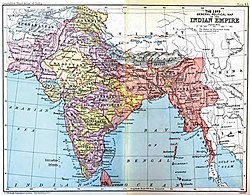
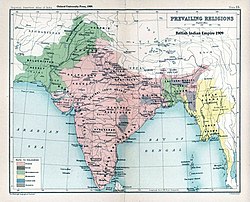
The British Raj was the period of direct British Crown rule over much of the Indian subcontinent, lasting from 1858 until Indian independence and Partition in 1947. More Less
Build a timeline like this one in minutes, for free. Start Yours →
Part of our collection of Indian history timelines.
May 10, 1857 - Jun 20, 1858
The rebellion began at Meerut when Indian soldiers of the East India Company's army mutinied against their officers and marched to Delhi. It spread across parts of northern and central India, challenging Company rule and prompting a fundamental restructuring of British authority.
Image source: Indian Rebellion of 1857
May 30, 1857 - Sep 20, 1857
Rebel forces made Delhi the symbolic center of the uprising and recognized the Mughal emperor Bahadur Shah II as their leader. British and loyalist troops besieged and recaptured the city after fierce fighting, weakening the rebellion.
Image source: Siege of Delhi
Jun 30, 1857 - Nov 17, 1857
British residents, soldiers, and civilians endured a prolonged siege in Lucknow during the rebellion. Relief expeditions eventually reached the besieged force, while the city remained a major battlefield until British forces recaptured it in 1858.
Image source: Siege of Lucknow
Nov 1, 1913
Indian expatriates founded the Ghadar Party in North America to organize armed revolution against British rule. During the First World War, it attempted to encourage mutiny and coordinated rebellion in India.
Image source: Ghadar Movement
Apr 13, 1919
Brigadier General Reginald Dyer ordered troops to fire on a large crowd gathered at Jallianwala Bagh in Amritsar. Hundreds were killed or wounded, provoking outrage across India and destroying faith in the reforming claims of the Raj.
Image source: Jallianwala Bagh massacre
Feb 5, 1922
Protesters at Chauri Chaura attacked and burned a police station, killing policemen after a confrontation. Gandhi called off the broader non-cooperation movement because he believed the campaign had abandoned nonviolence.
Image source: Chauri Chaura incident
Nov 5, 1945 - May 11, 1946
The British tried Indian National Army officers at the Red Fort for treason after the war. Public sympathy for the defendants and protests across India undermined British authority and strengthened pressure for a rapid transfer of power.
Image source: Indian National Army trials
Feb 18, 1946 - Feb 23, 1946
Ratings of the Royal Indian Navy mutinied in Bombay over poor conditions, racial discrimination, and nationalist grievances. The revolt spread to ships and establishments elsewhere before political leaders helped secure its surrender.
Image source: Royal Indian Navy mutiny
Aug 2, 1858
The act transferred administration of India from the East India Company to the British Crown. It created the office of secretary of state for India and established the constitutional foundation of the British Raj.
Nov 1, 1858
Queen Victoria's proclamation promised religious noninterference, equal protection under the law, and respect for treaties with Indian princes. Issued after the rebellion, it sought to legitimize direct Crown rule and win the cooperation of Indian elites.
Aug 1, 1861
The act reorganized legislative councils and allowed limited participation by nominated Indian members. It also restored legislative powers to provincial governments, while leaving effective authority firmly in British hands.
Jun 20, 1892
The act enlarged legislative councils and introduced an indirect, limited form of electoral representation. Members gained the ability to discuss budgets and ask questions, but executive power remained outside meaningful popular control.
Image source: Indian Councils Act 1892
May 25, 1909
The Indian Councils Act 1909 expanded legislative councils and introduced separate electorates for Muslims. The reforms increased representation but institutionalized communal political categories and preserved decisive executive authority for the Raj.
Image source: Indian Councils Act 1909
Dec 12, 1911
At the Delhi Durbar, King-Emperor George V announced the reversal of Bengal's partition. The imperial capital was also moved from Calcutta to Delhi, signaling a major administrative and political reorientation.
Image source: Partition of Bengal (1905)
Aug 20, 1917
Secretary of State Edwin Montagu declared that British policy aimed at the gradual development of self-governing institutions in India. The statement raised expectations while leaving the pace and limits of constitutional change under British control.
Image source: Montagu–Chelmsford Reforms
Dec 23, 1919
The act introduced dyarchy in the provinces, dividing subjects between elected Indian ministers and British-controlled officials. It expanded legislatures and voting rights but retained wide powers for the governor-general and provincial governors.
Aug 2, 1935
The act created provincial autonomy, proposed a federation of British India and princely states, and greatly expanded the electorate. Its federal provisions were never implemented, but provincial elections made Congress governments possible in 1937.
Sep 3, 1939
Viceroy Lord Linlithgow declared India at war with Germany without consulting Indian political leaders. Congress ministries resigned in protest, while the Muslim League used the crisis to strengthen its political position.
Image source: India in World War II
Dec 28, 1885
The Indian National Congress was founded in Bombay with Allan Octavian Hume and Indian political leaders among its organizers. Initially moderate, it created an all-India forum for petitions, representation, and constitutional reform.
Image source: Indian National Congress
Jul 20, 1905
Viceroy Lord Curzon announced the division of Bengal, officially to improve administration but widely understood as a strategy to weaken Bengali nationalism. The decision triggered mass protests and transformed Indian political mobilization.
Aug 7, 1905
Indian nationalists launched the Swadeshi movement to boycott British goods and promote indigenous industry after the partition of Bengal. It expanded political participation through protests, education campaigns, commerce, and revolutionary activism.
Image source: Swadeshi movement
Dec 30, 1906
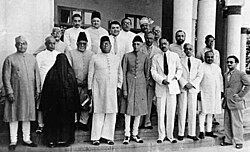
Muslim leaders founded the All-India Muslim League at Dacca to represent Muslim political interests and seek safeguards within the colonial system. It later became the principal organization demanding a separate Muslim homeland.
Image source: All-India Muslim League
Dec 29, 1916
The Indian National Congress and the Muslim League reached an agreement at Lucknow on constitutional demands and representation. The pact temporarily demonstrated Hindu-Muslim political cooperation and strengthened demands for self-government.
Sep 4, 1920 - Feb 12, 1922
Mahatma Gandhi led a mass campaign urging Indians to boycott government schools, courts, honors, and imported goods. The movement brought millions into nationalist politics but was suspended after violence at Chauri Chaura.
Image source: Non-cooperation movement
Nov 8, 1927
The British government appointed a commission chaired by John Simon to review India's constitutional system, but it contained no Indian members. Its arrival in 1928 provoked widespread protests under the slogan 'Simon Go Back.'
Image source: Simon Commission
Aug 10, 1928
An all-parties committee chaired by Motilal Nehru proposed dominion status, parliamentary government, and a constitutional framework for India. Disagreement over minority safeguards exposed growing divisions between Congress and Muslim League leaders.
Dec 31, 1929
The Indian National Congress, meeting at Lahore under Jawaharlal Nehru's presidency, adopted complete independence rather than dominion status as its objective. It designated January 26, 1930, for public independence pledges.
Image source: Purna Swaraj
Mar 12, 1930 - Apr 6, 1930
Gandhi led a march from Sabarmati Ashram to Dandi to challenge the colonial salt monopoly. His symbolic act of making salt launched a nationwide civil-disobedience campaign against British authority.
Image source: Salt March
Mar 5, 1931
Gandhi and Viceroy Lord Irwin agreed to end the immediate civil-disobedience campaign and release many political prisoners. Congress agreed to attend the Second Round Table Conference, while the pact stopped short of granting independence.
Image source: Gandhi–Irwin Pact
Aug 16, 1932
Prime Minister Ramsay MacDonald announced a system of separate electorates and reserved seats for several communities, including the Depressed Classes. Gandhi opposed separate electorates for Dalits, leading to negotiations and the Poona Pact.
Sep 24, 1932
Gandhi and B. R. Ambedkar reached an agreement replacing separate electorates for the Depressed Classes with reserved seats in joint electorates. The pact shaped later systems of political representation for historically oppressed communities.
Jul 7, 1937 - Nov 22, 1939
Congress formed ministries in several provinces after the 1937 elections under the Government of India Act. Their experience of limited self-government provided administrative training while conflicts with governors exposed the constraints of colonial autonomy.
Image source: 1937 Indian provincial elections
Mar 23, 1940
The Muslim League adopted a resolution calling for geographically contiguous Muslim-majority regions to form independent states. Though its wording was initially broad, it became the principal political foundation for the demand for Pakistan.
Image source: Lahore Resolution
Mar 22, 1942 - Apr 12, 1942
Sir Stafford Cripps offered Indian leaders dominion status after the Second World War and the possibility of provincial secession. Congress rejected the proposal as insufficient and the Muslim League objected to its structure, so negotiations failed.
Image source: Cripps Mission
Aug 9, 1942 - Sep 21, 1942
The Congress adopted the Quit India resolution demanding an immediate end to British rule. The Raj arrested its leadership within hours, but strikes, sabotage, underground networks, and local uprisings challenged wartime colonial control.
Image source: Quit India Movement
Mar 24, 1946 - Jun 16, 1946
The British Cabinet Mission proposed a united but loosely federated India with grouped provinces and a constituent assembly. Congress and the Muslim League initially accepted elements of the plan but soon disagreed over its interpretation.
Image source: 1946 Cabinet Mission to India
Aug 16, 1946 - Aug 21, 1946
The Muslim League called for mass action to demonstrate support for Pakistan after constitutional negotiations broke down. Communal violence in Calcutta and elsewhere deepened mistrust and made partition increasingly likely.
Image source: Direct Action Day
Sep 2, 1946 - Aug 15, 1947
An interim government led by Jawaharlal Nehru began operating under the viceroy, with Congress representatives initially dominant and Muslim League members joining later. It provided experience of central administration during the final transition from British rule.
Image source: Interim Government of India
Mar 24, 1947 - Aug 15, 1947
Lord Louis Mountbatten replaced Wavell as the last viceroy and was tasked with transferring power. He accelerated the timetable and concluded that partition was the most practical way to resolve the Congress–Muslim League deadlock.
Image source: Louis Mountbatten, 1st Earl Mountbatten of Burma
Jul 18, 1947
The British Parliament passed the Indian Independence Act, creating the independent dominions of India and Pakistan and ending British sovereignty. It provided the legal mechanism for partition and the lapse of Crown paramountcy over princely states.
Aug 14, 1947 - Dec 31, 1948
British India was divided into India and Pakistan amid hurried boundary decisions, mass migration, and catastrophic communal violence. Millions crossed the new borders, and hundreds of thousands or more died in the upheaval.
Image source: Partition of India
Aug 15, 1947
India became an independent dominion at midnight on August 15, 1947, with Jawaharlal Nehru delivering his 'Tryst with Destiny' speech. The transfer ended nearly two centuries of expanding British political control, though India initially remained within the Commonwealth.
Image source: Independence Day (India)
Build a timeline like this one in minutes, for free. Start Yours →
Or browse the full history timeline directory, with more than 2,500 topics.
This British Raj timeline was generated with the help of AI, using information found on the internet.
We work hard to keep these timelines accurate, but mistakes do get through. If you spot one, email us at [email protected] and we'll fix it for future visitors.
Generate yours with AI or build it from scratch, for free.
Export your timeline, add your own events, edit or remove AI-generated events, and much more
No credit card required.
15-day money-back guarantee.
You can create an unlimited number of timelines with up to 10 events on each one, customize how they look, export them to PDF, PNG, PowerPoint, CSV, and Excel, and share them with a link. Timelines made with Timeline Maker AI keep every event the generator created, and you can add up to 5 events of your own. Paid plans remove the event limit, add spreadsheet imports and hide Preceden's branding, and the higher-priced plan also adds collaborators, a custom logo and a custom domain.
Yes. You can cancel your subscription from your account page at any time, and you will not be charged again. Your subscription stays active for the rest of the period you already paid for.
Yes. We email you a reminder 15 days before your annual renewal, and we email you a receipt after every payment.
Yes. You can email us within 15 days of any payment, and we will issue you a full refund.
Check out our pricing docs or send us an email anytime: [email protected].