-
Use Cases
-
Resources
-
Pricing
Native American history encompasses the diverse peoples, cultures, societies, and experiences of Indigenous nations across North America from ancient times to the present. It includes sophisticated political systems, trade networks, cultural traditions, European colonization, forced removal, resistance, treaty-making, federal policies, and ongoing efforts to protect sovereignty and revitalize languages and communities. More Less
1700 BCE - 1100 BCE
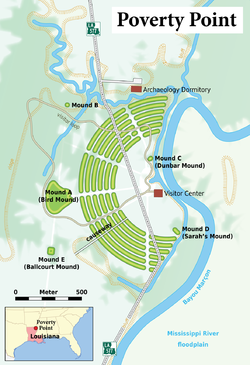
Indigenous communities in what is now Louisiana constructed the monumental Poverty Point earthworks, including large ridges, mounds, and plazas. The site demonstrates extensive trade networks, sophisticated engineering, and complex social organization among ancient peoples of the lower Mississippi Valley.
Image source: Poverty Point
850 - 1250
Chaco Canyon became a major center of Ancestral Puebloan society in the modern American Southwest. Its great houses, roads, ceremonial spaces, astronomical alignments, and long-distance exchange networks reveal a highly organized regional culture whose descendants include contemporary Pueblo peoples.
Image source: Chaco Culture National Historical Park
1050 - 1350
Cahokia, near present-day St. Louis, grew into the largest urban and ceremonial center in pre-Columbian North America north of Mexico. Its enormous earthen mounds, planned plazas, craft production, and regional influence illustrate the complexity of Mississippian civilizations.
Image source: Cahokia
1142
The Haudenosaunee, also known as the Iroquois Confederacy or Six Nations in its later form, developed a constitutional alliance among Indigenous nations in the Great Lakes and northeastern woodlands. The Great Law of Peace established procedures for diplomacy, collective decision-making, and conflict resolution, though the confederacy's exact founding date remains debated.
Image source: Iroquois
Oct 12, 1492
Christopher Columbus's arrival in the Caribbean initiated sustained European colonization of the Americas. Indigenous peoples, including Taíno communities, faced conquest, enslavement, epidemic disease, displacement, and demographic catastrophe, while European powers began transforming Indigenous trade, politics, and environments.
Image source: Christopher Columbus
1520 - 1521
Smallpox introduced by Europeans spread through Indigenous populations in Mesoamerica during the Spanish invasion. Disease, combined with warfare and political alliances, devastated communities and contributed significantly to the fall of the Aztec Empire, while epidemics soon affected Indigenous peoples across wider regions.
Image source: Smallpox
Aug 13, 1521
Spanish forces led by Hernán Cortés, supported by Indigenous allies and aided by epidemic disease, captured Tenochtitlan, the Mexica imperial capital. The conquest initiated Spanish colonial rule in central Mexico, though Indigenous nations continued to shape politics, labor, religion, and culture under colonial conditions.
Image source: Fall of Tenochtitlan
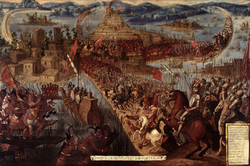
1539 - 1543
Hernando de Soto's expedition traveled through the Southeast and crossed the Mississippi River. The expedition brought violence, forced labor, and epidemic disease to numerous Indigenous societies and generated European descriptions of Mississippian polities shortly before major demographic and political transformations.
Image source: Hernando de Soto
Jun 20, 1675 - Apr 12, 1678
King Philip's War, known to many Indigenous peoples as Metacom's War, was a major conflict between New England colonists and an alliance of Native nations led by Wampanoag leader Metacom. The war caused enormous casualties and displacement and weakened Indigenous control over southern New England.
Image source: King Philip's War
Aug 10, 1680 - 1692
Pueblo communities led by Popé coordinated a successful uprising against Spanish colonial rule in New Mexico. They expelled the Spanish for more than a decade, destroyed or reclaimed many colonial institutions, and demonstrated the continuing strength of Pueblo religious, political, and cultural sovereignty.
Image source: Pueblo Revolt
Sep 3, 1783
The Treaty of Paris ended the American Revolutionary War and recognized the independence of the United States. Britain ceded vast territories east of the Mississippi River without Indigenous consent, disregarding Native nations that had fought on different sides and setting the stage for intensified American expansion.
Image source: Treaty of Paris (1783)
Jul 13, 1787
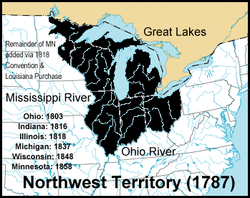
The Northwest Ordinance organized United States territories north of the Ohio River and promised that Indigenous lands would not be taken without consent. In practice, the policy accompanied continuing settlement, warfare, and treaty pressure, while its language became part of later debates over federal obligations.
Image source: Northwest Ordinance
May 28, 1830
President Andrew Jackson signed the Indian Removal Act, authorizing the negotiation of treaties intended to relocate southeastern Native nations west of the Mississippi River. Coercive implementation led to mass dispossession, broken agreements, and the forced migration known as the Trail of Tears.
Image source: Indian Removal Act
1831 - 1839
The Trail of Tears refers to the forced removals of several southeastern Native nations, including the Choctaw, Muscogee, Chickasaw, Seminole, and Cherokee. Thousands died from disease, hunger, exposure, and exhaustion as communities were transported to Indian Territory, despite legal resistance and treaty claims.
Image source: Trail of Tears
1831
In Cherokee Nation v. Georgia, the U.S. Supreme Court described Native nations as domestic dependent nations and declined to hear the Cherokee Nation's suit directly. The decision established important language about federal-tribal relations while leaving the Cherokee vulnerable to state and federal removal policies.
Image source: Cherokee Nation v. Georgia
Mar 3, 1832
The Supreme Court ruled that Georgia could not impose its laws within Cherokee territory and affirmed the federal government's exclusive role in relations with Native nations. Georgia and the Jackson administration did not effectively enforce the ruling, and removal followed, exposing the limits of judicial protection without political enforcement.
Sep 17, 1851
The First Treaty of Fort Laramie recognized territorial boundaries and promised annuity payments to several Plains nations in exchange for safe passage by emigrants. Increasing migration, military intrusion, and resource competition soon undermined the agreement and produced renewed conflict.
Image source: Treaty of Fort Laramie (1851)
Nov 29, 1864
Colorado volunteer soldiers attacked a Cheyenne and Arapaho encampment at Sand Creek despite assurances that it was under military protection. Many civilians were killed, and the massacre intensified Plains warfare, shaped federal investigations, and remains central to Cheyenne and Arapaho historical memory.
Image source: Sand Creek massacre
Jun 25, 1876 - Jun 26, 1876
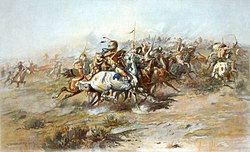
Lakota, Northern Cheyenne, and Arapaho forces defeated Lieutenant Colonel George A. Custer's U.S. cavalry at the Little Bighorn River. The victory temporarily protected a large Indigenous encampment, but the United States increased military pressure and soon imposed further restrictions on Plains nations.
Image source: Battle of the Little Bighorn
Feb 8, 1887
The Dawes Act authorized the allotment of reservation lands to individual Native households and declared remaining lands surplus for non-Native settlement. It undermined tribal landholding and governance, resulting in the loss of millions of acres while promoting forced assimilation.
Dec 29, 1890
U.S. soldiers killed many Lakota people at Wounded Knee Creek in South Dakota after attempting to disarm an encampment associated with the Ghost Dance movement. The massacre is commonly regarded as the closing major episode of the Plains Indian Wars and remains a symbol of colonial violence.
Jun 2, 1924
The Indian Citizenship Act granted U.S. citizenship to all Native Americans born in the United States who had not already acquired it through treaties or other means. It did not automatically guarantee voting rights, which remained restricted by state laws and discriminatory practices for decades.
Jun 18, 1934
The Indian Reorganization Act ended the general allotment policy, encouraged tribal self-government, and authorized federal support for Native economic and cultural programs. Its implementation was uneven, but it marked a shift away from the most explicit assimilation and privatization policies of the previous era.
1953 - 1968
The federal termination policy sought to end recognition of selected tribes and dissolve federal responsibilities, often transferring reservation lands and services to states or private ownership. Termination caused economic and political harm and prompted organized resistance that helped produce the modern tribal sovereignty movement.
Jul 28, 1968
The American Indian Movement was founded in Minneapolis by Dennis Banks, Clyde Bellecourt, Vernon Bellecourt, and George Mitchell. It addressed police abuse, poverty, treaty rights, and sovereignty, and became a highly visible force in Red Power activism and Indigenous self-determination.
Image source: American Indian Movement
Nov 20, 1969 - Jun 11, 1971
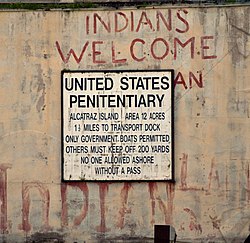
Indigenous activists occupied Alcatraz Island under the leadership of the Indians of All Tribes. The nineteen-month action drew national attention to treaty rights, cultural survival, and the failures of federal Indian policy, inspiring a new generation of Native activism.
Image source: Occupation of Alcatraz
Feb 27, 1973 - May 8, 1973
Members and supporters of the American Indian Movement occupied Wounded Knee on the Pine Ridge Reservation to protest tribal governance, treaty violations, and federal policies. The armed standoff lasted seventy-one days and brought international attention to contemporary Lakota political claims.
Image source: Wounded Knee Occupation
Jan 4, 1975
This law allowed tribes to contract with the federal government to administer programs previously controlled by federal agencies. It strengthened tribal governance, education, health, and administrative capacity and became a foundation of the federal self-determination era.
Aug 11, 1978
The American Indian Religious Freedom Act established federal policy protecting Native religious practices, sacred sites, ceremonies, and access to traditional materials. Although its original enforcement mechanisms were limited, the act represented an important acknowledgment of religious rights after long periods of suppression.
Nov 8, 1978
Congress enacted the Indian Child Welfare Act in response to the widespread removal of Native children from their families and tribes by state agencies and private organizations. The law established tribal jurisdiction and placement preferences in many child-custody cases to protect family, cultural, and political continuity.
Nov 16, 1990
The Native American Graves Protection and Repatriation Act created procedures for returning human remains, funerary objects, sacred objects, and objects of cultural patrimony from federally funded institutions to affiliated tribes and Native Hawaiian organizations. It transformed museum practice and affirmed Indigenous rights to cultural heritage.
Jun 19, 2003
In Navajo Nation v. United States Forest Service, the Supreme Court rejected a challenge to the use of treated sewage water on the sacred San Francisco Peaks under the Religious Freedom Restoration Act. The case highlighted continuing conflicts among federal land management, Indigenous religious freedom, and sacred-site protection.
Dec 19, 2009
Congress included a formal apology to Native peoples in the 2010 Defense Appropriations Act, signed in 2009. The statement acknowledged violence, forced removal, broken treaties, and assimilation policies, although it did not create a comprehensive reparations program or replace nation-to-nation political obligations.
Apr 1, 2016 - Feb 22, 2017
The Standing Rock Sioux Tribe and allied water protectors opposed the Dakota Access Pipeline because of threats to water, sacred places, and treaty rights. The demonstrations became a global Indigenous-led movement linking sovereignty, environmental justice, ceremony, and opposition to fossil-fuel infrastructure.
Image source: Dakota Access Pipeline protests
Jan 3, 2019
Deb Haaland and Sharice Davids became the first two Native American women elected to Congress. Their election, followed by Haaland's appointment as the first Native American cabinet secretary in 2021, reflected continuing Indigenous political participation and representation within U.S. institutions.
Or browse the full history timeline directory, with more than 2,500 topics.
This Native American History timeline was generated with the help of AI, using information found on the internet.
We work hard to keep these timelines accurate, but mistakes do get through. If you spot one, email us at [email protected] and we'll fix it for future visitors.
Generate yours with AI or build it from scratch, for free.
Export your timeline, add your own events, edit or remove AI-generated events, and much more
No credit card required.
Cancel anytime.
Cancel anytime.
You can create an unlimited number of timelines with up to 10 events on each one, customize how they look, export them to PDF, PNG, PowerPoint, CSV, and Excel, and share them with a link. Paid plans raise the event limit and add features like spreadsheet imports and collaborators.
Yes. You can cancel your subscription from your account page at any time, and you will not be charged again. Your subscription stays active for the rest of the period you already paid for.
Yes. We will email you a reminder before the annual renewal, and we will also email you a receipt.
Yes. You can email us within 15 days of any payment, and we will issue you a full refund.
Check out our pricing docs or send us an email anytime: [email protected].