-
Use Cases
-
Resources
-
Pricing
1700 BC - 1100 BC
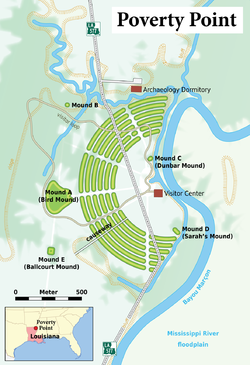
Communities at Poverty Point in present-day Louisiana built massive concentric ridges, mounds, and plazas and exchanged carved stone objects over long distances. The site demonstrates the scale, planning, and artistic complexity of ancient Indigenous societies in the Mississippi region.
Image source: Poverty Point
200 - 1300
Ancestral Puebloan communities developed distinctive painted pottery, basketry, masonry architecture, and ceremonial spaces across the Southwest. Designs and techniques varied by region while expressing enduring relationships among people, place, and ritual.
Image source: Ancestral Puebloans
800 - 1400
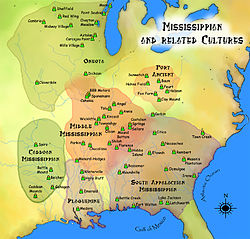
Mississippian societies created platform mounds, engraved shell, copper repoussé, carved stone, and symbolic ceramics. Cahokia became the largest urban and ceremonial center north of Mexico, influencing artistic traditions across the eastern woodlands.
Image source: Mississippian culture
850 - 1150
Chaco Canyon flourished as a regional center of monumental architecture, ceramics, turquoise production, and ceremonial exchange. Its art and building practices connected communities throughout the ancient Southwest.
Image source: Chaco Culture National Historical Park
1000 - 1800
Northwest Coast peoples developed highly formalized carving traditions in wood, bone, horn, and copper. Crest poles, masks, feast dishes, and bentwood boxes communicated family histories, rights, and supernatural relationships.
1000 - 1800
Arctic artists carved ivory, antler, bone, and wood into hunting tools, amulets, toys, and figurative objects. These works joined practical skill with spiritual knowledge and close observation of animals and the environment.
1000 - 1450
Elite Mississippian artists fashioned repoussé copper plates, engraved shell gorgets, and stone sculptures depicting birds, warriors, dancers, and supernatural beings. The imagery formed a broad ceremonial visual system across the Southeast.
1492 - 1700
European colonization introduced new materials, religious imagery, markets, and technologies while disrupting Indigenous communities. Native artists adapted metalwork, painting, weaving, and architectural practices without abandoning local visual systems.
Image source: Spanish colonization of the Americas
1680 - 1692
Pueblo peoples temporarily expelled Spanish colonizers from New Mexico and destroyed or concealed many Catholic objects and institutions. The revolt defended Indigenous religious practices and remains a major episode in the history of cultural survival.
Image source: Pueblo Revolt
1830 - 1839
George Catlin painted hundreds of portraits and scenes during travels among Indigenous nations of the Great Plains. Although shaped by romantic and ethnographic assumptions, his work preserved important visual records and also contributed to stereotypes about Native peoples.
1830 - 1900
Plains artists adopted paper and ledger books obtained through trade, warfare, diplomacy, and confinement. They recorded personal histories, ceremonies, battles, and changing life under colonial pressure in an adaptable drawing tradition.
1846 - 1900
The Smithsonian Institution became a major collector and classifier of Indigenous objects. Its collections helped preserve works but were frequently built through unequal transactions and supported a museum practice that separated art from living communities.
Image source: Smithsonian Institution
1860 - 1900
Navajo weavers adapted regional designs, wool production, and commercial distribution during the nineteenth century. Trading posts and collectors transformed weaving markets while Navajo artists maintained distinctive technical and cultural traditions.
1879 - 1918
The Carlisle Indian Industrial School became a model for the U.S. boarding-school system, which sought to suppress Indigenous languages, religions, and artistic practices. Students nevertheless retained and sometimes adapted artistic knowledge under coercive conditions.
Image source: Carlisle Indian Industrial School
1919
The Mission Indian Federation organized Southern California Indians against federal assimilation policies and attacks on tribal sovereignty. Its activism formed part of a wider cultural movement that supported the continued practice and public recognition of Native arts.
1922
The Santa Fe Indian Market grew into one of the most influential annual venues for Native art. It connects artists with collectors while helping establish standards for contemporary pottery, jewelry, weaving, painting, sculpture, and mixed media.
Image source: Santa Fe Indian Market
1929
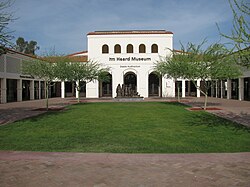
Founded in Phoenix, the Heard Museum became one of the leading institutions devoted to Indigenous arts of the Southwest and North America. Its exhibitions, markets, and educational programs have supported Native artists and contemporary cultural expression.
Image source: Heard Museum
1930 - 2001
Santa Clara Pueblo potter Margaret Tafoya became internationally known for large, highly burnished blackware vessels. She reinforced the status of Pueblo pottery as a living art while transmitting techniques and values within her community.
1932 - 1945
The Santa Fe Indian School developed a program encouraging Native students to create paintings drawing on Pueblo, Plains, and other Indigenous visual traditions. Artists such as Harrison Begay and Pablita Velarde helped establish modern Native studio art.
1935
The U.S. Indian Arts and Crafts Board was created to promote and authenticate Indigenous-made work. It helped develop markets and exhibitions while also reflecting federal efforts to regulate how Native identity and artistic production were represented.
1935
Federal protection for the marketing of authentic Indian arts began with the 1935 Indian Arts and Crafts Act. The law established an important precedent for combating fraudulent claims and protecting Indigenous artists economically.
1960
Tribal and community-centered museums increasingly presented Indigenous objects alongside Native histories and voices. Institutions such as the Mille Lacs Indian Museum helped challenge displays that treated Native cultures as vanished or purely archaeological.
1962
The Institute of American Indian Arts in Santa Fe became a crucial center for contemporary Indigenous art education. It encouraged experimentation across painting, sculpture, design, performance, and new media while supporting Native cultural identities.
1989
Congress authorized the National Museum of the American Indian and transferred major Smithsonian collections toward a museum shaped by Indigenous consultation. The legislation marked a shift toward repatriation, cultural authority, and Native-centered interpretation.
1990
NAGPRA required federally funded museums and institutions to inventory and return human remains, funerary objects, sacred objects, and objects of cultural patrimony. It transformed museum relationships with Native nations and restored access to culturally important materials.
Image source: Native American Graves Protection and Repatriation Act
1990
The 1990 act made it unlawful to market art as Indian-made when it was not produced by a member of a federally or officially recognized tribe or a certified artisan. It strengthened consumer protection and the economic rights of Indigenous artists.
2004
The National Museum of the American Indian opened on the National Mall in Washington, D.C., presenting collections through Native-authored narratives and community collaboration. Its architecture and exhibitions emphasized Indigenous continuity rather than disappearance.
Image source: National Museum of the American Indian
1964 - 1978
Kiowa-Caddo artist T.C. Cannon combined Indigenous symbolism, portraiture, abstraction, and modernist strategies. His short career produced a powerful body of work about identity, history, and the political presence of Native people.
1967 - 2005
Fritz Scholder used pop-influenced color, distortion, and irony to confront romantic stereotypes of Native Americans. His paintings helped redefine contemporary Native art and influenced generations of Indigenous artists.
1968 - 1978
The American Indian Movement and related activism brought sovereignty, treaty rights, repatriation, and cultural survival into national public debate. Artists responded through posters, performance, photography, installation, and renewed public use of Indigenous imagery.
Image source: American Indian Movement
1970 - 2021
Saulteaux artist and curator Robert Houle used painting, installation, and institutional critique to address colonial education, Christianity, and museum power. His practice helped establish First Nations art within contemporary Canadian art discourse.
1970 - 2021
Jaune Quick-to-See Smith developed layered paintings and collages that critique colonialism, racism, environmental destruction, and museum representation. Her work places Native histories within broader debates about American art and political power.
1972 - 1973
Native women artists participated in the feminist art movement while challenging both mainstream feminism and stereotyped representations of Indigenous women. Their work expanded conversations about gender, colonial violence, sovereignty, and artistic authorship.
Image source: A.I.R. Gallery
1990 - 2021
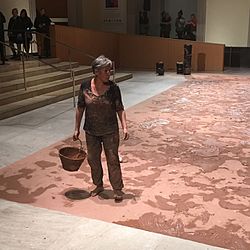
Anishinaabe artist Rebecca Belmore became known for performance, sculpture, and installation addressing violence, land, water, and the missing and murdered Indigenous women crisis. Her work centers embodied experience and public accountability.
Image source: Rebecca Belmore
2007
The Indigenous artist collective Postcommodity emerged with projects examining borders, trade, migration, extraction, and Indigenous sovereignty. Its installations and public works connect contemporary art to transnational Indigenous experiences.
2012
The inclusion of Indigenous artists in major international exhibitions such as Documenta increased the global visibility of Native contemporary art. Artists used these platforms to challenge colonial narratives rather than simply represent cultural tradition.
Image source: Documenta
2019
The 2019 Venice Biennale included prominent work by Indigenous artists, including Julie Buffalohead, Nicholas Galanin, and Jeffrey Gibson in national and collateral presentations. Their participation underscored the international significance and diversity of contemporary Native art.
Image source: Venice Biennale
Or browse the full history timeline directory, with more than 2,500 topics.
This History of Native American Art timeline was generated with the help of AI, using information found on the internet.
We work hard to keep these timelines accurate, but mistakes do get through. If you spot one, email us at [email protected] and we'll fix it for future visitors.
Generate yours with AI or build it from scratch, for free.
Export your timeline, add your own events, edit or remove AI-generated events, and much more
No credit card required.
Cancel anytime.
Cancel anytime.
You can create an unlimited number of timelines with up to 10 events on each one, customize how they look, export them to PDF, PNG, PowerPoint, CSV, and Excel, and share them with a link. Paid plans raise the event limit and add features like spreadsheet imports and collaborators.
Yes. You can cancel your subscription from your account page at any time, and you will not be charged again. Your subscription stays active for the rest of the period you already paid for.
Yes. We will email you a reminder before the annual renewal, and we will also email you a receipt.
Yes. You can email us within 15 days of any payment, and we will issue you a full refund.
Check out our pricing docs or send us an email anytime: [email protected].