-
Use Cases
-
Resources
-
Pricing
1800
The earliest European find of Aboriginal painted rock art was made in a shelter in Tasmania around 1800.
1800
Following the early Tasmanian discovery, other painted bark shelters were found in Victoria and New South Wales.
Jan 14, 1803
The first European discovery of Aboriginal rock paintings took place on 14 January 1803, marking an early recorded encounter between European observers and Australia's ancient Indigenous art.
1891
Joseph Bradshaw first reported the paintings now known as Gwion Gwion rock art, also called the Bradshaw rock paintings or Giro Giro, in caves in Western Australia's Kimberley region.
2008 - 2009
Researchers first saw the Maliwawa Figures during fieldwork conducted in 2008 and 2009, although the figures were not studied in detail until later research.
Image source: Indigenous Australian art
2016 - 2018
The Maliwawa Figures were examined through field research carried out from 2016 to 2018, establishing the basis for their later scholarly documentation.
2020
A 2020 study placed the age of Gwion Gwion rock art at approximately 12,000 years, contributing to continuing research into the chronology of Kimberley rock painting.
Sep 2020
A study led by Paul Taçon documenting the Maliwawa Figures was published in Australian Archaeology in September 2020.
2021
A February 2021 study radiometrically dated a large macropod painting in a Western Australian Kimberley rock shelter to approximately 17,300 years ago, making it the oldest reliably dated unambiguous in-situ rock art motif known in Australia.
1800
Basket weaving has traditionally been practised by women of many Aboriginal Australian peoples across the continent for centuries.
1800 - 1899
Although basket weaving is longstanding, the particular technique described in the source is not as old as some other Aboriginal art techniques and originated in the nineteenth century.
1898 - 1970
Despite some stories having been recorded by Haddon, many subsequently fell out of use or were forgotten before their revival through later publications.
1898
Many Torres Strait stories were written down by Alfred Haddon after his 1898 expedition, preserving material that later influenced the revival associated with Margaret Lawrie's publications.
1936
The landscape paintings described in the source were first created in 1936, beginning an influential body of Aboriginal watercolour work.
1938
The success of the 1938 exhibitions established the artist described in the source as the first Indigenous Australian watercolourist and the first to successfully exhibit and sell work to the non-Indigenous community.
1938
The landscape paintings were exhibited in Australian cities in 1938 and were immediately successful with audiences.
1970 - 1972
Margaret Lawrie published Myths and Legends of the Torres Strait in 1970 and Tales from the Torres Strait in 1972, reviving stories that had nearly been forgotten and strongly influencing Torres Strait Island artists.
1971 - 1972
In 1971–1972, art teacher Geoffrey Bardon encouraged Aboriginal people at Papunya, northwest of Alice Springs, to put their Dreamings onto canvas, helping initiate the Western Desert art movement.
1988
The Aboriginal Memorial was unveiled at the National Gallery of Australia in Canberra in 1988. It consists of 200 hollow log coffins similar to those used in mortuary ceremonies in Arnhem Land.
Image source: Aboriginal Memorial
1990 - 1999
During the 1990s, younger Torres Strait Island artists, including Dennis Nona, translated traditional skills into portable forms such as printmaking, linocut and etching, as well as larger bronze sculptures.
1990 - 1999
Dennis Nona, born in 1973, became an award-winning figure among the younger Torres Strait Island artists who developed contemporary printmaking and sculptural practices in the 1990s.
1990 - 1999
Billy Missi became known for decorated black-and-white linocuts depicting local vegetation and ecosystems, contributing to the modern Torres Strait Island art movement.
1990 - 1999
Alick Tipoti emerged among the outstanding Torres Strait Island artists associated with the translation of traditional skills into contemporary media.
1988
The Rebecca Hossack gallery opened in London in 1988 and has been credited with almost single-handedly introducing Australian Indigenous art to Britain and Europe.
1994 - 1997
Aboriginal art sales boomed between 1994 and 1997, increasing the movement's commercial visibility while also creating opportunities for exploitative dealers.
1999
The Kluge-Ruhe Aboriginal Art Collection of the University of Virginia opened in its current location in 1999. It exhibits solely Australian Aboriginal art and regularly mounts exhibitions.
2006
The Musée du Quai Branly in Paris, France, opened in 2006 and included an Oceania collection containing Australian Indigenous art.
2006 - 2017
The Museum of Contemporary Aboriginal Art in Utrecht, Netherlands, was dedicated to contemporary Australian Aboriginal art before closing in 2017.
Aug 2006 - 2007
Following concerns about unethical practices in the Indigenous art sector, the Australian Senate initiated an inquiry in August 2006. Its report was published in 2007.
2014
Koonalda Cave on South Australia's Nullarbor Plain was heritage-listed in 2014 because of the rarity of its approximately 30,000-year-old artwork.
Image source: Koonalda Cave
2022
In 2022, unique 30,000-year-old artwork at Koonalda Cave was vandalised in an event reported around the world, leaving much of the artwork unrecoverable.
2023
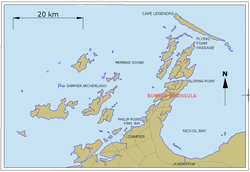
In 2023, three large panels of rock art were removed from Murujuga in Western Australia to enable construction of a new fertiliser factory.
Image source: Burrup Peninsula
2023 - 2024
The ancient Bulgandry Aboriginal art site in New South Wales's Brisbane Water National Park was vandalised twice in late 2023 and early 2024, within a period of only a few months.
Or browse the full history timeline directory, with more than 2,500 topics.
This Aboriginal Art timeline was generated with the help of AI, using information found on the internet.
We work hard to keep these timelines accurate, but mistakes do get through. If you spot one, email us at [email protected] and we'll fix it for future visitors.
Generate yours with AI or build it from scratch, for free.
Export your timeline, add your own events, edit or remove AI-generated events, and much more
No credit card required.
Cancel anytime.
Cancel anytime.
You can create an unlimited number of timelines with up to 10 events on each one, customize how they look, export them to PDF, PNG, PowerPoint, CSV, and Excel, and share them with a link. Paid plans raise the event limit and add features like spreadsheet imports and collaborators.
Yes. You can cancel your subscription from your account page at any time, and you will not be charged again. Your subscription stays active for the rest of the period you already paid for.
Yes. We will email you a reminder before the annual renewal, and we will also email you a receipt.
Yes. You can email us within 15 days of any payment, and we will issue you a full refund.
Check out our pricing docs or send us an email anytime: [email protected].