-
Use Cases
-
Resources
-
Pricing
Persian Art encompasses the visual traditions of Iran and the wider Persian cultural world, including architecture, sculpture, ceramics, textiles, metalwork, painting, calligraphy, and miniature manuscripts. It reflects the artistic achievements of successive empires and dynasties while preserving distinctive themes of symbolism, craftsmanship, and cultural exchange. More Less
5000 BCE
Evidence of a painted-pottery civilization around Susa has been dated to approximately 5000 BCE, making it one of the earliest documented artistic traditions in the region.
4000 BCE
Shortly after Susa was first settled, its inhabitants erected a temple on a monumental platform that rose above the surrounding flat landscape, demonstrating early monumental architecture.
3800 BCE - 3100 BCE
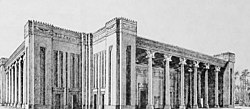
The Early, Middle, and Late Susa II periods, dated from about 3800 to 3100 BCE, correspond to the Early, Middle, and Late Uruk periods.
Image source: Susa
2300 BCE
The rock relief associated with the mountain kingdom of Lullubi, especially the Anubanini rock relief, dates to circa 2300 BCE or possibly the early second millennium BCE and is among the earliest rock reliefs in Iran.
2000 BCE
Iranian rock-relief traditions began with Lullubi and Elamite examples, including reliefs at Sarpol-e Zahab in Iranian Kurdistan, Kul-e Farah, and Eshkaft-e Salman in southwest Iran.
1000 BCE - 650 BCE
A group of Iranian rock reliefs probably dates between about 1000 and 650 BCE, spanning the later Elamite and early imperial artistic environments.
1000 BCE
The earliest relief at the referenced site is Elamite and dates to about 1000 BCE, illustrating the continuation of monumental carved art in southwestern Iran.
224 - 304
Sasanian reliefs are concentrated in the first 80 years of the dynasty, although one important group dates to the sixth century. They occur at relatively few sites, mostly in the Sasanian heartland.
224 - 651
Sasanian art was produced under the Sasanian Empire, which ruled from the third to the seventh centuries before the Muslim conquest of Persia was completed around 651.
Image source: Sasanian art
1920 - 1937
The excavations at Dura-Europos in the twentieth century produced many new discoveries that contributed to the study of art in the eastern Mediterranean, Iran, and neighboring regions.
Image source: Dura-Europos
1920
Michael Rostovtzeff, the classical archaeologist and excavation director, recognized shared principles in the art of the first centuries CE across Palmyra, Dura-Europos, Iran, and Buddhist India.
1984
The standard catalogue of pre-Islamic Persian reliefs, as known in 1984, organized examples into Lullubi, Elamite, Assyrian, Achaemenid, Late or post-Achaemenid and Seleucid, Parthian, Sasanian, and other groups.
650 - 800
Many surviving works of early Islamic Persian art mostly date from the seventh and eighth centuries, following the transformation of Persian territories under Islamic rule.
Image source: Persian art
800 - 999
During the Islamic Golden Age, especially in the ninth and tenth centuries, Nishapur became one of the great centers of pottery and related arts.
Image source: Nishapur
950
The Seljuqs, nomads of Turkic origin from present-day Mongolia, appeared prominently in Islamic history toward the end of the tenth century and helped shape subsequent Persian artistic production.
1048 - 1194
The Seljuqs seized Baghdad in 1048 and their rule in Iran ended by 1194, although production of works described as Seljuq continued into the late twelfth and early thirteenth centuries under smaller independent rulers and patrons.
1100 - 1200
A Persian pottery tradition became the earliest pottery anywhere known to use overglaze enamel painting, preceding the later development of the technique in China and Europe.
1200 - 1300
Miniature painting became a significant Persian genre in the thirteenth century and received Chinese influence after the Mongol conquests.
Image source: Persian miniature
1200 - 1500
Mongol control of much of the world, particularly during the thirteenth through fifteenth centuries, was reflected in the idealized appearance of Persians as Mongols in artistic representation.
1200 - 1500
Chinese influence entered Persian miniature painting after the Mongol conquests, contributing to the development of a distinctive and influential Persian manuscript tradition.
1200 - 1600
Spanish paper arrived in Iran in the thirteenth century and was used in Persian manuscripts. Marbled paper appeared around 1540, while later manuscript decoration included pierced leather covers, colored or silk pages, gold sprinkling, and painted or gilded margins.
1206 - 1294
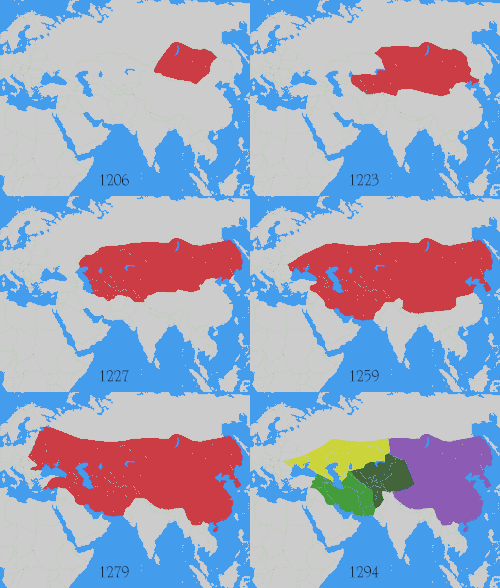
During the thirteenth century, the Mongols under Genghis Khan swept through the Islamic world, profoundly affecting Persian political and artistic life.
Image source: Mongol invasions and conquests
1400 - 1600
The Persian miniature tradition reached its highest point during the fifteenth and sixteenth centuries, when manuscript painting achieved exceptional refinement.
1400 - 1500
Chinese imitation drawings emerged in fifteenth-century Persian art, reflecting the continuing exchange of visual motifs and techniques across Asia.
1400 - 1700
Persian hardstone carvings, once thought to date mostly to the fifteenth and sixteenth centuries, are now understood to have been produced over a wider period.
1500 - 1700
By the sixteenth and seventeenth centuries, hunting scenes, animal-filled landscapes, and horsemen battling lions had become standard themes in Persian art.
1500 - 1600
Under the Safavid dynasty in the sixteenth century, a courtly style was used across a wide variety of media and diffused from the shah’s court artists, most of whom were primarily painters.
1500 - 1600
Carpets woven in Safavid court manufactories at Isfahan during the sixteenth century became famous for elaborate colors and artistic designs and are now treasured in museums and private collections worldwide.
1501 - 1722
Safavid art refers to the art of the Persian Safavid dynasty from 1501 to 1722, encompassing painting, manuscripts, carpets, ceramics, metalwork, and other media.
1524 - 1555
Shah Tahmasp I generously funded the royal workshop during the early years of his reign, supporting some of the most magnificent Persian manuscripts.
1546 - 1560
The disruption of Safavid artistic life encouraged painters such as Abd al-Samad and Mir Sayyid Ali to move to India. Mughal Emperor Humayun had recruited the two artists while in exile in 1546, and they became trail-blazers of Mughal miniature painting.
Image source: Mughal painting
1556
After increasing religious scruples, Shah Tahmasp I issued the 1556 Edict of Sincere Repentance, attempting to outlaw miniature painting, music, and other arts and greatly disrupting court artistic production.
1600 - 1700
By the end of the sixteenth century, complicated narrative scenes with many figures became less popular. Artists increasingly produced sheets with single figures, often partly painted against garden backgrounds drawn rather than painted.
1659
The closing of the Chinese market in 1659 caused Persian ceramic production to rise to new heights as it sought to fulfill European demand.
1781 - 1925
Qajar art refers to the art, architecture, and art forms of the Qajar era, when Iran was ruled by the Qajar dynasty from 1781 to 1925.
1781 - 1800
With the ascension of the Qajar dynasty, the bloody turmoil of the eighteenth century in Iran came to a close, allowing the arts to flourish during a period of relative peace.
1850 - 1900
Persian carpet production particularly suffered from the introduction of synthetic dyes during the second half of the nineteenth century, which altered traditional color practices.
1850 - 1900
The impact of photography greatly increased the individuality of portraits in the later nineteenth century, changing the character of Persian portrait art.
1892 - 1898
Kamal-ol-molk, who lived from 1845 to 1940, came from a family of court painters and trained with a painter who had studied in Europe.
1898 - 1902
After a career at court, Kamal-ol-molk visited Europe in 1898 at the age of 47 and stayed for approximately four years, furthering his engagement with European artistic models.
1900 - 2026
Modern Persian carpet production has been characterized by reviving traditional dyeing with natural dyes, reintroducing tribal patterns, and developing innovative designs using centuries-old weaving techniques.
2010
In 2010, the traditional skills of carpet weaving in Fārs and Kashan were inscribed on the UNESCO Intangible Cultural Heritage Lists.
Or browse the full history timeline directory, with more than 2,500 topics.
This Persian Art timeline was generated with the help of AI, using information found on the internet.
We work hard to keep these timelines accurate, but mistakes do get through. If you spot one, email us at [email protected] and we'll fix it for future visitors.
Generate yours with AI or build it from scratch, for free.
Export your timeline, add your own events, edit or remove AI-generated events, and much more
No credit card required.
Cancel anytime.
Cancel anytime.
You can create an unlimited number of timelines with up to 10 events on each one, customize how they look, export them to PDF, PNG, PowerPoint, CSV, and Excel, and share them with a link. Paid plans raise the event limit and add features like spreadsheet imports and collaborators.
Yes. You can cancel your subscription from your account page at any time, and you will not be charged again. Your subscription stays active for the rest of the period you already paid for.
Yes. We will email you a reminder before the annual renewal, and we will also email you a receipt.
Yes. You can email us within 15 days of any payment, and we will issue you a full refund.
Check out our pricing docs or send us an email anytime: [email protected].