-
Use Cases
-
Resources
-
Pricing
500 - 599
After the fall of Teotihuacan in the sixth century CE, several city-states rose to power in central Mexico. Cholula and Xochicalco were among the centers probably inhabited by Nahuatl speakers, forming part of the cultural background from which later Aztec artistic traditions developed.
Image source: Teotihuacan
500 - 599
One study has proposed that Nahuas originally inhabited the Bajío region around Guanajuato. The population reached a peak in the sixth century before rapidly declining during a subsequent dry period, an environmental shift relevant to the movements and cultural transformations of Nahua peoples.
1299
In 1299, Colhuacan ruler Cocoxtli permitted the Mexica to settle in the empty barrens of Tizapan. They were eventually assimilated into Culhuacan culture, an important stage in the development of the people later associated with Aztec art and civilization.
Image source: Mexica
1323
According to Aztec legend, the Mexica received a vision in 1323 of an eagle perched on a prickly pear cactus and eating a snake. This foundational image later became one of the most enduring symbols associated with Mexica identity and Mexico.
1325
The year of the foundation of Tenochtitlan is usually given as 1325. The island city became the political and ceremonial center of the Mexica and the setting for major architectural, sculptural, and ritual works.
Image source: Tenochtitlan
1376
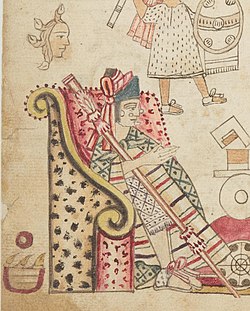
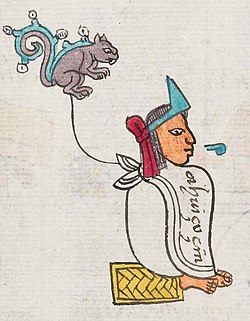
In 1376, Acamapichtli was elected the first Huey Tlatoani of Tenochtitlan, founding the Mexica royal dynasty. Royal patronage and state ceremony would subsequently shape the production and display of Aztec art.
Image source: Acamapichtli
1396
After Acamapichtli's death in 1396, his son Huitzilihhuitl became ruler of Tenochtitlan. His reign belongs to the period in which the Mexica city-state was consolidating the political and cultural institutions that supported later monumental art.
1418
In 1418, Azcapotzalco initiated a war against the Acolhua of Texcoco and killed their ruler Ixtlilxochitl. The conflict contributed to the political realignment that eventually enabled the Triple Alliance and its imperial artistic programs.
Image source: Azcapotzalco

1427
The Aztec Empire originated in 1427 as an alliance among Tenochtitlan, Texcoco, and Tlacopan to defeat the Tepanec state of Azcapotzalco. This confederation created the imperial framework within which temples, sculpture, ceramics, manuscripts, and ceremonial arts were commissioned.
Image source: Aztec Empire
1428
After Tezozomoc's death in 1426 and a succession struggle, Tenochtitlan, Texcoco, and Tlacopan formed the Triple Alliance. In 1428 they besieged and destroyed Azcapotzalco and sacrificed Maxtla, establishing the political foundation of the Aztec Empire.
1440
In 1440, Moteuczomatzin Ilhuicamina became ruler of Tenochtitlan. His reign was part of the period of imperial expansion and monumental construction that made the capital a major center of Aztec visual and ritual culture.
Image source: Moctezuma I
1469
In 1469, Axayacatl succeeded to the rulership of Tenochtitlan. His period of rule falls within the expansion of the empire and the production of state-sponsored monuments and ceremonial objects.
Image source: Axayacatl
1478 - 1479
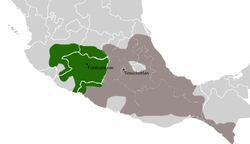
During the major campaign against the Tarascans, or Michhuahqueh, in 1478–1479, Aztec forces were repelled by a well-organized defense. The encounter marked a limit to imperial expansion and shaped the political environment in which Aztec art circulated.
Image source: Purépecha Empire
1481
When Axayacatl died in 1481, his older brother Tizoc was elected ruler. Tizoc's short reign preceded the major building and ritual projects associated with his successor Ahuitzotl.
Image source: Tizoc
1485
Tizoc died suddenly in 1485, and his brother and war leader Ahuitzotl became the next tlatoani. Ahuitzotl presided over an era of expansion and spectacular state ritual closely connected to monumental art in Tenochtitlan.
Image source: Ahuitzotl
1502
Motecuhzoma Xocoyotzin became the Aztec ruler before the arrival of the Spanish. He is known to world history as the ruler during the conquest, while his reign also belonged to the mature period of Mexica monumental and courtly art.
Image source: Moctezuma II
1517
In 1517, Moctezuma received the first reports of ships carrying strange warriors that had landed near Cempoallan on the Gulf Coast. He dispatched messengers and ordered continued reports, beginning the sequence of events that disrupted the imperial world depicted in Aztec art.
1519
The empire reached its maximum extent in 1519, immediately before the arrival of Spanish conquistadors led by Hernán Cortés. Its broad political network supported the movement of artistic styles, tribute objects, and skilled makers across central Mexico.
Nov 8, 1519
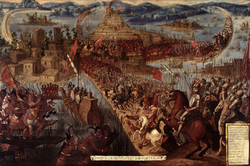
On 8 November 1519, Moctezuma II received Hernán Cortés, Spanish troops, and their Tlaxcalan allies on the causeway south of Tenochtitlan. He invited them to stay as guests, bringing Spanish observers into the capital's monumental artistic environment.
Image source: Spanish conquest of the Aztec Empire
1520 - 1521
An outbreak of smallpox swept through the population of Tenochtitlan in 1520–1521 and was decisive in the fall of the city. The epidemic weakened resistance during the siege and contributed to the destruction and dispersal of the artistic culture of the imperial capital.
Jun 1520
As the Spaniards became increasingly unwelcome in Tenochtitlan, hostilities broke out in June 1520. The conflict culminated in a massacre in the Great Temple and a major Mexica uprising against the Spanish, placing the city's monuments and sacred objects in immediate danger.
Image source: Massacre in the Great Temple of Tenochtitlan
Aug 13, 1521
After a siege and the destruction of the Aztec capital, Cuauhtémoc was captured on 13 August 1521. The fall marked the beginning of Spanish hegemony in central Mexico and a profound transformation of Aztec artistic production and patronage.
1100 - 1350
Aztec black-on-orange ceramics are classified into an early Aztec I and II period dated approximately 1100–1350. Their forms and painted surfaces provide archaeological evidence for the development of Aztec ceramic traditions before the height of the empire.
1350 - 1520
The Aztec III ceramic phase dates approximately from 1350 to 1520. Black-on-orange wares from this period represent the mature pre-Hispanic ceramic tradition associated with the expansion and cultural influence of the Mexica and related Nahua polities.
1400 - 1499
The Coyolxauhqui Stone, depicting the dismembered goddess Coyolxauhqui, was produced for the ceremonial precinct of Tenochtitlan. Its imagery connected sculpture, myth, warfare, sacrifice, and the ritual movement up the Great Temple.
1487
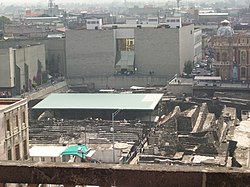
Ahuitzotl began an enlargement of the Great Temple of Tenochtitlan and inaugurated the new temple in 1487. The project exemplified the relationship between architecture, sculpture, ritual, political power, and imperial spectacle in Aztec art.
Image source: Templo Mayor
1487
Aztec and later Spanish sources reported that 80,400 prisoners were sacrificed over four days for the reconsecration of the Great Pyramid in 1487, reportedly under Ahuitzotl. The figure is contested, but the account illustrates the ritual context in which monumental art was experienced.
Image source: Human sacrifice in Aztec culture
1790
Archaeological excavations in the capital's main square in 1790 uncovered two massive stone sculptures that had been buried immediately after the fall of Tenochtitlan. The discoveries brought major Aztec monuments into public and scholarly attention.
1790
The so-called Aztec Sun Stone, or Calendar Stone, was discovered in 1790, as was the 2.7-meter-tall Coatlicue statue made of andesite. Coatlicue represents a serpentine chthonic goddess wearing a skirt made of rattlesnakes, making the excavation central to the modern study of Aztec sculpture.
1978
The Coyolxauhqui Stone was found in 1978 at the foot of the staircase leading to the Great Temple in Tenochtitlan. Its discovery helped locate and expand archaeological investigation of the Templo Mayor precinct and renewed public attention to Aztec monumental sculpture.
1541 - 1542
The Codex Mendoza was an important pictorial and alphabetic text produced in the early sixteenth century, probably commissioned by or associated with the first viceroy of Mexico. It was intended to inform the Spanish crown about the political and economic structure of the Aztec Empire.
Image source: Codex Mendoza
1545 - 1576
Between 1545 and 1576, Franciscan friar Bernardino de Sahagún worked with Indigenous informants and scribes to produce a bilingual Spanish-Nahuatl ethnographic encyclopedia. Its illustrated and written sections record religion, calendrics, botany, zoology, trades, crafts, and history.
Image source: Florentine Codex
1582
Romances de los señores de la Nueva España was collected at Texcoco in 1582, probably by Juan Bautista de Pomar. Together with the Cantares Mexicanos, it preserves poems and songs that illuminate the literary and performative dimensions of Nahua artistic culture.
1780 - 1781
In Italian exile after the expulsion of the Jesuits, Francisco Javier Clavijero published La Historia Antigua de México in 1780–1781. He traced the history of the Aztecs from their migration to the reign of Cuauhtemoc, helping shape later interpretations of Indigenous civilization.
1792
Antonio de León y Gama's 1792 Descripción histórico y cronológico de las dos piedras examined the two monumental stone sculptures found in Mexico City's main square. The work helped establish an early scholarly framework for interpreting Aztec monuments.
1800 - 1899
During the nineteenth century, romanticized visions of the Aztecs increasingly replaced European portrayals of them as barbaric and culturally inferior. Mexican scholarship, archaeology, public monuments, and world-fair displays helped recast Aztec civilization and its art as foundations of national identity.
Image source: Aztecs
1810
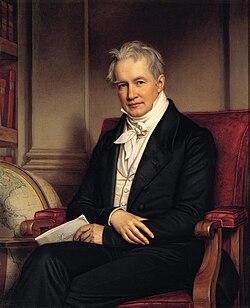
Alexander von Humboldt originated the modern usage of “Aztec” in 1810 as a collective term for people linked to the Mexica state and Triple Alliance through trade, custom, religion, and language. This terminology influenced how Aztec art and culture were categorized internationally.
Image source: Alexander von Humboldt
1821
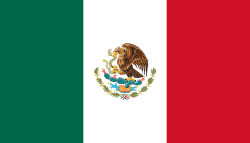
When New Spain achieved independence in 1821 and became the First Mexican Empire, its flag displayed the traditional Aztec eagle on a nopal cactus. The emblem connected Indigenous imagery to the emerging national identity.
Image source: Flag of Mexico
1843
William Hickling Prescott published his highly popular and deeply researched The Conquest of Mexico in 1843. The book helped make Aztec history widely known and contributed to the adoption of the term “Aztec” in global historical writing.
1843
With the publication of Prescott's history of the conquest of Mexico in 1843, the term “Aztec” was adopted by much of the world. Nineteenth-century Mexican scholars also used it to distinguish present-day Mexicans from pre-conquest Mexicans.
1887
During the Porfirian era, a monument to Cuauhtémoc was placed at a major traffic roundabout on Mexico City's Paseo de la Reforma and inaugurated in 1887. The monument reflected the late nineteenth-century transformation of Aztec civilization into a source of national pride.
1910 - 1920
The Mexican Revolution and the participation of Indigenous people in the struggle stimulated the government-sponsored movement of indigenismo. Symbols of Mexico's Aztec past became ubiquitous, especially in the muralism associated with Diego Rivera and other artists.
Image source: Mexican muralism
1980
American author Gary Jennings published Aztec in 1980, an acclaimed historical novel set in Aztec-period Mexico. The novel represents the continuing influence of Aztec history and imagery on modern popular culture.
Image source: Gary Jennings Jr.
1989
Juan Mora Catlett's 1989 film Retorno a Aztlán is a work of historical fiction set during the rule of Motecuzoma I. Filmed in Nahuatl and also titled Necuepaliztli in Aztlan, it presents an Indigenous-language cinematic engagement with Aztec history.
2000
Salvador Carrasco's 2000 Mexican feature film The Other Conquest, or La Otra Conquista, depicts the colonial aftermath of the Spanish conquest of Mexico in the 1520s. It demonstrates the continued use of Aztec history and visual memory in modern artistic production.
Image source: The Other Conquest
Or browse the full history timeline directory, with more than 2,500 topics.
This Aztec Art timeline was generated with the help of AI, using information found on the internet.
We work hard to keep these timelines accurate, but mistakes do get through. If you spot one, email us at [email protected] and we'll fix it for future visitors.
Generate yours with AI or build it from scratch, for free.
Export your timeline, add your own events, edit or remove AI-generated events, and much more
No credit card required.
Cancel anytime.
Cancel anytime.
You can create an unlimited number of timelines with up to 10 events on each one, customize how they look, export them to PDF, PNG, PowerPoint, CSV, and Excel, and share them with a link. Paid plans raise the event limit and add features like spreadsheet imports and collaborators.
Yes. You can cancel your subscription from your account page at any time, and you will not be charged again. Your subscription stays active for the rest of the period you already paid for.
Yes. We will email you a reminder before the annual renewal, and we will also email you a receipt.
Yes. You can email us within 15 days of any payment, and we will issue you a full refund.
Check out our pricing docs or send us an email anytime: [email protected].