-
Use Cases
-
Resources
-
Pricing
Forensic pathology is the medical specialty that determines the cause and manner of death through postmortem examinations. Its history spans from ancient Roman legal autopsies and medieval coroner investigations to the rise of modern autopsy techniques in the Renaissance, the professionalization of legal medicine in the 19th century, and today's advanced methods incorporating toxicology, imaging, and molecular analysis. More Less
399 BC - 300 BC
% complete
The history of forensic pathology can be traced all the way back to the fourth century BC in Babylonia. In this early era, instead of practicing on deceased human bodies, the practice of forensic pathology was strictly practiced on animals, laying an unusual but foundational groundwork for the discipline.
Image source: Forensic pathology
399 BC
% complete
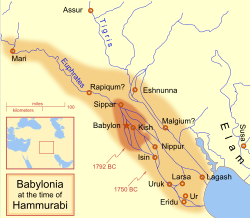
In ancient Babylonia during the fourth century BC, medicolegal examination practices were applied exclusively to animals rather than deceased human bodies. This restriction reflected early cultural and legal constraints on the dissection of humans, even as systematic investigative techniques were being developed.
Image source: Babylonia
350 BC
% complete
The animal-based practice of forensic pathology in fourth century BC Babylonia allowed early practitioners to develop methods of examining bodies for signs of trauma and cause of death. These techniques would later inform the human-focused medicolegal autopsy traditions that emerged in later centuries.
Image source: History of medicine
1500 - 1525
% complete
In the early 16th century, important inventions included surgical instruments and techniques that advanced the practice of anatomy and dissection. These innovations supported more precise postmortem examinations and contributed to the eventual development of forensic pathology as a medical specialty.
Image source: History of surgery
1510
% complete
The surgical instruments invented in the early 16th century gave physicians better tools for opening and examining bodies. Improved instrumentation was essential for the growth of anatomical study, which underpins the medicolegal autopsy central to forensic pathology.
Image source: Surgical instrument
1520
% complete
Techniques devised in the early 16th century circulated through European medical centers, standardizing approaches to dissection and wound examination. This diffusion helped establish the technical foundation on which formal forensic pathology lectures and departments were later built.
Image source: Medical Renaissance
1740 - 1760
% complete
In German-speaking Europe, lectures on forensic pathology were regularly held in Freiburg in the mid 18th century. These lectures represented one of the earliest sustained academic treatments of medicolegal death investigation in the region.
Image source: Freiburg im Breisgau
1750
% complete
The mid 18th century lecture series at Freiburg helped institutionalize forensic pathology within German-speaking academia. By regularly teaching the subject, Freiburg established a precedent for universities to incorporate legal medicine into medical curricula.
Image source: University of Freiburg
1804
% complete
In 1804, Vienna joined Freiburg as a center for forensic pathology instruction, with lectures regularly held there in German-speaking Europe. Vienna's adoption of the subject signaled its growing acceptance within the Habsburg medical establishment.
Image source: University of Vienna
1805
% complete
Following the regular lecture series in mid 18th century Freiburg and 1804 Vienna, German-speaking Europe became a leader in the academic teaching of forensic pathology, influencing how other nations organized medicolegal death investigation.
Image source: Geographical distribution of German speakers
2009
% complete
Doctors in the UK who are neither forensic pathologists nor pathologists are allowed to perform medicolegal autopsies, because the wording of the Coroners and Justice Act 2009 merely stipulates a 'registered medical practitioner': anyone on the General Medical Council register.
Image source: Coroners and Justice Act 2009
2010
% complete
Because the Coroners and Justice Act 2009 requires only that an autopsy be performed by anyone on the General Medical Council register, any registered medical practitioner in the UK — regardless of pathology training — remains eligible to conduct medicolegal autopsies, an ongoing point of debate about standards in death investigation.
Image source: General Medical Council
1899
% complete
The department of Forensic Medicine at Kyoto University in Japan has a legacy traced back to 1899, when the department of forensic medicine was first founded. It became one of Japan's foundational institutions for medicolegal education and research.
Image source: Kyoto University
1900
% complete
After Kyoto University founded its department of forensic medicine in 1899, Japan developed a lasting tradition of academic forensic medicine, training generations of practitioners who contributed to death investigation across the country.
1900 - 1920
% complete
Modern forensic pathology in the Dutch East Indies was first introduced through the Dutch colonial criminal justice system in the early twentieth century. The colonial administration brought European-style medicolegal autopsy practices into its courts.
Image source: Dutch colonial empire
1910
% complete
Through the Dutch colonial criminal justice system of the early twentieth century, autopsy findings began to be formally integrated into judicial proceedings, establishing the role of the forensic pathologist as an expert witness in the region's courts.
Image source: Criminal justice
2018
% complete
Misumi Mikoto, protagonist of Unnatural (2018) and a forensic pathologist at Tokyo's fictional UDI Lab, popularized the image of the forensic pathologist in Japan, inspiring public fascination with unnatural death investigation.
Jan 12, 2018 - Mar 16, 2018
% complete
The Japanese drama Unnatural aired in 2018, starring Misumi Mikoto, a forensic pathologist at the fictional Unnatural Death Investigation Laboratory (UDI Lab) in Tokyo. The series brought forensic pathology into popular culture and boosted public interest in the field.
1918 - 1958
% complete
For years before official recognition, toxicology and pathology were used together to solve thousands of criminal cases worldwide. Poisoning investigations demonstrated the power of laboratory analysis combined with postmortem examination in determining causes of suspicious deaths.
Image source: Forensic toxicology
1930 - 1958
% complete
The pairing of pathological examination with toxicological analysis over decades produced thousands of solved criminal cases worldwide, building the evidentiary track record that ultimately justified formal recognition of forensic pathology as a distinct specialty.
Image source: Pathology
1959
% complete
Forensic pathology was first recognized in the United States by the American Board of Pathology in 1959. This came after toxicology and pathology had been used to solve thousands of criminal cases worldwide, marking the birth of the specialty's official certification in America.
1960
% complete
Following the American Board of Pathology's 1959 recognition of forensic pathology, structured board certification pathways formalized the training and qualifications required to practice as a forensic pathologist in the United States.
Image source: Medical license
1975
% complete
As an alternate route to specialization, candidates can pass the board examination conducted by the National Board of Examinations, leading to the awarding of the Diplomate of National Board (DNB), providing an equivalent qualification pathway for forensic medicine trainees.
Image source: National Board of Examinations in Medical Sciences
1990
% complete
The Diplomate of National Board (DNB), awarded after passing the National Board of Examinations' board examination, became a widely accepted alternative qualification for physicians entering forensic medicine, expanding access to the specialty beyond traditional university degrees.
2000
% complete
A national association dedicated to forensic medicine grew to a specialist member strength of more than 1000, reflecting the rapid professionalization and expanding workforce of the specialty in the country it represents.
2003
% complete
In Canada, forensic pathology was formally recognized in 2003. Following this milestone, a formal training program — a fellowship — is being established under the auspices of the Royal College of Physicians and Surgeons of Canada.
Image source: Royal College of Physicians and Surgeons of Canada
2004
% complete
Under the auspices of the Royal College of Physicians and Surgeons of Canada, a formal fellowship training program in forensic pathology has been established following the specialty's formal Canadian recognition in 2003.
2005
% complete
With a specialist member strength exceeding 1000, the association gained significant influence in advocating for standards, training, and recognition of forensic pathologists within the broader medical and legal communities.
2010 - 2018
% complete
McMaster University operated one of Canada's forensic pathology training programs, contributing fellows to the growing national cohort before the university ceased the program in 2019.
Image source: McMaster University
2020 - 2022
% complete
As of 2022, three schools in Canada offer the forensic pathology training program, providing fellowship positions under the framework established after the specialty's 2003 formal recognition.
Or browse the full history timeline directory, with more than 2,000 topics.
This History of Forensic Pathology timeline was generated with the help of AI, using information found on the internet.
We work hard to keep these timelines accurate, but mistakes do get through. If you spot one, email us at [email protected] and we'll fix it for future visitors.
Generate yours with AI or build it from scratch, for free.
Export your timeline, add your own events, edit or remove AI-generated events, and much more
No credit card required.
Cancel anytime.
Cancel anytime.
You can create an unlimited number of timelines with up to 10 events on each one, customize how they look, export them to PDF, PNG, PowerPoint, CSV, and Excel, and share them with a link. Paid plans raise the event limit and add features like spreadsheet imports and collaborators.
Yes. You can cancel your subscription from your account page at any time, and you will not be charged again. Your subscription stays active for the rest of the period you already paid for.
Yes. We will email you a reminder before the annual renewal, and we will also email you a receipt.
Yes. You can email us within 15 days of any payment, and we will issue you a full refund.
Check out our pricing docs or send us an email anytime: [email protected].