-
Use Cases
-
Resources
-
Pricing
The history of forensic ballistics traces how investigators linked firearms, bullets, and cartridge cases to crimes through increasingly scientific methods and technologies. More Less
Build a timeline like this one in minutes, for free. Start Yours →
1807
The percussion cap, patented by Reverend Alexander John Forsyth in 1807 and subsequently refined by firearms makers, replaced less reliable flint ignition. Its widespread adoption helped standardize cartridge and firearm mechanisms whose marks could later be examined by investigators.
Image source: Percussion cap

1840
During the nineteenth century, self-contained metallic cartridges became practical and widespread. Their bullets and cartridge cases preserved marks from rifling, firing pins, breech faces, extractors, and ejectors, substantially expanding the physical evidence available for firearm examination.
Image source: Cartridge (firearms)

1880
In an 1880 letter to Nature, Henry Faulds proposed using fingerprints for personal identification and crime investigation. Although fingerprint evidence is distinct from ballistics, the proposal helped establish the broader forensic-identification framework in which firearms comparison developed.
Image source: Henry Faulds
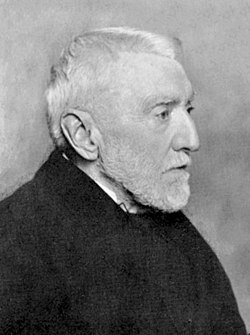
1882
Alphonse Bertillon introduced anthropometry and systematic police recordkeeping in the 1880s. His emphasis on standardized measurements, photography, and documentation influenced the organization of forensic laboratories and crime-scene evidence, including firearms and ammunition.
Image source: Alphonse Bertillon

1893
Austrian jurist Hans Gross published his influential Handbook for Examining Magistrates, Police Officials, and Military Police in 1893. The work promoted systematic crime-scene examination and treated firearms, bullets, powder, and shooting circumstances as scientific evidence.
Image source: Hans Gross

1900
At the beginning of the twentieth century, investigators increasingly compared bullets recovered from crime scenes with test bullets fired from suspected weapons. These early examinations relied on visible lands-and-grooves patterns and rudimentary microscopes before modern comparison instruments existed.
Image source: Forensic firearm examination

1918
Charles E. Waite began assembling systematic information on firearms, ammunition, and manufacturing marks after World War I. His research created the foundation for a national reference collection and more disciplined approaches to linking bullets and cartridge cases to particular weapons.
Image source: A. E. Waite

1920
Physician and Army officer Calvin H. Goddard became a leading advocate of scientific firearms identification in the early 1920s. He refined test-firing procedures, emphasized microscopic comparison, and helped establish firearms examination as a specialized forensic discipline.
1925
Calvin Goddard helped establish the Bureau of Forensic Ballistics in New York City in 1925. The organization conducted casework, maintained firearm and ammunition reference materials, and promoted the use of comparison microscopy in criminal investigations.
1925
Philip O. Gravelle, working with Calvin Goddard and Charles Waite, adapted the comparison microscope for side-by-side examination of bullets and cartridge cases. The instrument allowed examiners to assess microscopic striations and impressed marks simultaneously, transforming firearms identification.
Image source: Comparison microscope

Build a timeline like this one in minutes, for free. Start Yours →
This History of Forensic Ballistics timeline was generated with the help of AI, using information found on the internet.
We work hard to keep these timelines accurate, but mistakes do get through. If you spot one, email us at [email protected] and we'll fix it for future visitors.
Generate yours with AI or build it from scratch, for free.