-
Use Cases
-
Resources
-
Pricing
Baseball evolved from older bat-and-ball games in England into a distinctly American sport during the 19th century. The National League was founded in 1876, followed by the American League in 1901, forming Major League Baseball. Over more than 150 years, baseball has produced legendary figures like Babe Ruth, Jackie Robinson—who broke the color barrier in 1947—and modern stars, while expanding globally with the World Baseball Classic and inclusion in the Olympics. More Less
1744
% complete
Games like rounders and cricket, ancestors of baseball, were popular in England. A 1744 children's book, 'A Little Pretty Pocket-Book,' contains one of the earliest references to a game resembling baseball, illustrating how bat-and-ball games spread through British culture.
Image source: Baseball
Sep 23, 1845
% complete
Alexander Cartwright and other New Yorkers founded the Knickerbocker Base Ball Club, codifying early rules of the game including the diamond-shaped infield and the concept of foul territory. Their rules became the foundation for modern baseball.
Jun 19, 1846
% complete
The Knickerbockers lost to the New York Nine 23–1 at the Elysian Fields in Hoboken, New Jersey, in the first game played under formalized rules, marking the birth of organized baseball competition.
Image source: Origins of baseball
1857
% complete
Sixteen clubs from the New York area met to form the first governing body of baseball, standardizing rules and organizing competition as the sport's popularity exploded across the United States.
1869
% complete
The Cincinnati Red Stockings paid all their players salaries, becoming baseball's first openly all-professional team. They toured the country undefeated in 1869, proving that professional baseball could draw large crowds and profits.
Image source: Cincinnati Red Stockings
Feb 2, 1876
% complete
William Hulbert established the National League of Professional Base Ball Clubs with eight teams, creating the first enduring major league with strict standards for contracts, schedules, and conduct that still exists today.
1882
% complete
The American Association launched as a major league competing with the National League, offering cheaper tickets, alcohol sales, and Sunday games, which broadened baseball's appeal among working-class fans before folding in 1891.
Image source: American Association (1882–1891)
1890
% complete
Star players led by John Montgomery Ward formed the Players' League to protest reserve clause exploitation. Though it lasted only one season, it was an early landmark in labor relations within professional sports.
1901
% complete
Ban Johnson's Western League rebranded itself as the American League and challenged the National League by signing its stars, establishing the two-major-league structure that defines Major League Baseball today.
Image source: American League
Oct 13, 1903 - Oct 31, 1903
% complete
The Boston Americans defeated the Pittsburgh Pirates five games to three in the first World Series between the National and American Leagues, establishing baseball's championship tradition that continues annually.
Image source: 1903 World Series
May 5, 1904
% complete
Denton 'Cy' Young threw a perfect game against the Philadelphia Athletics, adding to his record-setting career. The Cy Young Award, given annually to the best pitchers, honors his legacy.
Image source: Cy Young
1907
% complete
Ty Cobb began his dominant run of batting championships, hitting .350 or better in most seasons during his career and setting records for hits and stolen bases that stood for decades.
Image source: Ty Cobb
Sep 28, 1919 - Aug 3, 1921
% complete
Eight Chicago White Sox players were accused of intentionally losing the 1919 World Series to the Cincinnati Reds in exchange for money from gamblers. The ensuing trial and lifetime bans shook public trust in the game.
Image source: Black Sox Scandal
Jan 5, 1920
% complete
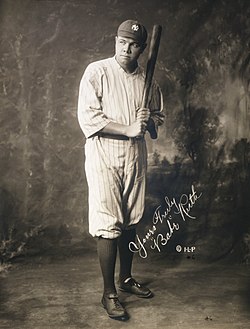
The Boston Red Sox sold Babe Ruth to the New York Yankees, launching the Yankees dynasty and transforming baseball with Ruth's unprecedented home run power, which rescued the sport's reputation after the Black Sox scandal.
Image source: Babe Ruth
Nov 12, 1920
% complete
Federal judge Kenesaw Mountain Landis was named the first Commissioner of Baseball with sweeping powers to restore integrity to the game following the Black Sox scandal, serving until his death in 1944.
Image source: Kenesaw Mountain Landis
Apr 18, 1923
% complete
'The House That Ruth Built' opened in the Bronx, becoming baseball's most iconic venue. In its inaugural game, Babe Ruth hit a three-run home run as the Yankees defeated the Boston Red Sox.
Image source: Yankee Stadium (1923)
1924
% complete
The Kansas City Monarchs of the Negro National League defeated the Hilldale Club of the Eastern Colored League in the first Negro World Series, showcasing the extraordinary talent flourishing in segregated Black baseball.
Image source: Negro World Series
Jul 6, 1933
% complete
Chicago Tribune sports editor Arch Ward conceived the All-Star Game at Comiskey Park, where the American League beat the National League 4–2. The midsummer classic became an annual tradition celebrating baseball's best players.
Image source: Major League Baseball All-Star Game
Jul 4, 1939
% complete
Forced to retire by amyotrophic lateral sclerosis, Lou Gehrig called himself 'the luckiest man on the face of the Earth' at Yankee Stadium. His courage made him an enduring symbol of grace, and his disease became known as Lou Gehrig's disease.
Image source: Lou Gehrig
Apr 15, 1947
% complete
Jackie Robinson debuted for the Brooklyn Dodgers, becoming the first African American player in modern Major League Baseball. His courage and excellence ended decades of segregation and transformed American society, earning him Rookie of the Year honors.
Image source: Jackie Robinson
Jul 9, 1948
% complete
At age 42, legendary Negro leagues pitcher Satchel Paige joined the Cleveland Indians, helping them win the pennant and proving that stars of segregated baseball belonged among the game's elite.
Image source: Satchel Paige
Sep 29, 1954
% complete
Willie Mays made his over-the-shoulder catch of Vic Wertz's drive in Game 1 of the World Series, one of the most famous defensive plays ever, as the Giants swept the heavily favored Cleveland Indians.
Image source: The Catch (baseball)
1958
% complete
The Brooklyn Dodgers and New York Giants relocated to Los Angeles and San Francisco respectively, opening the West Coast to major league baseball and beginning a new era of national expansion.
Image source: Dodgers–Giants rivalry
Oct 1, 1961
% complete
Roger Maris hit his 61st home run on the final day of the season, surpassing Babe Ruth's single-season record of 60 set in 1927, a mark that stood until 1998.
Image source: Roger Maris
Jun 8, 1965
% complete
Major League Baseball instituted its first amateur draft to distribute young talent more evenly among clubs, replacing the previous free-signing system and reshaping how teams built their rosters.
Image source: 2023 Major League Baseball draft
Oct 16, 1969
% complete
The New York Mets, who had never finished above ninth place, stunned the Baltimore Orioles to win the World Series, completing one of the greatest underdog stories in sports history.
Image source: 1969 New York Mets season
Jan 11, 1973
% complete
The American League introduced the designated hitter, allowing a player to bat in place of the pitcher. The rule change extended careers of sluggers like Edgar Martínez and David Ortiz and sparked debate lasting decades.
Image source: Designated hitter
Apr 8, 1974
% complete
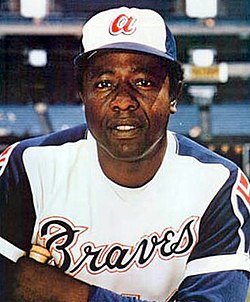
Hank Aaron hit his 715th home run at Atlanta-Fulton County Stadium, surpassing Babe Ruth's record while enduring racist threats. His achievement stands as one of the most significant moments in sports history.
Image source: Hank Aaron
Sep 11, 1985
% complete
Pete Rose collected his 4,192nd hit, breaking Ty Cobb's career record. His later lifetime ban for gambling on baseball kept him out of the Hall of Fame despite the milestone.
Image source: Pete Rose
Sep 6, 1995
% complete
Cal Ripken Jr. played in his 2,131st consecutive game, breaking Lou Gehrig's seemingly unbreakable record. His durability and dedication earned a standing ovation and symbolized a return of fan enthusiasm after the 1994 strike.
Image source: Cal Ripken Jr.
1998
% complete
Mark McGwire hit 70 home runs and Sammy Sosa hit 66, both surpassing Roger Maris's record of 61. The summer-long chase revitalized baseball after the 1994 strike, though it was later shadowed by performance-enhancing drug revelations.
Image source: 1998 Major League Baseball home run record chase
Oct 5, 2001
% complete
Barry Bonds hit his 73rd home run, breaking McGwire's single-season mark. His career, also marked by steroid allegations, remains one of the most debated legacies in baseball history.
Image source: Barry Bonds
Oct 27, 2004
% complete
After falling behind 0–3 to the Yankees in the ALCS, the Red Sox won four straight and then swept the Cardinals to win their first World Series since 1918, ending an 86-year championship drought attributed to the sale of Babe Ruth.
Image source: Curse of the Bambino
Nov 2, 2016
% complete
The Cubs defeated the Cleveland Indians in seven games, winning their first World Series since 1908. Game 7 featured a dramatic rain-delayed comeback and is considered one of the greatest games ever played.
Image source: 2016 Chicago Cubs season
Nov 18, 2021
% complete
Shohei Ohtani became the first player in MLB history selected as both an All-Star pitcher and hitter, winning the American League MVP unanimously. His rare two-way excellence drew comparisons to Babe Ruth and globalized baseball's appeal.
Image source: Shohei Ohtani
Or browse the full history timeline directory, with more than 2,000 topics.
This History of Baseball timeline was generated with the help of AI, using information found on the internet.
We work hard to keep these timelines accurate, but mistakes do get through. If you spot one, email us at [email protected] and we'll fix it for future visitors.
Generate yours with AI or build it from scratch, for free.
Export your timeline, add your own events, edit or remove AI-generated events, and much more
No credit card required.
Cancel anytime.
Cancel anytime.
You can create an unlimited number of timelines with up to 10 events on each one, customize how they look, export them to PDF, PNG, PowerPoint, CSV, and Excel, and share them with a link. Paid plans raise the event limit and add features like spreadsheet imports and collaborators.
Yes. You can cancel your subscription from your account page at any time, and you will not be charged again. Your subscription stays active for the rest of the period you already paid for.
Yes. We will email you a reminder before the annual renewal, and we will also email you a receipt.
Yes. You can email us within 15 days of any payment, and we will issue you a full refund.
Check out our pricing docs or send us an email anytime: [email protected].