
-
Use Cases
-
Resources
-
Pricing
The Chronicles of Narnia is a series of seven fantasy novels by C.S. Lewis set in the magical land of Narnia. Published between 1950 and 1956, the series has become a cornerstone of children's literature, inspiring radio serials, stage productions, television series, major motion pictures, and countless scholarly works on its Christian allegory and imaginative world-building. More Less
Nov 29, 1898
% complete
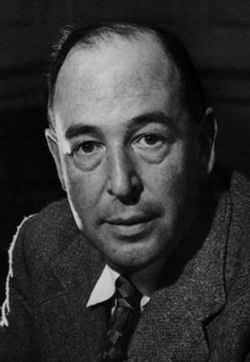
Clive Staples Lewis was born in Belfast, Ireland, to Albert James Lewis and Flora Augusta Hamilton Lewis. He would grow up to become one of the most influential Christian writers and scholars of the twentieth century, eventually creating the world of Narnia.
Image source: C. S. Lewis
Apr 1917
% complete
Lewis entered University College, Oxford, where he excelled academically before his studies were interrupted by service in World War I. He later returned to Oxford, becoming a fellow of Magdalen College in 1925.
Image source: University of Oxford
Sep 1931
% complete
After a long journey from atheism, Lewis converted to Christianity during a late-night conversation with J.R.R. Tolkien and Hugo Dyson at Magdalen College. His faith became a central theme in his writing and deeply shaped the allegorical elements of the Narnia books.
Feb 1942
% complete
Lewis published The Screwtape Letters, an epistolary novel in which a senior demon instructs a junior tempter. Its success established Lewis as a major popular author of religious fiction, paving the way for his later works for children.
Image source: The Screwtape Letters
Nov 22, 1963
% complete
C.S. Lewis died at his home, The Kilns, in Headington, Oxford, one week before his 65th birthday. His death received little media coverage due to the assassination of President John F. Kennedy on the same day, but his literary legacy continued to grow.
Mar 1948
% complete
Inspired by images that had come to him since his teens — a faun carrying parcels in a snowy wood, a queen on a sledge, and a majestic lion — Lewis began writing what would become the first published Narnia book, completing it by early 1949.
Image source: The Lion, the Witch and the Wardrobe
Oct 16, 1950
% complete
Geoffrey Bles published Lewis's first Narnia book in London, illustrated by Pauline Baynes. It introduced the Pevensie children, Aslan, and the White Witch, becoming an immediate success and one of the most beloved children's novels of all time.
Oct 15, 1951
% complete
The second published Narnia chronicle returned the Pevensie siblings to Narnia centuries after their first visit to help Prince Caspian reclaim the throne from his usurping uncle Miraz, featuring the memorable battle with the help of Old Narnians.
Image source: Prince Caspian
Sep 1952
% complete
This third Narnia book followed Edmund, Lucy, and their cousin Eustace Scrubb aboard the ship Dawn Treader on a voyage eastward toward Aslan's country, introducing Eustace's dramatic transformation after being turned into a dragon.
Sep 1953
% complete
Eustace and schoolmate Jill Pole descended into Narnia to rescue King Caspian's lost son Rilian from the Lady of the Green Kirtle, venturing through underground lands in one of the darkest adventures of the series.
Image source: The Silver Chair
Sep 6, 1954
% complete
Set during the reign of the Pevensies as kings and queens, this chronicle told the story of Shasta, Aravis, and two talking horses fleeing Calormen to reach Narnia, expanding the geography of the Narnian world.
Image source: The Horse and His Boy
May 2, 1955
% complete
Published near the end of the series' release order but telling the earliest story chronologically, it depicted the creation of Narnia by Aslan and explained how the wardrobe came to be connected to other worlds via Digory Kirke and Polly Plummer.
Image source: The Magician's Nephew
Sep 4, 1956
% complete
The seventh and final Narnia book portrayed the end of the Narnian world and its characters' entry into Aslan's true country, winning Lewis the Carnegie Medal for children's literature and providing an apocalyptic conclusion to the series.
Image source: The Last Battle
1967
% complete
The BBC produced a ten-episode black-and-white serial adapting The Lion, the Witch and the Wardrobe, marking the first major screen version of the Narnia stories, though few episodes survive today.
Image source: The Chronicles of Narnia (TV series)
1970 - 1989
% complete
Throughout the 1970s and 1980s, amateur and professional theatre companies around the world staged dramatizations of The Lion, the Witch and the Wardrobe and other Narnia tales, cementing the stories' popularity in live performance.
Apr 3, 1979
% complete
A made-for-television animated feature directed by Bill Melendez aired in the United States and won an Emmy Award, bringing Narnia to American audiences in animated form with voice work by Stephen Thorne as Aslan.
Image source: The Lion, the Witch and the Wardrobe (1979 film)
Nov 13, 1988 - Dec 23, 1990
% complete
The BBC produced three seasons adapting four Narnia books: The Lion, the Witch and the Wardrobe, Prince Caspian and The Voyage of the Dawn Treader, and The Silver Chair. The acclaimed serial used animatronics for Aslan and introduced generations of viewers to Narnia.
1990 - 1997
% complete
Focus on the Family produced a full-cast audio dramatization of all seven Narnia books, featuring performances by actors including David Suchet and Paul Scofield as the narrator. It became one of the best-selling audio dramas ever made.
Image source: The Chronicles of Narnia: The Lion, the Witch and the Wardrobe
1990 - 1999
% complete
HarperCollins acquired global rights to publish the Narnia books and renumbered them in internal chronological order rather than publication order, sparking debate among fans over the preferred reading sequence.
Image source: The Chronicles of Narnia
1994
% complete
Douglas Gresham, stepson of C.S. Lewis, emerged as co-producer and creative steward of Narnia-related projects, overseeing rights and participating in later film productions while promoting his stepfather's works worldwide.
Image source: Douglas Gresham
2021
% complete
More than seventy years after the first book appeared, the Narnia series had sold well over 100 million copies in dozens of languages, been translated across cultures, inspired countless authors including J.K. Rowling and Philip Pullman, and remained a cornerstone of children's literature.
Dec 2001
% complete
Walden Media partnered with Walt Disney Pictures to develop a new big-budget live-action film series based on the Narnia books, setting the stage for the most ambitious screen adaptations yet attempted.
Image source: The Chronicles of Narnia (film series)
2002
% complete
Shrek director Andrew Adamson was hired to direct the first Narnia film, bringing CGI expertise and a family-friendly sensibility to the project, which was filmed largely in New Zealand beginning in mid-2004.
Jun 28, 2004 - Dec 2004
% complete
Principal photography took place primarily in New Zealand, with Georgie Henley, Skandar Keynes, William Moseley, and Anna Popplewell cast as the Pevensie children, and Liam Neeson voicing Aslan.
Dec 9, 2005
% complete
The film premiered in London and grossed more than $745 million worldwide, earning an Academy Award for Best Makeup and revitalizing mainstream interest in the Narnia franchise.
May 16, 2008
% complete
The second Walden-Disney Narnia film, again directed by Andrew Adamson, earned over $400 million worldwide but underperformed relative to expectations, leading Disney to withdraw from the franchise afterward.
Image source: The Chronicles of Narnia: Prince Caspian
Jan 2009
% complete
After Disney declined to continue the series, Twentieth Century Fox stepped in to co-produce the third installment, with Michael Apted replacing Andrew Adamson as director.
Image source: The Chronicles of Narnia: The Voyage of the Dawn Treader
Dec 10, 2010
% complete
The third Narnia film followed Eustace, Lucy, Edmund, and Caspian aboard the Dawn Treader. Grossing about $415 million worldwide, it received mixed reviews and marked the end of the initial theatrical film run.
Oct 2018
% complete
Netflix announced a multi-year deal with the C.S. Lewis Company to develop both film and television adaptations of the Narnia books, signaling a fresh era for the franchise under new leadership including Matthew Aldrich as creative officer.
Jul 2023
% complete
Acclaimed filmmaker Greta Gerwig was confirmed to write and direct new Narnia films for Netflix, raising anticipation for a prestige-scale return of the beloved fantasy world to the screen.
Image source: Greta Gerwig
Or browse the full history timeline directory, with more than 2,000 topics.
This History of Chronicles of Narnia timeline was generated with the help of AI, using information found on the internet.
We work hard to keep these timelines accurate, but mistakes do get through. If you spot one, email us at [email protected] and we'll fix it for future visitors.
Generate yours with AI or build it from scratch, for free.
Export your timeline, add your own events, edit or remove AI-generated events, and much more
No credit card required.
Cancel anytime.
Cancel anytime.
You can create an unlimited number of timelines with up to 10 events on each one, customize how they look, export them to PDF, PNG, PowerPoint, CSV, and Excel, and share them with a link. Paid plans raise the event limit and add features like spreadsheet imports and collaborators.
Yes. You can cancel your subscription from your account page at any time, and you will not be charged again. Your subscription stays active for the rest of the period you already paid for.
Yes. We will email you a reminder before the annual renewal, and we will also email you a receipt.
Yes. You can email us within 15 days of any payment, and we will issue you a full refund.
Check out our pricing docs or send us an email anytime: [email protected].