-
Use Cases
-
Resources
-
Pricing
The History of Genomics traces the scientific milestones that transformed our understanding of genes and genomes. Beginning with early discoveries about heredity and DNA's double-helix structure, it covers the development of sequencing technologies, the landmark completion of the Human Genome Project, and the rise of next-generation sequencing and genome editing tools like CRISPR that continue to revolutionize medicine and biology today. More Less
1926
% complete
The word genome, derived from the German 'Genom' attributed to Hans Winkler, was already in use in English by 1926, laying the terminological groundwork for the future science of genomics.
Image source: Genome
Apr 25, 1953
% complete
James Watson and Francis Crick published the double-helical structure of DNA in 1953, revealing how genetic information is stored and copied, and inspiring molecular biologists to pursue nucleic acid sequencing as a major research target.
Image source: Molecular Structure of Nucleic Acids: A Structure for Deoxyribose Nucleic Acid
1955
% complete
In 1955, Fred Sanger published the complete amino acid sequence of insulin, demonstrating that biological molecules could be fully sequenced and paving the way for nucleic acid sequencing as a major goal of early molecular biology.
Image source: Insulin
1986
% complete
The term genomics was coined by Tom Roderick, a geneticist at the Jackson Laboratory in Bar Harbor, Maine, over beers with James E. Womack, Tom Shows and Stephen O'Brien at a meeting held in Maryland on the mapping of the human genome.
Image source: Genomics
1972
% complete
In 1972, Walter Fiers and his team at the Laboratory of Molecular Biology of the University of Ghent in Belgium were the first to determine the sequence of a gene: the gene for the Bacteriophage MS2 coat protein.
1976
% complete
Fiers' group expanded on their earlier MS2 work by determining the complete nucleotide sequence of bacteriophage MS2-RNA in 1976, whose genome encodes just four genes within 3569 base pairs, one of the first complete genomes ever sequenced.
Image source: Bacteriophage MS2
1977
% complete
In 1977, Sanger's group sequenced most of the 5,386 nucleotides of the single-stranded bacteriophage φX174, completing the first fully sequenced DNA-based genome and proving that entire genomes could be read base by base.
Image source: Phi X 174
1978
% complete
Following their bacteriophage MS2 success, Fiers' team determined the complete nucleotide sequence of Simian virus 40 in 1978, further extending the frontier of viral genome sequencing.
Image source: SV40
1980
% complete
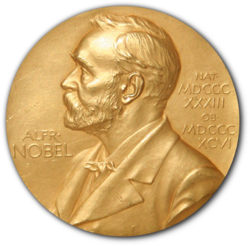
For their groundbreaking work on sequencing nucleic acids, Walter Gilbert and Fred Sanger shared half of the 1980 Nobel Prize in chemistry with Paul Berg, who was recognized for his work on recombinant DNA.
Image source: Nobel Prize in Chemistry
1981
% complete
The first complete genome sequence of a eukaryotic organelle, the human mitochondrion (16,568 bp), was reported in 1981, marking the first time the entire genetic material of a human-related genome had been determined.
Image source: Mitochondrial DNA
1986
% complete
Following the sequencing of the human mitochondrial genome, the first chloroplast genomes were reported in 1986, completing the initial sequencing of eukaryotic organelle genomes.
Image source: Chloroplast
1992
% complete
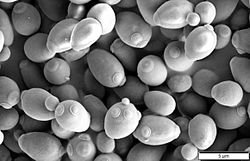
In 1992, the first eukaryotic chromosome, chromosome III of brewer's yeast Saccharomyces cerevisiae (315 kb), was sequenced, extending genomic analysis from viruses and organelles into the chromosomes of eukaryotic cells.
Image source: Saccharomyces cerevisiae
1995
% complete
The first free-living organism to be sequenced was Haemophilus influenzae (1.8 Mb), completed in 1995, demonstrating that entire bacterial genomes could be determined and opening the era of whole-genome microbial sequencing.
Image source: Haemophilus influenzae
1975
% complete
In 1975, Fred Sanger and Alan Coulson published a sequencing procedure using DNA polymerase with radiolabelled nucleotides, which Sanger called the Plus and Minus technique, an important early method for reading DNA sequences.
Image source: Sanger sequencing
1977
% complete
The refinement of the Plus and Minus method resulted in the chain-termination, or Sanger method, which formed the basis of the techniques of DNA sequencing, genome mapping, data storage, and bioinformatic analysis most widely used over the following quarter-century of research.
1980
% complete
Shotgun sequencing is a method designed for analyzing DNA sequences longer than 1000 base pairs, up to and including entire chromosomes. Longer DNA is broken into random small segments which are then individually sequenced and reassembled computationally into contiguous reads.
Image source: Shotgun sequencing
1980
% complete
Because gel electrophoresis sequencing can only be used for fairly short sequences of roughly 100 to 1000 base pairs, longer DNA molecules must be broken into smaller random segments before they can be sequenced and reconstructed, motivating methods like shotgun sequencing.
Image source: Gel electrophoresis
1996
% complete
The Illumina dye sequencing method, based on reversible dye-terminators, was developed in 1996 at the Geneva Biomedical Research Institute by Pascal Mayer and Laurent Farinelli, later becoming one of the most dominant high-throughput sequencing technologies in genomics.
Image source: Illumina dye sequencing
2010
% complete
Current DNA sequencing technology cannot read whole genomes as continuous sequences; instead it produces short pieces of between 20 and 1000 bases depending on the technology used, requiring computational assembly to reconstruct full genomes.
Feb 12, 2001
% complete
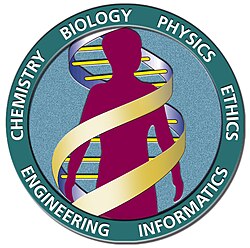
A rough draft of the human genome was completed by the Human Genome Project in early 2001, creating much fanfare and providing humanity's first comprehensive look at its own genetic blueprint.
Image source: Human Genome Project
Apr 14, 2003
% complete
This project, completed in 2003, sequenced the entire genome for one specific person, fulfilling the ambitious goal set more than a decade earlier and marking a landmark achievement in modern science.
2007
% complete
By 2007, the human genome sequence was declared 'finished', meaning it contained less than one error in 20,000 bases with all chromosomes assembled, achieving an unprecedented level of accuracy for a reference genome.
2010
% complete
In 2010, researchers at the J. Craig Venter Institute made landmark contributions to synthetic genomics, building on decades of sequencing progress to construct and study genomes assembled from chemically synthesized DNA, pushing genomics toward the design of novel living systems.
Image source: J. Craig Venter
Oct 2011
% complete
As of October 2011, complete genome sequences were publicly available for 2,719 viruses, 1,115 archaea and bacteria, and 36 eukaryotes, about half of which are fungi, illustrating the explosive growth of genome sequencing across all domains of life.
Oct 2012
% complete
In the years after the reference human genome was finished, the genomes of many other individuals were sequenced partly under the auspices of the 1000 Genomes Project, which announced the sequencing of 1,092 genomes in October 2012.
Image source: 1000 Genomes Project
2009
% complete
Early efforts to apply genomics to medicine include those by a Medical College of Wisconsin team led by Howard Jacob, who developed the first tools for medical interpretation of both exome and whole human genomes in 2009, helping bring genomic data into clinical care.
Image source: Medical College of Wisconsin
2010
% complete
Epigenetic modifications are reversible changes on a cell's DNA or histones that affect gene expression without altering the underlying DNA sequence, adding an important regulatory layer to the study of genomes and expanding genomics beyond pure sequence analysis.
Image source: Epigenetics
2012
% complete
The Genomes2People research program was established in 2012 at Brigham and Women's Hospital, the Broad Institute and Harvard Medical School to conduct empirical research on translating genomics into health outcomes for patients.
Image source: Brigham and Women's Hospital
Aug 2019
% complete
In August 2019, Brigham and Women's Hospital opened a Preventive Genomics Clinic, offering healthy patients access to genomic sequencing for disease risk assessment and prevention, a major step toward mainstream preventive genomic medicine.
Sep 2019
% complete
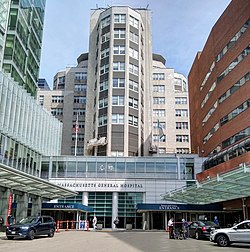
One month after Brigham and Women's Hospital, Massachusetts General Hospital followed suit in September 2019 by launching its own preventive genomics clinic, reflecting growing institutional adoption of genomics in routine healthcare.
Image source: Massachusetts General Hospital
Or browse the full history timeline directory, with more than 2,000 topics.
This History of Genomics timeline was generated with the help of AI, using information found on the internet.
We work hard to keep these timelines accurate, but mistakes do get through. If you spot one, email us at [email protected] and we'll fix it for future visitors.
Generate yours with AI or build it from scratch, for free.
Export your timeline, add your own events, edit or remove AI-generated events, and much more
No credit card required.
Cancel anytime.
Cancel anytime.
You can create an unlimited number of timelines with up to 10 events on each one, customize how they look, export them to PDF, PNG, PowerPoint, CSV, and Excel, and share them with a link. Paid plans raise the event limit and add features like spreadsheet imports and collaborators.
Yes. You can cancel your subscription from your account page at any time, and you will not be charged again. Your subscription stays active for the rest of the period you already paid for.
Yes. We will email you a reminder before the annual renewal, and we will also email you a receipt.
Yes. You can email us within 15 days of any payment, and we will issue you a full refund.
Check out our pricing docs or send us an email anytime: [email protected].