-
Use Cases
-
Resources
-
Pricing
Golf is a club-and-ball sport that originated in Scotland during the 15th century. The game evolved from informal stick-and-ball games played on coastal links land into a codified sport governed by formal rules. The Royal and Ancient Golf Club of St Andrews, founded in 1754, became the sport's governing authority, and golf spread globally through the British Empire before becoming an Olympic sport and a multibillion-dollar professional industry. More Less
1261
% complete
In the 1261 Middle Dutch manuscript of the Flemish poet Jacob van Maerlant's Boeck Merlijn, mention is made of a ball game played "mit ener coluen" (with a colf/kolf club), providing one of the earliest written references to a stick-and-ball game in the Low Countries.
Image source: History of golf
Feb 26, 1297
% complete
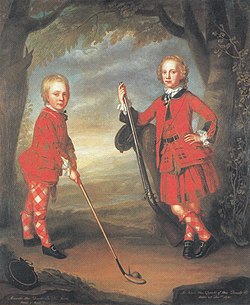
A golf-like game is apocryphally recorded as taking place on February 26, 1297, in Loenen aan de Vecht, where the Dutch played a game with a stick and leather ball.
1360
% complete
In 1360, the council of Brussels banned the game of colf, decreeing that anyone who played at colf would pay a fine of 20 shillings or have his overcoat confiscated, showing the game was popular enough to require prohibition.
1387
% complete
In 1387, Albrecht of Bavaria, regent of Holland, Zeeland and Hainaut, sealed a charter for the city of Brielle in which it was forbidden to play any game for money.
1389
% complete
In 1389, regent Albrecht offered the citizens of Haarlem a field called "De Baen" (the course) to be used exclusively for playing games – especially colf – because these were too dangerous within the city walls.
1540
% complete
A game similar to modern day golf features in a book of hours from 1540, which has, based on this association, acquired the name of the Golf Book.
1643
% complete
According to the "Le grand dictionnaire françois-flamen" printed in 1643, the Dutch term is stated to Flemish: "Kolf, zest Kolve; Kolfdrager, Sergeant; Kolf, Kolp, Goulfe." The Dutch term Kolven refers to a related sport where the lowest number of strokes needed to hit a ball into a hole determines the winner.
Image source: Kolf
1457
% complete
The first documented mention of golf in Scotland appears in a 1457 Act of the Scottish Parliament, an edict issued by King James II prohibiting the playing of gowf and futball as distractions from archery practice for military purposes. The word golf was first mentioned in writing here as gouf.
1471 - 1491
% complete
Bans on golf were again imposed in Acts of 1471 and 1491, with golf being described as "an unprofitable sport" that distracted men from military training.
1502
% complete
Golf had been banned again by parliament under King James IV of Scotland, but golf clubs and balls were bought for him in 1502 when he was visiting Perth, and on subsequent occasions when he was in St Andrews and Edinburgh, signaling royal acceptance of the game.
Mar 1561
% complete
In March 1561, Thomas Eduein of Stirling attacked his neighbours with a golf club, an early recorded incident involving the use of golf equipment as a weapon.
1567
% complete
Mary, Queen of Scots played golf, and she was accused of playing "pell-mell and golf" at Seton Palace shortly after her husband Lord Darnley was murdered in 1567, when she ought to have been in solemn mourning. There is also a story that she played at Musselburgh Links in 1567.
Image source: Mary, Queen of Scots
Apr 19, 1592
% complete
An entry in the Town Council Minutes of Edinburgh for 19 April 1592 includes golf in a list of pursuits to be avoided on the Sabbath, reflecting religious objections to Sunday play.
Feb 13, 1593
% complete
On 13 February 1593 the Duke of Lennox and Sir James Sandilands decided to go down to Leith to play golf, one of many documented instances of aristocratic participation in the game.
Mar 2, 1672
% complete
The account book of lawyer Sir John Foulis of Ravelston records that he played golf at Musselburgh Links on 2 March 1672, which has been accepted as proving that The Old Links, Musselburgh, is the oldest playing golf course in the world.
Image source: Musselburgh Links
1681
% complete
James VII of Scotland, while still Duke of Albany, was said to have played the first international golf contest in 1681 when he participated in a game against two English courtiers as part of a bet over rights to claim the game for Scotland or England.
1744
% complete
The 1744 competition for the Gentlemen Golfers' Competition for the Silver Club, a trophy provided as sponsorship by Edinburgh Town Council, was won by surgeon John Rattray, who was required to attach a silver ball engraved with his name to the trophy, beginning a long tradition.
1745 - 1747
% complete
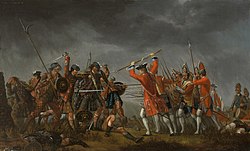
John Rattray joined the Jacobite Rising of 1745 and as a result was imprisoned in Inverness, but was saved from being hanged by the pleading of his fellow golfer Duncan Forbes of Culloden, Lord President of the Court of Session. He was released in 1747 and went on to win the Silver Club three times in total.
Image source: Jacobite rising of 1745
1603
% complete
In 1603, James VI of Scotland succeeded to the throne of England, helping carry Scottish culture, including golf, southward and aiding the eventual spread of the game beyond Scotland.
Image source: James VI and I
Dec 1650
% complete
In December 1650, near Fort Orange (modern Albany, New York), settlers played the first recorded round of kolf (golf) in America. A group of four men played in pairs for points, and afterwards a party came to Steven Jansz's tavern to drink brandy after their round.
Jul 22, 1657
% complete
On July 22, 1657, several men were cited and warned not to play Kolf on Sundays, showing that the Dutch game had taken hold in the New Netherland settlement.
Dec 10, 1659
% complete
On December 10, 1659, an ordinance was issued to prevent playing Kolf in the streets of Albany due to too many windows being broken, one of the earliest golf-related laws in America.
1829
% complete
Scottish soldiers, expatriates and immigrants took the game to British colonies during the 18th and early 19th centuries. The Royal Calcutta Golf Club (1829) is one of the oldest golf clubs outside the British Isles, along with the Mauritius Gymkhana Club (1844) and the club at Pau (1856).
Image source: Royal Calcutta Golf Club
1852
% complete
The railways came to St Andrews in 1852, making the home of golf far more accessible to visitors and helping fuel the game's growing popularity in the late 19th century.
Image source: St Andrews
1864
% complete
In 1864, the golf course at the resort of Westward Ho! became the first new club in England since Blackheath, and the following year London Scottish Golf Club was founded on Wimbledon Common.
Image source: Royal North Devon Golf Club
1890
% complete
The game in England had progressed sufficiently by 1890 to produce its first English-born Open Champion, John Ball, marking a milestone in the sport's expansion beyond Scotland.
Image source: John Ball (golfer)
1903
% complete
After the Meiji restoration of 1868 Japan modernised its economy on western lines. In 1903 a group of British expatriates established the first golf club in Japan, at Kobe.
1913
% complete
In 1913 the Tokyo Golf Club at Komazawa was established for and by native Japanese who had encountered golf in the United States; it was moved to Asaka in Saitama prefecture in 1932.
Image source: History of golf
1914
% complete
By 1880 England had 12 courses, rising to 50 in 1887 and over 1000 by 1914, demonstrating the explosive growth of golf in England in the decades after it spread from Scotland.
1921
% complete
In 1921, Japan established the first golf course in Korea at Hyochang Park, which then contained the tombs of Korean royalty.
1922
% complete
In 1922, Walter Hagen became the first native born American to win the British Open Championship, a landmark for American golfers on the world stage.
Image source: Walter Hagen
1924
% complete
In 1924 the Japan Golf Association was established by the seven clubs then in existence, organizing the sport in Japan.
Image source: Japan Golf Association
1932
% complete
During the Roaring Twenties the game expanded greatly in popularity in America, and by 1932 there were over 1,100 golf clubs affiliated to the USGA, up from 267 clubs by 1910.
Image source: United States Golf Association
1957
% complete
By 1956 there were 72 courses in Japan, and in 1957 Torakichi Nakamura and Koichi Ono won the Canada Cup (now World Cup) in Japan, an event often cited as igniting the post-war golf boom. Courses only began returning to Japanese control in 1952 after wartime requisition.
1960 - 1964
% complete
Between 1960 and 1964 the number of golf courses in Japan increased from 195 to 424, reflecting the rapid growth of the sport in post-war Japan.
2009
% complete
The 1987 Resort Law that reduced protection on agricultural land and forest preserves created a further boom in course construction in Japan, and by 2009 there were over 2,400 courses.
1744
% complete
The oldest surviving rules of golf were written in 1744 for the Company of Gentlemen Golfers, later renamed The Honourable Company of Edinburgh Golfers, which played at Leith Links. Their "Articles and Laws in Playing at Golf," preserved in the National Library of Scotland, became known as the Leith Rules and support the club's claim to be the oldest golf club, though a later almanac first records a rival claim that The Royal Burgess Golfing Society had been set up in 1735.
Image source: Muirfield
1764
% complete
As early as the 15th century, golfers at St Andrews established a trench through the undulating terrain, playing to holes whose locations were dictated by topography. In 1764, several holes were deemed too short and were therefore combined, shaping the course toward the standard round.
Image source: St Andrews Links
1850
% complete
As the golf ball developed and became more durable with the introduction of the "gutty" around 1850, the club head was also allowed to develop, and a variety of iron headed clubs entered the game.
Image source: Golf ball
2003
% complete
In 2003 the USGA and R&A began limiting the spring-like effect, also known as the coefficient of restitution (COR), to 0.83 and the maximum club head size to 460 cm³ in an attempt to maintain the challenge of the game.
Or browse the full history timeline directory, with more than 2,000 topics.
This History of Golf timeline was generated with the help of AI, using information found on the internet.
We work hard to keep these timelines accurate, but mistakes do get through. If you spot one, email us at [email protected] and we'll fix it for future visitors.
Generate yours with AI or build it from scratch, for free.
Export your timeline, add your own events, edit or remove AI-generated events, and much more
No credit card required.
Cancel anytime.
Cancel anytime.
You can create an unlimited number of timelines with up to 10 events on each one, customize how they look, export them to PDF, PNG, PowerPoint, CSV, and Excel, and share them with a link. Paid plans raise the event limit and add features like spreadsheet imports and collaborators.
Yes. You can cancel your subscription from your account page at any time, and you will not be charged again. Your subscription stays active for the rest of the period you already paid for.
Yes. We will email you a reminder before the annual renewal, and we will also email you a receipt.
Yes. You can email us within 15 days of any payment, and we will issue you a full refund.
Check out our pricing docs or send us an email anytime: [email protected].