-
Resources
-
Pricing
The history of hammers traces the evolution of striking tools from prehistoric stones and wooden handles to specialized modern hammers used in construction, crafts, industry, and science. More Less
Build a timeline like this one in minutes, for free. Start Yours →
7000 BCE
Neolithic communities used stone hammering and pecking tools to shape axes, adzes, and other ground-stone implements. Polishing later improved their cutting edges, while hammering remained essential for roughing out the forms.
Image source: Neolithic
5000 BCE
Early metalworkers in the Near East and southeastern Europe began cold-hammering native copper into awls, beads, blades, and small tools. Hammering hardened and shaped copper but also made it brittle, encouraging repeated annealing by heating.
Image source: Chalcolithic
3300 BCE
The adoption of bronze enabled more durable, cast, and purpose-built hammerheads. Bronze hammers and anvils supported metalworking industries that produced weapons, ornaments, vessels, and tools across the ancient Near East and Europe.
Image source: Bronze Age
3000 BCE
Ancient Egyptian workshops used stone pounders, wooden mallets, and metal hammers for quarrying, stone dressing, copper working, and goldsmithing. Reliefs and surviving tools show that hammering was central to both monumental construction and fine craftsmanship.
Image source: Ancient Egyptian technology
1200 BCE
Iron metallurgy introduced hammerheads that could be tougher and harder than most earlier copper-alloy tools. Iron hammers became increasingly important for forging, carpentry, construction, agriculture, and the manufacture of weapons.
Image source: Iron Age
800 BCE
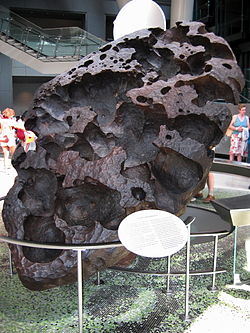
Greek metalworking traditions developed specialized forging hammers used with anvils to shape iron and bronze. The hammer became both a practical workshop instrument and an attribute of the divine smith Hephaestus.
200 BCE - 400
Roman miners, builders, carpenters, and armorers used a broad range of standardized iron and steel hammers. Archaeological finds include club-like hammers, clawed tools, sledgehammers, and small precision hammers for specialized trades.
Image source: Ancient Roman technology
31
The Chinese engineer Du Shi is credited with introducing water-powered bellows for iron smelting during the Eastern Han dynasty. This mechanization increased furnace output and helped support larger-scale ironworking, although the later development of powered forging hammers was gradual.
Image source: Du Shi
700
Japanese smiths developed distinctive small forging hammers, including the kozuchi, for repeatedly folding, welding, and shaping steel. Hammering became an essential part of sword manufacture and remained closely linked to the craft's ritual and technical traditions.
1200
Water-powered trip hammers appeared in European metalworking during the Middle Ages. Camshafts lifted heavy hammerheads and released them onto heated metal, reducing manual labor and enabling the forging of larger bars, tools, and weapons.
1200 - 1500
Medieval European workshops differentiated hammers by weight and face shape, including hand hammers, cross-peen hammers, sledgehammers, and specialized armorers' tools. Improved handles, anvils, and forge practice supported expanding construction, farming, and military production.
1300 - 1600
Stonecutters and masons developed distinct pitching, pecking, and dressing hammers for splitting and finishing building stone. Their forms reflected the growing specialization of Gothic and late-medieval construction trades.
Image source: Masonry
1500 - 1800
European miners used compact hammers with picks, wedges, and chisels to break ore and coal and to drive excavation supports. The hammer and pick became enduring symbols of mining labor and mineral extraction.
1500 - 1800
Carpenters increasingly used hammers with a curved split claw for removing nails and prying boards. Although early examples varied widely, the combination of striking face and nail-pulling claw became a defining general-purpose tool.
1600 - 1800
Metalworking hammers with a rounded peen became common for riveting, shaping, and peening metal edges. The ball peen helped distribute material and strengthen riveted joints, making it valuable to blacksmiths, armorers, and machinists.
1760 - 1840
Industrialization increased demand for large iron and steel components, encouraging the replacement of hand forging with powered hammers. Waterwheels, steam engines, improved furnaces, and larger machine shops transformed hammer production and use.
Image source: Industrial Revolution
1769
James Watt patented major improvements to the steam engine in 1769. More efficient rotary steam power later supplied factories and forges, making mechanized hammers practical where water power was unavailable or insufficient.
Image source: Watt steam engine
1839
James Nasmyth patented the steam hammer in 1839 after developing it for forging large marine-engine components. Its independently controlled ram could deliver either gentle blows or immense impacts, greatly improving the manufacture of iron and steel.
Image source: Steam hammer
1842
Nasmyth demonstrated his steam hammer at the Bridgewater Foundry in 1842. The machine's controllable blows illustrated how powered forging could combine the delicacy of a hand hammer with vastly greater force.
1856
Henry Bessemer's 1856 process made large quantities of inexpensive steel possible. Stronger and more consistent steel enabled durable hammerheads, machine frames, anvils, rails, and the increasingly mechanized industries that used them.
Image source: Bessemer process
1860 - 1900
Industrial manufacturers adopted drop hammers to drive heated metal into dies. Repeated, controlled impacts produced interchangeable tools, hardware, vehicle parts, and military components more quickly and consistently than hand forging.
1870 - 1900
Pneumatic technology led to powered riveting and forging hammers that used compressed air rather than steam. These machines were smaller and more controllable than many steam hammers, making them useful in factories, shipyards, and construction.
1871
G. F. L. D. C. Sommeiller's pneumatic drill, developed for the Mont Cenis Tunnel and patented in 1871, demonstrated the potential of compressed air for percussive excavation. Later rock drills and jackhammers extended the hammer principle into large-scale construction.
1923
Estwing began producing one-piece forged-steel hammers in 1923. The integrated head and handle reduced the risk of a loose head and became a recognizable design in carpentry, construction, and outdoor work.
1930 - 1970
Electric motors, impact mechanisms, and carbide masonry bits produced portable hammer drills capable of drilling concrete and brick. Rotary hammers later combined rotation with a stronger reciprocating impact for construction and demolition.
1970 - 2000
Late twentieth-century toolmakers introduced titanium heads, fiberglass handles, elastomer grips, and other engineered materials. These designs sought to reduce vibration and user fatigue while retaining enough impact energy for construction and repair work.
1980 - 2000
Portable electric demolition hammers became widespread in renovation and construction. Their reciprocating impact systems could drive chisels and points through concrete, masonry, tile, and asphalt without requiring a separate compressor.
2000 - 2025
Twenty-first-century hammer design has emphasized vibration isolation, balanced geometry, replaceable faces, and battery-powered impact mechanisms. Digital manufacturing and materials engineering have expanded specialized options for carpentry, mechanics, surgery, geology, and demolition.
1900
The gavel became a familiar ceremonial symbol of authority in modern courts, legislatures, auctions, and organizations. Although its exact historical path is debated, the small wooden hammer functions as a signal to begin, end, or restore order.
1900
The men's hammer throw appeared in the Olympic program at the 1900 Paris Games. Athletes throw a weighted metal ball attached to a wire and grip, preserving the name and rotational action of older blacksmithing hammers while turning them into a standardized sport.
1901
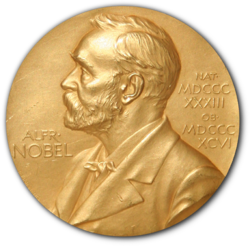
The first Nobel Prizes were awarded in 1901, reinforcing the hammer's public association with skilled work, discovery, and achievement through the Nobel medal's imagery and the broader cultural symbolism of tools and labor.
Image source: Nobel Prize
1918 - 1991
The hammer and sickle became a major symbol of the Soviet state after the Russian Revolution, representing industrial workers and peasants. Its use on flags, emblems, and monuments made the hammer one of the most politically recognizable tools in modern history.
Image source: Hammer and sickle
1962
Marvel Comics introduced its modern superhero version of Mjölnir in 1962 through Thor. The fictional hammer brought an ancient Norse weapon into global popular culture as a symbol of power, worthiness, protection, and heroic identity.
Build a timeline like this one in minutes, for free. Start Yours →
Or browse the full history timeline directory, with more than 2,500 topics.
This History of Hammers timeline was generated with the help of AI, using information found on the internet.
We work hard to keep these timelines accurate, but mistakes do get through. If you spot one, email us at [email protected] and we'll fix it for future visitors.
Generate yours with AI or build it from scratch, for free.
Export your timeline, add your own events, edit or remove AI-generated events, and much more
No credit card required.
15-day money-back guarantee.
You can create an unlimited number of timelines with up to 10 events on each one, customize how they look, export them to PDF, PNG, PowerPoint, CSV, and Excel, and share them with a link. Timelines made with Timeline Maker AI keep every event the generator created, and you can add up to 5 events of your own. Paid plans remove the event limit, add spreadsheet imports and hide Preceden's branding, and the higher-priced plan also adds collaborators, a custom logo and a custom domain.
Yes. You can cancel your subscription from your account page at any time, and you will not be charged again. Your subscription stays active for the rest of the period you already paid for.
Yes. We email you a reminder 15 days before your annual renewal, and we email you a receipt after every payment.
Yes. You can email us within 15 days of any payment, and we will issue you a full refund.
Check out our pricing docs or send us an email anytime: [email protected].