-
Use Cases
-
Resources
-
Pricing
This timeline traces the history of Jerusalem, one of the oldest cities in the world and a sacred site for Judaism, Christianity, and Islam. It covers key periods including ancient Canaanite settlement, the reigns of Kings David and Solomon, Babylonian and Roman conquests, Islamic rule, the Crusades, Ottoman governance, the British Mandate, and the city's central role in the modern Israeli-Palestinian conflict. More Less
3000 BC
% complete
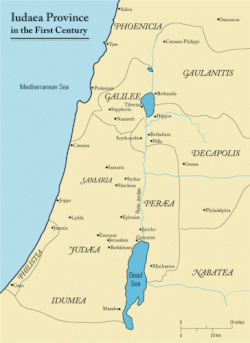
Jerusalem was first established as a settlement by Canaanite peoples on a hill above the Kidron Valley. Its strategic location between major trade routes helped it grow into an important city-state in the ancient Near East.
Image source: History of Jerusalem
1500 BC
% complete
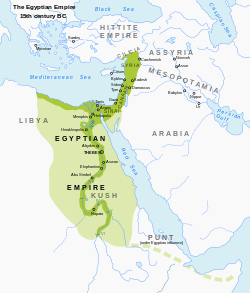
During the New Kingdom period, Jerusalem came under Egyptian influence and control. The city is mentioned in the Amarna letters, diplomatic correspondence written to the pharaohs, attesting to its early importance.
Image source: New Kingdom of Egypt
1000 BC
% complete
According to the Hebrew Bible, King David captured the city from the Jebusites and established it as the capital of the united Kingdom of Israel, giving the city its enduring centrality in Jewish tradition.
Image source: Siege of Jebus
950 BC
% complete
King Solomon constructed the First Temple on the Temple Mount, making Jerusalem the central site of worship for the Israelites and transforming it into the religious heart of the kingdom.
Image source: Solomon's Temple
587 BC
% complete
Nebuchadnezzar II of Babylon besieged and destroyed Jerusalem, burning the Temple and exiling much of the Jewish population to Babylon, an event known as the Babylonian captivity.
Image source: Siege of Jerusalem (587 BC)
538 BC
% complete
After conquering Babylon, Persian king Cyrus the Great permitted the Jews to return to Jerusalem and rebuild their temple, which was completed around 516 BC under Persian imperial rule.
Image source: Return to Zion
332 BC
% complete
Alexander the Great's conquest of the Levant brought Jerusalem under Hellenistic rule, beginning centuries of Greek cultural influence over the city and its inhabitants.
Image source: Alexander the Great
167 BC - 160 BC
% complete
Jewish rebels led by Judah Maccabee rose against the Seleucid Empire after Antiochus IV desecrated the Temple. The successful revolt restored Jewish independence and rededicated the Temple, commemorated at Hanukkah.
Image source: Maccabean Revolt
63 BC
% complete
The Roman general Pompey besieged Jerusalem and absorbed Judea into the Roman Republic, ending Hasmonean independence and beginning Roman dominance over the city.
Image source: Siege of Jerusalem (63 BC)
20 BC
% complete
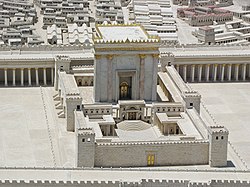
Herod, Rome's client king of Judea, undertook a massive expansion of the Second Temple, creating one of the most magnificent religious structures of antiquity; remnants include the Western Wall.
Image source: Second Temple
30 AD
% complete
According to Christian tradition, Jesus was crucified in Jerusalem around 30 AD, making the city central to Christianity and the eventual destination for pilgrims from across the world.
Image source: Crucifixion of Jesus
70 AD
% complete
Roman forces under Titus besieged Jerusalem during the Great Revolt, destroying the Second Temple in 70 AD, a catastrophic event that reshaped Judaism and began the long era of diaspora.
Image source: First Jewish–Roman War
132 AD - 135 AD
% complete
The final major Jewish uprising against Rome was brutally suppressed. Emperor Hadrian rebuilt Jerusalem as Aelia Capitolina, banned Jews from the city, and renamed the province Syria Palaestina.
Image source: Bar Kokhba revolt
313 AD
% complete
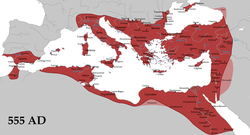
Under Constantine the Great, Jerusalem became a major Christian center within the Byzantine Empire. The Church of the Holy Sepulchre was built on the traditional site of Christ's crucifixion and resurrection.
Image source: Byzantine Empire
614 AD
% complete
Persian forces allied with local Jews seized Jerusalem from the Byzantines in 614, looting the True Cross and devastating the city before Byzantine control was briefly restored.
Image source: Sasanian conquest of Jerusalem
637 AD
% complete
Caliph Umar's forces captured Jerusalem from the Byzantine Empire. The Muslim conquest introduced Islamic governance to the city, which became the third holiest site in Islam.
Image source: First Muslim conquest of Jerusalem
691 AD
% complete
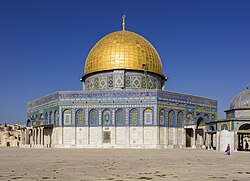
Umayyad caliph Abd al-Malik completed the Dome of the Rock, an iconic Islamic shrine with its golden dome, built atop the Temple Mount where Muhammad is believed to have ascended to heaven.
Image source: Dome of the Rock
1099 AD
% complete
During the First Crusade, European knights stormed Jerusalem, establishing the Kingdom of Jerusalem and killing many of the city's Muslim and Jewish residents in a notorious massacre.
Image source: Siege of Jerusalem (1099)
1187 AD
% complete
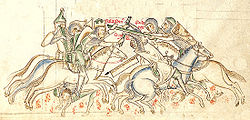
After his decisive victory at the Battle of Hattin, Saladin besieged and retook Jerusalem from the Crusaders, allowing peaceful surrender terms and restoring Muslim control of the holy city.
Image source: Battle of Hattin
1260 AD
% complete
Following the defeat of the Mongols at Ain Jalut, the Mamluks of Egypt asserted control over Jerusalem, ruling the city for over two and a half centuries and building numerous religious structures.
Image source: Mamluk Sultanate
1517 AD
% complete
Sultan Selim I's forces took Jerusalem from the Mamluks, beginning four centuries of Ottoman rule during which the city's famous current walls were constructed by Suleiman the Magnificent.
Image source: Ottoman Empire
1538 AD - 1541 AD
% complete
Suleiman the Magnificent commissioned the reconstruction of Jerusalem's defensive walls, including the ornate Damascus Gate; these Ottoman-era walls still encircle the Old City today.
Image source: Walls of Jerusalem
Dec 9, 1917
% complete
British forces under General Edmund Allenby entered Jerusalem, ending 400 years of Ottoman rule. The capture came weeks after the Balfour Declaration expressed British support for a Jewish national home in Palestine.
Image source: Battle of Jerusalem
1920 AD
% complete
The League of Nations formally entrusted Britain with administering Palestine, including Jerusalem, launching a period of growing immigration, urban development, and rising Arab-Jewish tensions.
Image source: Mandatory Palestine
Nov 29, 1947
% complete
UN Resolution 181 proposed dividing Palestine into Jewish and Arab states, with Jerusalem designated as an international corpus separatum under UN administration. The plan was accepted by Jewish leaders and rejected by Arab leaders.
Image source: United Nations Partition Plan for Palestine
May 14, 1948
% complete
Upon the end of the British Mandate, Israel declared statehood, triggering war with neighboring Arab states. Fighting engulfed Jerusalem, leaving the city divided between Israeli and Jordanian control.
Image source: Israeli Declaration of Independence
Apr 3, 1949
% complete
The armistice line left West Jerusalem under Israeli control and East Jerusalem, including the Old City and Western Wall, under Jordanian administration, separated by barbed wire until 1967.
Image source: 1949 Armistice Agreements
Jun 7, 1967
% complete
During the Six-Day War, Israeli forces captured East Jerusalem from Jordan, gaining access to the Old City and the Western Wall. Israel subsequently extended its law to the eastern part of the city, a move not widely recognized internationally.
Image source: Six-Day War
Jul 30, 1980
% complete
Israel enacted the Jerusalem Law, declaring the complete and unified city as its eternal capital. The United Nations Security Council responded with Resolution 478, deeming the law null and void.
Jul 11, 2000 - Jul 25, 2000
% complete
US President Bill Clinton hosted Israeli Prime Minister Ehud Barak and Palestinian leader Yasser Arafat at Camp David. Negotiations collapsed largely over competing sovereignty claims to Jerusalem and the Temple Mount.
Image source: 2000 Camp David Summit
Dec 6, 2017
% complete
President Donald Trump announced US recognition of Jerusalem as Israel's capital and ordered plans to relocate the American embassy, prompting international debate and protests across the Middle East.
May 14, 2018
% complete
The United States moved its embassy from Tel Aviv to Jerusalem on the eve of the 70th anniversary of Israel's independence, coinciding with deadly clashes along the Gaza border.
Image source: Embassy of the United States, Jerusalem
Or browse the full history timeline directory, with more than 2,000 topics.
This History of Jerusalem timeline was generated with the help of AI, using information found on the internet.
We work hard to keep these timelines accurate, but mistakes do get through. If you spot one, email us at [email protected] and we'll fix it for future visitors.
Generate yours with AI or build it from scratch, for free.
Export your timeline, add your own events, edit or remove AI-generated events, and much more
No credit card required.
Cancel anytime.
Cancel anytime.
You can create an unlimited number of timelines with up to 10 events on each one, customize how they look, export them to PDF, PNG, PowerPoint, CSV, and Excel, and share them with a link. Paid plans raise the event limit and add features like spreadsheet imports and collaborators.
Yes. You can cancel your subscription from your account page at any time, and you will not be charged again. Your subscription stays active for the rest of the period you already paid for.
Yes. We will email you a reminder before the annual renewal, and we will also email you a receipt.
Yes. You can email us within 15 days of any payment, and we will issue you a full refund.
Check out our pricing docs or send us an email anytime: [email protected].