-
Use Cases
-
Resources
-
Pricing
Nov 27, 1095
% complete
Pope Urban II called for an armed pilgrimage to recover Jerusalem and aid the Byzantine Empire. His appeal launched the First Crusade and created the political and religious movement that would establish the Kingdom of Jerusalem.
Image source: Council of Clermont
May 14, 1097 - Jun 19, 1097
% complete
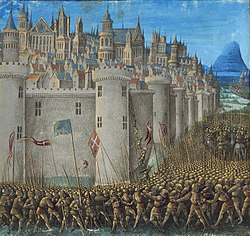
Crusader and Byzantine forces besieged Nicaea, the Seljuk capital in Anatolia. The city surrendered to Emperor Alexios I Komnenos, allowing the crusaders to continue toward Syria and Palestine.
Image source: Siege of Nicaea
1099
% complete
Godfrey of Bouillon accepted authority in Jerusalem but declined the title of king, using the designation Defender of the Holy Sepulchre. His administration established the first Latin government in the newly conquered city.
Image source: Godfrey of Bouillon
Jul 15, 1099
% complete
Crusader forces captured Jerusalem after a short siege, ending nearly four centuries of Muslim rule over the city. The conquest created the territorial and religious core of the Latin Kingdom of Jerusalem.
Image source: Siege of Jerusalem (1099)
1100
% complete
Baldwin of Boulogne succeeded Godfrey and adopted the title King of Jerusalem. He transformed the embryonic state into a hereditary monarchy and expanded its control over the Palestinian coast.
1101
% complete
Baldwin I captured Arsuf and Caesarea in successive campaigns. These ports strengthened the kingdom's communications and helped connect Jerusalem with the Mediterranean and later Italian maritime support.
1104
% complete
Acre fell to Baldwin I with assistance from Genoese naval forces. Its harbor became one of the kingdom's most important commercial and military centers.
1110
% complete
Baldwin I and allied Venetian forces captured Sidon. Together with Acre, Beirut, and Tyre, the port gave the kingdom a chain of fortified maritime bases.
1110
% complete
The crusaders captured Beirut, extending the kingdom's coastal corridor northward. The city later served as an important port and administrative center.
Feb 23, 1124 - Jul 7, 1124
% complete
Jerusalem and Venetian forces besieged Tyre, the last major Fatimid-held port on the Levantine coast. Its capture completed the kingdom's effective control of the central Palestinian and Lebanese coastline.
Jul 1, 1097
% complete
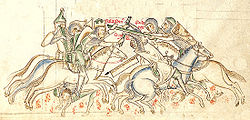
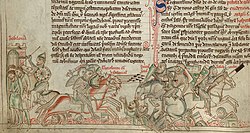
The crusaders defeated a large Seljuk army near Dorylaeum. The victory protected the crusading army's advance across Anatolia, although the march remained costly and difficult.
Image source: Battle of Dorylaeum (1097)
Oct 21, 1097 - Jun 3, 1098
% complete
The First Crusade captured Antioch after a prolonged siege, then endured a counter-siege by Kerbogha of Mosul. The crusaders' survival and victory opened the route south toward Jerusalem.
Image source: Siege of Antioch
Aug 12, 1099
% complete
Godfrey of Bouillon and the crusaders defeated a large Egyptian Fatimid army near Ascalon. The victory secured Jerusalem's immediate survival, though Ascalon itself remained under Fatimid control.
Image source: Battle of Ascalon
Nov 25, 1177
% complete
King Baldwin IV's much smaller army defeated Saladin near Montgisard. The unexpected victory temporarily checked Ayyubid pressure and became one of the kingdom's most celebrated military successes.
Image source: Battle of Montgisard
Jun 10, 1179
% complete
Saladin defeated a Jerusalemite army near the Litani River. The loss weakened the kingdom's northern defenses and demonstrated the growing danger posed by Saladin's unified Muslim territories.
Aug 30, 1179
% complete
Saladin captured and destroyed the unfinished fortress of Chastellet at Jacob's Ford. The victory secured an important crossing of the Jordan and further exposed the kingdom's vulnerable northern frontier.
Jul 4, 1187
% complete
Saladin decisively defeated the main army of the Kingdom of Jerusalem near the Horns of Hattin. King Guy was captured, the True Cross was lost, and the defeat left most of the kingdom open to conquest.
Image source: Battle of Hattin
Aug 28, 1189 - Jul 12, 1191
% complete
King Guy and crusader forces besieged Acre, which was held by Saladin. The prolonged operation attracted armies from across Europe and became the central military campaign of the Third Crusade.
Image source: Siege of Acre (1189–1191)
Jun 8, 1191
% complete
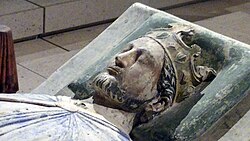
Richard the Lionheart arrived at Acre with the English contingent of the Third Crusade. His leadership helped force the city's surrender and restored a substantial crusader foothold on the coast.
Image source: Richard I of England
Jul 12, 1191
% complete
The garrison of Acre surrendered to the crusaders after nearly two years of siege. Acre replaced Tyre as the kingdom's principal political and military center.
Sep 7, 1191
% complete
Richard I defeated Saladin near Arsuf while advancing south from Acre. The victory restored crusader confidence and secured much of the coastal road toward Jaffa.
Image source: Battle of Arsuf
May 29, 1218 - Nov 5, 1219
% complete
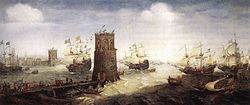
Crusaders captured the Egyptian port of Damietta after a long siege. They hoped to exchange it for Jerusalem, but strategic disagreements and failed negotiations eventually forced its return.
Image source: Fifth Crusade
Oct 17, 1244
% complete
Khwarazmian and Ayyubid forces destroyed a combined Jerusalemite and allied army at La Forbie. The defeat ended the kingdom's restored control of Jerusalem and severely reduced its military capacity.
Image source: Battle of La Forbie
Jun 12, 1248
% complete
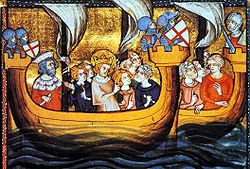
King Louis IX of France launched a crusade aimed at Egypt, believing that control of the Nile valley could force the restoration of Jerusalem. The campaign ultimately failed after the capture and release of Louis.
Image source: Seventh Crusade
Feb 8, 1250 - Feb 11, 1250
% complete
The Seventh Crusade suffered a major setback at Mansurah in Egypt. Although crusader forces briefly held parts of the city, counterattacks and disease helped bring the campaign to disaster.
Sep 3, 1260
% complete
The Mamluk sultanate defeated the Mongol army at Ain Jalut in Palestine. The victory preserved Mamluk control of the region and left the remaining crusader states facing the strongest power in the Levant.
Image source: Battle of Ain Jalut
Apr 14, 1118
% complete
Baldwin of Bourcq succeeded Baldwin I. His reign consolidated the monarchy, supported the military orders, and defended the kingdom against powerful Muslim rulers in Syria.
Image source: Baldwin II of Jerusalem
1120
% complete
A small fraternity of knights was organized to protect pilgrims traveling near Jerusalem. It developed into the Knights Templar, a major military, financial, and political institution of the kingdom.
Image source: Knights Templar
1131
% complete
Fulk succeeded Baldwin II through marriage to Queen Melisende. His reign balanced Angevin interests, the native nobility, and the political power of the queen and her Jerusalem-based court.
1192
% complete
Henry of Champagne became king through marriage to Queen Isabella I. He ruled the restored coastal kingdom from Acre and helped stabilize the monarchy after the crises of 1187.
1197
% complete
Amalric II of Lusignan succeeded through marriage to Isabella I and united the crowns of Jerusalem and Cyprus. His reign strengthened the kingdom's dynastic and strategic links with the island.
Nov 9, 1225
% complete
Holy Roman Emperor Frederick II married Queen Isabella II and assumed the crown of Jerusalem. His rule brought imperial authority into the kingdom but also provoked conflict with local nobles and the papacy.
Image source: Frederick II, Holy Roman Emperor
1228 - 1243
% complete
A prolonged civil conflict pitted supporters of the imperial Hohenstaufen monarchy against the Ibelin-led baronial faction. The struggle weakened central authority and divided the kingdom's political elite.
Oct 2, 1187
% complete
After a negotiated siege, Jerusalem surrendered to Saladin. The city returned to Muslim rule, while the Kingdom of Jerusalem survived only through a few coastal strongholds and prompted the launch of the Third Crusade.
Image source: Siege of Jerusalem (1187)
Nov 23, 1187 - Jan 1, 1188
% complete
Saladin failed to capture Tyre after Conrad of Montferrat organized its defense. The port became the principal base of the surviving crusader kingdom and a rallying point for the Third Crusade.
Sep 2, 1192
% complete
Richard I and Saladin agreed to a settlement ending the Third Crusade. The crusaders retained the coastal strip from Tyre to Jaffa, while Christian pilgrims received access to Jerusalem, which remained under Muslim control.
Image source: Treaty of Jaffa (1192)
Apr 13, 1204
% complete
The Fourth Crusade captured Constantinople instead of reaching the Holy Land. The diversion reduced western resources available to Jerusalem and deepened the political fragmentation of the Christian eastern Mediterranean.
Image source: Sack of Constantinople
Feb 18, 1229
% complete
Frederick II negotiated with Sultan al-Kamil to regain Jerusalem, Bethlehem, and Nazareth without a major battle. The arrangement temporarily restored the holy cities to the kingdom but left them weakly defended.
Image source: Sixth Crusade
1265
% complete
Sultan Baibars captured Caesarea, Haifa, and Arsuf during a sustained offensive against the crusader coast. These losses reduced the Kingdom of Jerusalem's territory and isolated its remaining strongholds.
May 18, 1268
% complete
Baibars captured Antioch and destroyed much of the city. The catastrophe removed a major northern Christian power and left the Kingdom of Jerusalem increasingly dependent on its coastal defenses.
Apr 26, 1289
% complete
Mamluk forces captured the County of Tripoli after a major siege. The loss exposed the remaining crusader territories around Acre and made the kingdom's final defense increasingly untenable.
1291 - 1292
% complete
After Acre fell, Mamluk forces took or compelled the abandonment of Tyre, Sidon, Beirut, and other remaining coastal positions. The mainland Kingdom of Jerusalem ceased to exist as a territorial state.
Image source: Crusader states
1291 - 1489
% complete
The royal title and claims of Jerusalem survived after the mainland conquest, passing through the Lusignan rulers of Cyprus and later European dynasties. The crown remained politically significant despite the loss of its Levantine territory.
Image source: Kingdom of Jerusalem
Apr 5, 1291 - May 18, 1291
% complete
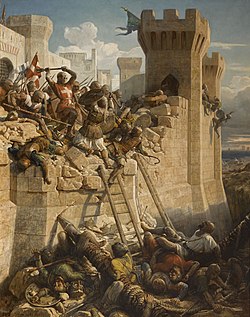
Sultan al-Ashraf Khalil besieged and captured Acre, the capital and last major stronghold of the Kingdom of Jerusalem. The fall ended effective Frankish rule on the mainland, although titular claims and island possessions continued.
Image source: Siege of Acre (1291)
Or browse the full history timeline directory, with more than 2,000 topics.
This Kingdom of Jerusalem timeline was generated with the help of AI, using information found on the internet.
We work hard to keep these timelines accurate, but mistakes do get through. If you spot one, email us at [email protected] and we'll fix it for future visitors.
Generate yours with AI or build it from scratch, for free.
Export your timeline, add your own events, edit or remove AI-generated events, and much more
No credit card required.
Cancel anytime.
Cancel anytime.
You can create an unlimited number of timelines with up to 10 events on each one, customize how they look, export them to PDF, PNG, PowerPoint, CSV, and Excel, and share them with a link. Paid plans raise the event limit and add features like spreadsheet imports and collaborators.
Yes. You can cancel your subscription from your account page at any time, and you will not be charged again. Your subscription stays active for the rest of the period you already paid for.
Yes. We will email you a reminder before the annual renewal, and we will also email you a receipt.
Yes. You can email us within 15 days of any payment, and we will issue you a full refund.
Check out our pricing docs or send us an email anytime: [email protected].