-
Use Cases
-
Resources
-
Pricing
The Kingdom of Aksum was a powerful ancient empire centered in present-day Ethiopia and Eritrea. Flourishing from roughly the 1st to the 10th century AD, it controlled key Red Sea trade routes linking Africa with Arabia, Rome, and India. Aksum was one of the first African states to mint its own coins and became one of the earliest empires to adopt Christianity as its state religion under King Ezana in the 4th century AD. Renowned for its monumental obelisks (stelae), written Ge'ez script, and regional influence, Aksum declined by the 10th century due to shifting trade routes, environmental pressures, and conflicts. More Less
700 BC - 400 BC
% complete
Archaeological excavations on the tell of Betä Giyorgis northwest of Aksum validate the pre-Aksumite roots of a settlement in the vicinity of Aksum, dating back to approximately the seventh to fourth centuries BCE.
Image source: Kingdom of Aksum
100
% complete
During the second century AD, Ptolemy's geographer referred to Aksum as a powerful kingdom.
Image source: Ptolemy
100 - 300
% complete
Although excavations have been limited, fourteen Roman coins dating to the second and third centuries have been discovered at Aksumite sites like Matara, reflecting ties with the Greco-Roman world.
Image source: Matara, Eritrea
300
% complete
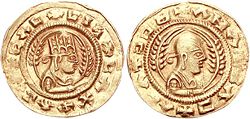
By the beginning of the fourth century AD, the Aksumite state had become well-established, featuring urban centers, an official currency with coinage struck in gold, silver, and copper, an intensive agricultural system, and an organized military.
50
% complete
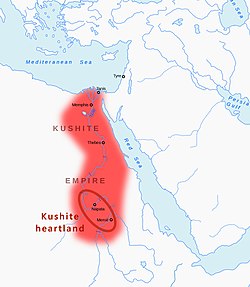
By the first century AD, Aksum had gained control over territory previously held by the Kingdom of Kush.
Image source: Kingdom of Kush
50
% complete
The first historical mention of Axum comes from the Periplus of the Erythraean Sea, a trading guide which likely dates to the mid-first century AD.
Image source: Periplus of the Erythraean Sea
100 - 300
% complete
During the second and third centuries AD the Kingdom of Aksum continued to expand their control of the southern Red Sea basin.
Image source: Red Sea
200
% complete
During the early part of the third century, the kings GDRT and ʽDBH dispatched military expeditions to the region. Inscriptions from local Arabian dynasties refer to these rulers with the title 'nagasi of Aksum and Habashat,' and a metal object discovered in eastern Tigray also mentions a certain 'GDR negus of Aksum.'
Image source: GDRT
240 - 260
% complete
According to a Greek inscription in Eritrea known as the Monumentum Adulitanum recorded by Cosmas Indicopleustes, in around the mid to late third century, the Aksumites, led by an anonymous king, achieved significant territorial expansion in the Ethiopian Highlands and the Arabian Peninsula, with influence extending as far as Lake Tana and the borders of Egypt.
250
% complete
Later in the third century, the mlky hhst dtwns wzqrns (kings of Habashat DTWNS and ZQRNS) are also mentioned fighting in Arabia. Aksum-Himyar conflicts persisted throughout the 3rd century.
290
% complete
By the end of the third century AD, Aksum had gained recognition by the prophet Mani in the Kephalaia as one of the four great powers of the world alongside Rome, Persia, and China.
Image source: Mani (prophet)
520
% complete
In the early sixth century, Cosmas Indicopleustes described his visit to Aksum, mentioning the four-towered palace of the Aksumite king, adorned with bronze statues of unicorns.
Image source: Cosmas Indicopleustes
200
% complete
One of the oldest Aksumite tombs is at Näfas Mawca, dated to the third century AD, where the burial is covered by a single stone block measuring 17 by 7 by 1 metres.
300 - 400
% complete
Steve Kaplan argues that Aksum culture was significantly influenced by Judaism, saying that 'The first carriers of Judaism reached Ethiopia between the reign of Queen of Sheba BC and conversion to Christianity of King Ezana in the fourth century AD.' By the time Christianity took hold in the fourth century, many originally Hebraic-Jewish elements had been adopted by much of the indigenous population.
Image source: History of the Jews in Ethiopia
300
% complete
In the early times of the empire, around 1700 years ago, giant obelisks were constructed to mark emperors' and nobles' tombs with underground grave chambers, the most famous of which is the Obelisk of Aksum.
Image source: Obelisk of Axum
320 - 360
% complete
Due to its ties with the Greco-Roman world, Aksum adopted Christianity as its state religion in the mid 4th century under Ezana (320s – c. 360). King Ezana became the first Christian ruler of Aksum in the fourth century.
Image source: Ezana of Axum
330 - 350
% complete
The Tomb of the Brick Arches, dating to the early or mid-fourth century, lies beneath a structure of mud-mortared stones and contains a horseshoe arch of square bricks.
330
% complete
In the fourth century, Ezana of Axum promoted the Geʽez script and made Geʽez an official state language alongside Greek; by the sixth century literary translations into Geʿez were common.
Image source: Geʽez
380 - 420
% complete
The Tomb of the False Door, probably built in the late fourth or early fifth century, features a false-door facade with the symmetrical recessed planes characteristic of Aksumite design.
400 - 600
% complete
The most famous example of early Geʽez literature is represented by the Garima Gospels, a set of manuscripts containing all four Gospels translated into Ethiopic dating between the fourth and sixth centuries.
Image source: Garima Gospels
615
% complete
Islam arrived in the seventh century, during the reign of Ashama ibn-Abjar, when the first followers of the Islamic prophet Muhammad (the Sahabah) migrated from Arabia due to their persecution by the Quraysh, the ruling Arab tribal confederation of Mecca.
Image source: Najashi
630
% complete
A more enduring impact occurred with the rise of Islam in the early seventh century and the expansion of the Rashidun Caliphate. After the Muslim conquests isolated Axum from the Greco-Roman world, Geʿez replaced Greek entirely.
Image source: Rashidun Caliphate
690
% complete
At the end of the seventh century, a strong Beja tribe known as the Zanafaj entered the Eritrean plateau through the valley of Gash-Barka.
Image source: Beja people
700
% complete
The kingdom's slow decline had begun by the 7th century, at which point currency ceased to be minted. Consequently, Aksum experienced a decline in prosperity due to increased isolation and eventually ceased production of coins in the early eighth century.
730 - 900
% complete
This decline was possibly accelerated by an apparent decline in the reliability of rainfall beginning between 730 and 760, presumably with the result that an abbreviated modern growing season was reestablished during the ninth century.
800 - 900
% complete
Famine is noted in Ethiopia in the ninth century, contributing to the kingdom's difficulties.
Image source: Famines in Ethiopia
850
% complete
Arabic inscriptions on the Dahlak Archipelago are dated to the mid ninth century AD, reflecting the growing Islamic presence in the region.
Image source: Dahlak Archipelago
850
% complete
Under the reign of Degna Djan, during the ninth century, the empire kept expanding south, undertaking missionary activities south of Angot.
960
% complete
Aksum's final three centuries are considered a dark age, and the kingdom collapsed under uncertain circumstances around 960. The Persian (and later Muslim) presence in the Red Sea, along with the decline of Rome, caused Aksum to suffer economically, and the population of the city of Axum shrank.
1137
% complete
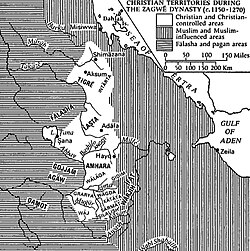
After a short Dark Age, the Aksumite Empire was succeeded by the Zagwe dynasty in the eleventh or twelfth century (most likely around 1137), although limited in size and scope. According to one Ethiopian traditional account, Queen Gudit reigned for forty years and her dynasty was overthrown by Mara Tekla Haymanot in 1137 C.E., who ushered in the formation of the Zagwe dynasty.
Image source: Zagwe dynasty
1270
% complete
Yekuno Amlak, who killed the last Zagwe king and founded the modern Solomonic dynasty around 1270, traced his ancestry and his right to rule from the last emperor of Aksum, Dil Na'od.
Image source: Yekuno Amlak
Or browse the full history timeline directory, with more than 2,000 topics.
This Kingdom of Aksum timeline was generated with the help of AI, using information found on the internet.
We work hard to keep these timelines accurate, but mistakes do get through. If you spot one, email us at [email protected] and we'll fix it for future visitors.
Generate yours with AI or build it from scratch, for free.
Export your timeline, add your own events, edit or remove AI-generated events, and much more
No credit card required.
Cancel anytime.
Cancel anytime.
You can create an unlimited number of timelines with up to 10 events on each one, customize how they look, export them to PDF, PNG, PowerPoint, CSV, and Excel, and share them with a link. Paid plans raise the event limit and add features like spreadsheet imports and collaborators.
Yes. You can cancel your subscription from your account page at any time, and you will not be charged again. Your subscription stays active for the rest of the period you already paid for.
Yes. We will email you a reminder before the annual renewal, and we will also email you a receipt.
Yes. You can email us within 15 days of any payment, and we will issue you a full refund.
Check out our pricing docs or send us an email anytime: [email protected].