
-
Use Cases
-
Resources
-
Pricing
The History of Lord of the Rings traces the creation, publication, and adaptation of J.R.R. Tolkien's epic fantasy masterpiece. Beginning with Tolkien's scholarly fascination with languages and mythology, the work evolved over decades into one of the most influential works of fiction ever published, spawning countless adaptations, academic study, and shaping the modern fantasy genre. More Less
Jan 3, 1892
% complete
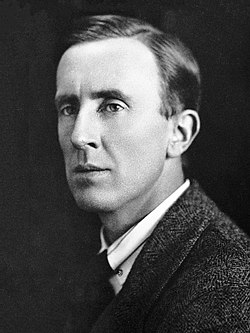
John Ronald Reuel Tolkien was born in Bloemfontein, South Africa, to Arthur and Mabel Tolkien. His family moved to England a few years later, where he would spend most of his life developing the languages, myths, and stories that eventually gave rise to The Hobbit and The Lord of the Rings.
Image source: J. R. R. Tolkien
1910
% complete
As a teenager, Tolkien became fascinated by philology and began inventing his own languages, including early forms of what would become Quenya. His conviction that languages need histories and peoples to inhabit them drove him to create the elaborate world of Middle-earth.
Image source: Languages constructed by Tolkien
Jul 1, 1916 - Oct 27, 1916
% complete
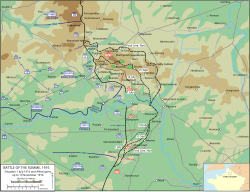
Tolkien fought as a second lieutenant with the Lancashire Fusiliers on the Somme before falling ill with trench fever. The horrors of the trenches profoundly influenced his depictions of war, including the desolation of Mordor and the psychological toll borne by Frodo and Sam.
Image source: Battle of the Somme
1917
% complete
While recovering from illness, Tolkien began composing 'The Book of Lost Tales,' the earliest version of his legendarium featuring tales of elves and gods that would later evolve into The Silmarillion. This work laid the mythological foundation for Middle-earth.
Image source: The Book of Lost Tales
1917
% complete
One of the first major stories of Tolkien's legendarium, 'The Fall of Gondolin' recounts the destruction of a hidden elven city by Morgoth's forces. It introduced themes of heroism against overwhelming darkness that recur throughout his later works.
Image source: The Fall of Gondolin
1930
% complete
While grading examination papers, Tolkien wrote the famous sentence 'In a hole in the ground there lived a hobbit' on a blank page, sparking the story of Bilbo Baggins. He developed the tale over several years, sharing chapters with his children.
Image source: The Hobbit
Dec 16, 1937
% complete
Tolkien started the sequel with the sentence 'When Mr. Bilbo Baggins of Bag End announced that he would shortly be celebrating his eleventy-first birthday...' The project grew far beyond a simple children's sequel into an epic three-volume novel.
Image source: The Lord of the Rings
Sep 3, 1939 - 1942
% complete
The outbreak of World War II, along with Tolkien's academic duties and air-raid precautions at Oxford, slowed progress dramatically. Work resumed in earnest in 1944 through long letters to his son Christopher describing ongoing chapters.
Oct 1948
% complete
After more than a decade of intermittent writing, Tolkien typed out the final chapter of The Lord of the Rings in October 1948. Extensive revisions followed for years as he refined chronologies, maps, and appendices.
Sep 21, 1937
% complete
The Hobbit, or There and Back Again was published in September 1937 to critical acclaim. Its success prompted publisher Stanley Unwin to request a sequel, setting in motion the creation of The Lord of the Rings.
Nov 15, 1937
% complete
Following The Hobbit's success, Tolkien sent drafts of The Silmarillion to his publishers, but the material was deemed too obscure and uncommercial. Instead, Tolkien began writing what would become The Lord of the Rings as its sequel.
Image source: The Silmarillion
Jul 29, 1954
% complete
Due to post-war paper shortages and cost concerns, Allen & Unwin published The Lord of the Rings in three volumes. The first volume, The Fellowship of the Ring, introduced readers to Frodo's quest and received largely positive reviews.
Image source: The Fellowship of the Ring
Nov 11, 1954
% complete
The second volume continued the epic, following the splitting of the fellowship and the war in Rohan. Tolkien chose the ambiguous title 'The Two Towers' himself after struggling to find a name for the middle book.
Image source: The Two Towers
Oct 20, 1955
% complete
The final volume concluded Frodo's quest with the destruction of the One Ring and the crowning of Aragorn, along with extensive appendices detailing Middle-earth's history. Some critics initially dismissed it, but readers embraced it enthusiastically.
Image source: The Return of the King
1965 - 1969
% complete
The affordable Ballantine paperback edition ignited a massive boom among American college students in the late 1960s, making Tolkien a bestseller. The books became touchstones of 1960s counterculture, spawning merchandise, fan clubs, and even 'Frodo Lives' graffiti.
1965
% complete
Ace Books published an unauthorized paperback edition of The Lord of the Rings in the United States, exploiting a copyright loophole. A fan campaign urged readers to buy authorized Houghton Mifflin copies instead, and Ace ultimately paid royalties to Tolkien.
Image source: Ace Books
Sep 15, 1977
% complete
Four years after Tolkien's death, his son Christopher edited and published The Silmarillion, compiling the mythic history of Middle-earth from decades of manuscripts. The book revealed the deep backstory behind The Lord of the Rings.
1980 - 1996
% complete
Christopher Tolkien published Unfinished Tales in 1980, then spent nearly two decades editing the twelve-volume History of Middle-earth series, documenting the evolution of his father's legendarium from earliest drafts to finished works.
Image source: The History of Middle-earth
Nov 15, 1978
% complete
Director Ralph Bakshi's rotoscope-animated adaptation covered roughly the first half of the trilogy. Despite mixed reviews and commercial disappointment, it influenced later filmmakers, including Peter Jackson, who admired its ambition.
Image source: The Lord of the Rings (1978 film)
May 11, 1980
% complete
Rankin/Bass, which had adapted The Hobbit for television in 1977, completed the story with this animated TV special covering the events of the final volume. Though less ambitious than Ralph Bakshi's film, it brought the tale's ending to television audiences.
Image source: The Return of the King (1980 film)
Aug 30, 1981
% complete
The BBC produced a landmark 26-part radio adaptation starring Ian Holm as Frodo and Michael Hordern as Gandalf. Widely praised for its production values, it remains one of the most celebrated audio adaptations of the novel.
Image source: The Lord of the Rings (1981 radio series)
1984
% complete
Middle-earth Role Playing, licensed from Tolkien Enterprises, allowed tabletop players to adventure in Middle-earth. It spawned numerous supplements throughout the 1980s and 1990s before the license passed to Decipher in 2001.
Image source: Middle-earth Role Playing
Nov 2, 2004
% complete
Electronic Arts released this turn-based RPG allowing players to follow a new party of heroes alongside the film trilogy's events. It joined a wave of tie-in games capitalizing on the films' success.
Image source: The Lord of the Rings: The Third Age
Apr 24, 2007
% complete
Turbine launched the massively multiplayer online role-playing game The Lord of the Rings Online, letting players explore a faithful recreation of Middle-earth. It received critical praise and continues operating with regular expansion content.
Image source: The Lord of the Rings Online
Nov 13, 2017
% complete
Amazon acquired global television rights to Tolkien's works for a reported $250 million, committing to a multi-season prequel series exploring Middle-earth's Second Age. It became one of the most expensive television productions ever made, premiering in 2022.
Image source: The Lord of the Rings: The Rings of Power
Sep 1, 2022 - Oct 14, 2022
% complete
Amazon's high-budget prequel series debuted to record streaming viewership, depicting the forging of the Rings of Power and the rise of Sauron in Middle-earth's Second Age. A second season followed in 2024.
Oct 11, 1999 - Dec 22, 2000
% complete
Peter Jackson shot all three films back-to-back over 438 days across New Zealand, employing massive sets, groundbreaking digital effects from Weta Workshop, and thousands of extras. It was one of the most ambitious productions in cinema history.
Image source: Production of The Lord of the Rings film series
Dec 10, 2001
% complete
Jackson's first installment premiered in London and became a global phenomenon, grossing over $880 million. It won four Academy Awards, including Best Cinematography and Best Score, and revitalized the fantasy genre in mainstream cinema.
Image source: The Lord of the Rings: The Fellowship of the Ring
Dec 5, 2002
% complete
The second film introduced Gollum, a motion-captured digital character voiced and performed by Andy Serkis that revolutionized CGI. The Battle of Helm's Deep sequence set new standards for large-scale cinematic warfare and earned two Oscars.
Image source: The Lord of the Rings: The Two Towers
Feb 29, 2004
% complete
At the 76th Academy Awards, The Return of the King won all 11 awards it was nominated for, including Best Picture and Best Director, tying the record for most Oscar wins. The ceremony marked the trilogy's triumphant culmination.
Image source: 76th Academy Awards
Nov 28, 2012
% complete
Peter Jackson returned to Middle-earth with a three-film prequel series adapting The Hobbit. The first installment grossed over $1 billion worldwide, though the trilogy drew more divided critical reception than the original films.
Image source: The Hobbit (film series)
Or browse the full history timeline directory, with more than 2,000 topics.
This History of Lord of the Rings timeline was generated with the help of AI, using information found on the internet.
We work hard to keep these timelines accurate, but mistakes do get through. If you spot one, email us at [email protected] and we'll fix it for future visitors.
Generate yours with AI or build it from scratch, for free.
Export your timeline, add your own events, edit or remove AI-generated events, and much more
No credit card required.
Cancel anytime.
Cancel anytime.
You can create an unlimited number of timelines with up to 10 events on each one, customize how they look, export them to PDF, PNG, PowerPoint, CSV, and Excel, and share them with a link. Paid plans raise the event limit and add features like spreadsheet imports and collaborators.
Yes. You can cancel your subscription from your account page at any time, and you will not be charged again. Your subscription stays active for the rest of the period you already paid for.
Yes. We will email you a reminder before the annual renewal, and we will also email you a receipt.
Yes. You can email us within 15 days of any payment, and we will issue you a full refund.
Check out our pricing docs or send us an email anytime: [email protected].