-
Use Cases
-
Resources
-
Pricing
The history of machine learning traces the evolution of algorithms and systems that enable computers to learn from data. Beginning with early theoretical work by Alan Turing and Arthur Samuel's pioneering checkers program, the field progressed through symbolic AI, statistical learning, and connectionism before exploding into prominence with deep learning breakthroughs like AlexNet in 2012 and the rise of large language models. More Less
1949
% complete
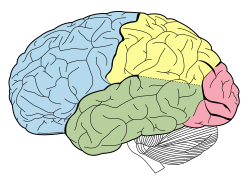
In 1949, Canadian psychologist Donald Hebb published The Organization of Behavior, introducing a theoretical neural structure formed by certain interactions among nerve cells. His ideas laid early groundwork for artificial neural networks and learning theory.
Image source: Donald O. Hebb
1959
% complete
The term machine learning was coined in 1959 by Arthur Samuel, an IBM employee and pioneer in the field of computer gaming and artificial intelligence, giving the emerging discipline its enduring name.
1970 - 1979
% complete
Interest related to pattern recognition continued into the 1970s, as described by Duda and Hart in their influential 1973 work, helping establish statistical approaches to classification and perception.
Image source: Pattern recognition
1980
% complete
By 1980, expert systems had come to dominate AI, and statistics was out of favour, shifting the field's focus toward rule-based symbolic systems rather than data-driven learning methods.
Image source: Expert system
1981
% complete
In 1981, a report was given on using teaching strategies so that an artificial neural network learns to recognise 40 characters (26 letters, 10 digits, and 4 special symbols) from a computer terminal, demonstrating practical neural learning.
1981
% complete
Shapiro built his first implementation (Model Inference System) in 1981: a Prolog program that inductively inferred logic programs from positive and negative examples, advancing inductive inference research.
Image source: Inductive logic programming
1982
% complete
Self-learning, as a machine learning paradigm, was introduced in 1982 along with a neural network capable of self-learning, named crossbar adaptive array (CAA), expanding the range of learning paradigms beyond supervised methods.
2012
% complete
In 2012, AlexNet, developed by Alex Krizhevsky, Ilya Sutskever, and Geoffrey Hinton, achieved substantially improved results in the ImageNet image recognition competition, contributing to the wider adoption of deep neural networks.
Image source: AlexNet
2013
% complete
In 2013, Tomáš Mikolov and colleagues introduced word2vec, techniques for efficiently learning distributed vector representations of words from large text corpora, transforming natural language processing.
Image source: Word2vec
2014
% complete
In 2014, Ian Goodfellow and colleagues introduced generative adversarial networks (GANs), a framework for training generative models through an adversarial process between generator and discriminator networks.
2017
% complete
In 2017, Ashish Vaswani and colleagues introduced the Transformer, a neural network architecture based primarily on attention rather than recurrence or convolution, becoming foundational to modern large language models.
Image source: Transformer (deep learning)
1988
% complete
In 1988, the UK's Commission for Racial Equality found that St. George's College had used an algorithm that discriminated against applicants, an early example of algorithmic bias with real-world consequences.
Image source: Commission for Racial Equality
2012
% complete
In 2012, co-founder of Sun Microsystems, Vinod Khosla, predicted that 80% of medical doctors jobs would be lost in the next two decades to automated machine learning medical diagnostic software, sparking debate about AI's impact on professions.
Image source: Vinod Khosla
2015
% complete
In 2015, Google Photos once tagged a couple of black people as gorillas, which caused controversy and drew attention to racial bias in image recognition systems.
2016
% complete
In 2016, Microsoft tested Tay, a chatbot that learned from Twitter, and it quickly picked up racist and sexist language, prompting Microsoft to shut it down within days and raising concerns about adversarial manipulation of learning systems.
Image source: Tay (chatbot)
2018
% complete
In 2018, a self-driving car from Uber failed to detect a pedestrian, who was killed after a collision, marking the first fatality involving an autonomous vehicle and intensifying scrutiny of ML safety in critical systems.
Image source: Death of Elaine Herzberg
2021
% complete
According to research carried out by the Computing Research Association in 2021, "female faculty make up just 16.1%" of all faculty members who focus on AI among several universities around the world, highlighting persistent gender disparities in the field.
2023
% complete
The gorilla label was subsequently removed from Google Photos following the 2015 controversy, and in 2023, it still cannot recognise gorillas, illustrating the lasting challenges of fixing biased image classifiers.
Image source: Google Photos
2006
% complete
In 2006, the media-services provider Netflix held the first "Netflix Prize" competition to find a program to better predict user preferences and improve the accuracy of its existing Cinematch movie recommendation algorithm by at least 10%.
Image source: Netflix Prize
2009
% complete
A joint team made up of researchers from AT&T Labs-Research in collaboration with the teams Big Chaos and Pragmatic Theory built an ensemble model to win the Grand Prize in 2009 for $1 million, showcasing the power of collaborative filtering ensembles.
2010
% complete
In 2010, an article in The Wall Street Journal noted the use of machine learning by Rebellion Research to predict the 2008 financial crisis, highlighting ML's growing role in quantitative finance.
Image source: Rebellion Research
2014
% complete
In 2014, it was reported that a machine learning algorithm had been applied in the field of art history to study fine art paintings and that it may have revealed previously unrecognised influences among artists.
2016
% complete
In 2016, AlphaGo became the first computer program to defeat a professional human Go player without handicaps on a full-sized board, using deep neural networks and reinforcement learning.
2019
% complete
In 2019 Springer Nature published the first research book created using machine learning, demonstrating ML's potential to assist in scientific publishing and knowledge synthesis.
Image source: Springer Nature
2020
% complete
In 2020, machine learning technology was used to help make diagnoses and aid researchers in developing a cure for COVID-19, showing how ML accelerated responses to a global health crisis.
Image source: COVID-19 pandemic
2016
% complete
Since their introduction in 2016, TPUs have become a key component of AI infrastructure, especially in cloud-based environments, providing custom silicon optimized for neural network training and inference.
Image source: Tensor Processing Unit
2017
% complete
OpenAI estimated the hardware compute used in the largest deep learning projects from AlexNet (2012) to AlphaZero (2017), and found a 300,000-fold increase in the amount of compute required, with a doubling-time trendline of 3.4 months.
Image source: OpenAI
2019
% complete
By 2019, graphics processing units (GPUs), often with AI-specific enhancements, had displaced CPUs as the dominant method of training large-scale commercial cloud AI, accelerating deep learning development.
Image source: Graphics processing unit
Or browse the full history timeline directory, with more than 2,000 topics.
This History of Machine Learning timeline was generated with the help of AI, using information found on the internet.
We work hard to keep these timelines accurate, but mistakes do get through. If you spot one, email us at [email protected] and we'll fix it for future visitors.
Generate yours with AI or build it from scratch, for free.
Export your timeline, add your own events, edit or remove AI-generated events, and much more
No credit card required.
Cancel anytime.
Cancel anytime.
You can create an unlimited number of timelines with up to 10 events on each one, customize how they look, export them to PDF, PNG, PowerPoint, CSV, and Excel, and share them with a link. Paid plans raise the event limit and add features like spreadsheet imports and collaborators.
Yes. You can cancel your subscription from your account page at any time, and you will not be charged again. Your subscription stays active for the rest of the period you already paid for.
Yes. We will email you a reminder before the annual renewal, and we will also email you a receipt.
Yes. You can email us within 15 days of any payment, and we will issue you a full refund.
Check out our pricing docs or send us an email anytime: [email protected].