-
Use Cases
-
Resources
-
Pricing
Milan, one of Europe's most influential cities, has a rich history spanning over two millennia. Founded by the Celts around 600 BC, it became a major center of the Roman Empire, later served as the capital of the Duchy of Milan under the Visconti and Sforza dynasties, flourished as a Renaissance hub of art and innovation, and grew into Italy's leading industrial, fashion, and financial capital. More Less
600 BC
% complete
The Celtic Insubres founded the settlement of Mediolanum around 600 BC. The name, meaning 'in the middle of the plain,' reflected its central position in the Po Valley, and the settlement grew into one of the most important towns in northern Italy.
222 BC
% complete
Roman legions under consuls Gnaeus Cornelius Scipio Calvus and Marcus Claudius Marcellus captured Mediolanum from the Insubres, incorporating it into the Roman Republic and beginning its transformation into a major Roman city.
Image source: Mediolanum
286 AD
% complete
Emperor Diocletian made Milan the capital of the Western Roman Empire, elevating the city's status and triggering an era of monumental construction including baths, circuses, and imperial palaces.
313 AD
% complete
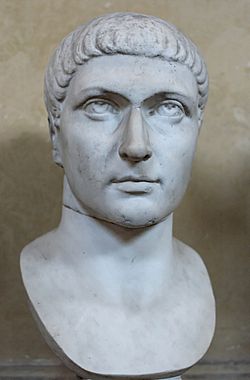
Emperors Constantine I and Licinius met in Milan and issued the Edict of Milan, granting tolerance to Christianity throughout the Roman Empire and marking a turning point in the history of the religion.
Image source: Edict of Milan
374 AD
% complete
Ambrose was acclaimed bishop of Milan, becoming one of the most influential ecclesiastical figures of the fourth century. He strengthened the church in Milan, combated Arianism, and left a lasting legacy on Western Christianity.
Image source: Ambrose
402 AD
% complete
The Visigoths under Alaric I attacked and sacked Milan, forcing Emperor Honorius to move the Western Roman capital to Ravenna, which began the city's long decline from imperial prominence.
Image source: Gothic War (401–403)
1162
% complete
Holy Roman Emperor Frederick Barbarossa razed Milan after a prolonged siege during his conflict with the Lombard cities, destroying much of the city and dispersing its population among surrounding villages.
Image source: Milan
May 29, 1176
% complete
The Lombard League, led by Milanese forces, defeated Emperor Frederick Barbarossa at Legnano, securing greater autonomy for the Italian communes and allowing Milan to be rebuilt and regain its power.
Image source: Battle of Legnano
1277
% complete
Ottone Visconti, Archbishop of Milan, defeated the rival Della Torre family at the Battle of Desio, establishing Visconti rule that would transform Milan into a powerful regional lordship.
Image source: Visconti of Milan
1386 - 1965
% complete
Gian Galeazzo Visconti ordered construction of the Duomo di Milano, one of the largest Gothic cathedrals in the world. Work continued over nearly six centuries, making it an enduring symbol of the city.
1447
% complete
The death of Duke Filippo Maria Visconti without a male heir ended Visconti dominance. The short-lived Ambrosian Republic was proclaimed before Francesco Sforza seized power three years later.
Image source: Filippo Maria Visconti
1450
% complete
Condottiero Francesco Sforza captured Milan and established himself as duke, founding the Sforza dynasty. Under Sforza patronage, Milan flourished as one of Europe's leading Renaissance centers.
Image source: Francesco I Sforza
1495 - 1498
% complete
Under Ludovico Sforza's patronage, Leonardo da Vinci painted The Last Supper on the wall of the refectory of Santa Maria delle Grazie, creating one of the most celebrated artworks in history.
Image source: The Last Supper (Leonardo)
1499
% complete
King Louis XII of France invaded and captured Milan, ousting Ludovico Sforza. The duchy became a battleground between France and the Holy Roman Empire for over half a century.
Image source: Italian Wars
Feb 24, 1525
% complete
Imperial forces decisively defeated the French at Pavia, capturing King Francis I. The victory confirmed Habsburg dominance in Italy and paved the way for Spanish rule over the Duchy of Milan.
Image source: Battle of Pavia
1559
% complete
With the Peace of Cateau-Cambrésis, Milan passed definitively to Spanish Habsburg control. The long period of Spanish rule brought both cultural vitality and economic stagnation to the city.
Image source: Duchy of Milan
1629 - 1631
% complete
The Great Plague, vividly chronicled by Alessandro Manzoni, devastated Milan and killed an estimated 60,000 of its inhabitants, leaving a profound mark on the city's collective memory.
Image source: 1629–1631 Italian plague
1714
% complete
Following the War of the Spanish Succession, the Treaty of Rastatt transferred the Duchy of Milan from Spain to Austria, beginning more than a century of Habsburg administration.
Image source: House of Habsburg
1740 - 1790
% complete
Austrian rulers implemented sweeping reforms in Milan, modernizing agriculture, education, and taxation. The city became a center of Enlightenment thought, home to figures like Cesare Beccaria and Pietro Verri.
Image source: Maria Theresa
May 15, 1796
% complete
Napoleon Bonaparte's army entered Milan after defeating Austrian forces, ending Habsburg rule and ushering in a period of French domination that reshaped northern Italy politically.
Image source: Italian campaigns of the French Revolutionary Wars
1805 - 1814
% complete
Napoleon crowned himself King of Italy in Milan Cathedral, making the city the capital of his satellite kingdom. Milan saw urban improvements, including new boulevards and the Arena, during this era.
Image source: Kingdom of Italy (Napoleonic)
1815
% complete
After Napoleon's fall, the Congress of Vienna restored Lombardy to Austrian control as part of the Kingdom of Lombardy–Venetia, beginning the Restoration period in Milan.
Image source: Congress of Vienna
Mar 18, 1848 - Mar 22, 1848
% complete
Milanese citizens rose against Austrian garrison forces in a heroic five-day insurrection, expelling Field Marshal Radetzky's troops from the city and inspiring the wider Italian unification movement.
Image source: Five Days of Milan
Jun 4, 1859
% complete
French and Piedmontese armies under Napoleon III and Victor Emmanuel II defeated the Austrians at Magenta, opening the road to Milan, which welcomed them enthusiastically and joined the Kingdom of Sardinia soon after.
Image source: Battle of Magenta
Mar 17, 1861
% complete
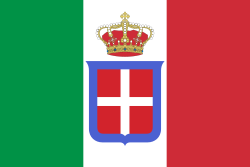
Victor Emmanuel II was proclaimed King of Italy in Turin, formally uniting Milan and Lombardy within the new Italian state and concluding decades of struggle for independence and unification.
Image source: Kingdom of Italy
1877
% complete
Architect Giuseppe Mengoni completed the ornate glass-vaulted shopping arcade near the cathedral. It became one of the world's first purpose-built shopping malls and a symbol of modern Milanese elegance.
Image source: Galleria Vittorio Emanuele II
Dec 16, 1899
% complete
Englishmen Alfred Edwards and Herbert Kilpin founded AC Milan, launching one of the most successful football clubs in history and cementing the city's place in world sport alongside Inter, founded in 1908.
Image source: AC Milan
Feb 20, 1909
% complete
Filippo Tommaso Marinetti published the Futurist Manifesto in Le Figaro, and the avant-garde movement took root in Milan, celebrating speed, technology, and modernity in art and culture.
Image source: Futurism
Aug 14, 1943 - Apr 25, 1945
% complete
Allied air raids heavily damaged Milan, destroying parts of the cathedral area and many historic buildings. On April 25, 1945, partisans liberated the city from Nazi-Fascist occupation, a date now commemorated as Liberation Day.
Image source: Bombing of Milan in World War II
1950 - 1967
% complete
Milan became the engine of Italy's postwar economic boom, attracting waves of internal migration and growing into the country's financial, industrial, and design capital.
Image source: Italian economic miracle
1960
% complete
Designed by Gio Ponti and Pier Luigi Nervi, the 32-story Pirelli Tower became one of Italy's first skyscrapers and an icon of the city's modernist transformation.
Image source: Pirelli Tower
May 1, 2015 - Oct 31, 2015
% complete
Milan hosted the World Expo themed 'Feeding the Planet, Energy for Life,' attracting over 20 million visitors and spurring major urban redevelopment, including the Porta Nuova district.
Or browse the full history timeline directory, with more than 2,000 topics.
This History of Milan timeline was generated with the help of AI, using information found on the internet.
We work hard to keep these timelines accurate, but mistakes do get through. If you spot one, email us at [email protected] and we'll fix it for future visitors.
Generate yours with AI or build it from scratch, for free.
Export your timeline, add your own events, edit or remove AI-generated events, and much more
No credit card required.
Cancel anytime.
Cancel anytime.
You can create an unlimited number of timelines with up to 10 events on each one, customize how they look, export them to PDF, PNG, PowerPoint, CSV, and Excel, and share them with a link. Paid plans raise the event limit and add features like spreadsheet imports and collaborators.
Yes. You can cancel your subscription from your account page at any time, and you will not be charged again. Your subscription stays active for the rest of the period you already paid for.
Yes. We will email you a reminder before the annual renewal, and we will also email you a receipt.
Yes. You can email us within 15 days of any payment, and we will issue you a full refund.
Check out our pricing docs or send us an email anytime: [email protected].