-
Use Cases
-
Resources
-
Pricing
New Mexico's history spans thousands of years, beginning with ancient Puebloan peoples, followed by Spanish exploration and colonization in the 16th century, Mexican rule after 1821, American territorial status following the Mexican-American War, and finally statehood in 1912. Its unique blend of Native American, Hispanic, and Anglo cultures makes it one of the most culturally rich states in the United States. More Less
1000
% complete
Taos Pueblo was constructed around 1000 CE and remains one of the oldest continuously inhabited communities in the United States. Its multi-storied adobe dwellings exemplify traditional Pueblo architecture and enduring Indigenous culture in northern New Mexico.
Image source: Taos Pueblo
1536
% complete
After surviving a shipwreck on the Gulf Coast, Álvar Núñez Cabeza de Vaca trekked across the American Southwest, including parts of present-day New Mexico. His accounts of wealthy cities fueled Spanish interest in exploring the region.
Image source: Álvar Núñez Cabeza de Vaca
1706 - 1875
% complete
The Comanche built a powerful empire across the southern plains, including eastern New Mexico, controlling trade and raiding networks. Their dominance shaped colonial and later American policy in the region for over a century until their defeat after the Red River War.
Image source: Comanche history
1540 - 1542
% complete
Francisco Vásquez de Coronado led a large Spanish expedition north from Mexico in search of the fabled Seven Cities of Gold. The expedition encountered Zuni pueblos and other Pueblo communities, marking the first major European contact with the region's Indigenous peoples.
Image source: Francisco Vázquez de Coronado
1598
% complete
Juan de Oñate led the first permanent Spanish colonization of New Mexico, establishing the settlement of San Juan de los Caballeros near present-day Española. He was appointed the first governor of the Province of Santa Fe de Nuevo México, beginning more than two centuries of Spanish rule.
Image source: Juan de Oñate
Jan 1599
% complete
Following a conflict at Acoma Pueblo that killed Spanish soldiers, Juan de Oñate ordered a brutal punitive attack in which hundreds of Acoma people were killed and survivors were subjected to harsh punishments. The event became one of the darkest episodes of the colonial period.
Image source: 1599 Acoma massacre
1610
% complete
Pedro de Peralta founded La Villa Real de la Santa Fe de San Francisco de Asís, now Santa Fe, as the capital of the Spanish province. It is the oldest state capital city in the United States and became the center of Spanish colonial administration.
Image source: Santa Fe, New Mexico
Aug 10, 1680 - Sep 1680
% complete
Led by Popé of Ohkay Owingeh, Pueblo peoples coordinated a massive uprising against Spanish colonizers, killing hundreds of Spaniards and driving survivors south to El Paso. The revolt expelled Spanish authority from New Mexico for twelve years, one of the most successful Indigenous uprisings in North American history.
Image source: Pueblo Revolt
1692 - 1696
% complete
Don Diego de Vargas led the Spanish reconquest of New Mexico, reoccupying Santa Fe in 1692 and gradually restoring Spanish control through a mix of negotiation and force. Many Pueblos accepted Spanish rule again while retaining much of their cultural autonomy.
Image source: Diego de Vargas
Apr 23, 1706
% complete
Spanish colonists established the villa of Albuquerque along the Rio Grande, named for the Duke of Albuquerque. It grew into a farming and trade community and eventually became New Mexico's largest city.
Image source: Albuquerque, New Mexico
1821
% complete
Mexico gained independence from Spain, and New Mexico became a remote northern province of the new nation. Trade restrictions eased, opening the door for commerce with the United States.
Image source: Mexican War of Independence
1821 - 1880
% complete
William Becknell pioneered the Santa Fe Trail from Missouri to Santa Fe, creating a vital commercial route between the United States and New Mexico. The trail carried goods, settlers, and cultural exchange for nearly six decades until the railroad arrived.
Image source: Santa Fe Trail
1841
% complete
The Republic of Texas claimed lands extending eastward into New Mexico and sent the failed Texan Santa Fe Expedition to assert control. The boundary dispute contributed to tensions leading to the Mexican-American War and the U.S.-Mexico border debates.
Image source: Republic of Texas
Aug 18, 1846
% complete
During the Mexican-American War, General Stephen W. Kearny led the Army of the West into Santa Fe and raised the American flag without significant resistance, claiming New Mexico for the United States as part of the conquest of California campaign.
Image source: Stephen W. Kearny
Jan 1847 - Feb 1847
% complete
Pueblo and Hispano residents rose up against the new American territorial government, killing first governor Charles Bent. American forces suppressed the revolt after battles at Taos Pueblo and Mora, cementing U.S. control over New Mexico.
Image source: Taos Revolt
Feb 2, 1848
% complete
The treaty ending the Mexican-American War formally transferred New Mexico to the United States. Mexican citizens in the territory were promised U.S. citizenship and protection of property rights, though many land grant disputes followed.
Image source: Treaty of Guadalupe Hidalgo
Sep 9, 1850
% complete
As part of the Compromise of 1850, Congress organized the New Mexico Territory, which initially included portions of present-day Arizona and Nevada. The territorial government was headquartered in Santa Fe.
Image source: New Mexico Territory
Dec 30, 1853
% complete
The United States purchased roughly 29,000 square miles of land from Mexico, adding southern Arizona and southwestern New Mexico. The purchase provided a route for a transcontinental railroad and finalized the state's southern border.
Image source: Gadsden Purchase
Mar 26, 1862 - Mar 28, 1862
% complete
Union forces defeated Confederate troops attempting to seize New Mexico and Colorado territories in what is called the 'Gettysburg of the West.' Union soldiers destroyed Confederate supplies at Johnson's Ranch, forcing the retreat of Henry Sibley's army to Texas.
Image source: Battle of Glorieta Pass
1864 - 1868
% complete
U.S. forces under Kit Carson and others forced thousands of Navajo from their homeland in northeastern Arizona and northwestern New Mexico on brutal marches to Bosque Redondo at Fort Sumner. Hundreds died before the Navajo were allowed to return home in 1868 under a treaty.
Image source: Long Walk of the Navajo
1878 - 1881
% complete
A violent feud between rival merchants and ranchers in Lincoln County involved Billy the Kid and ended with federal intervention. The conflict symbolized lawlessness in the territory and helped spur reforms ahead of statehood.
Image source: Lincoln County War
1878 - 1880
% complete
The railroad crossed Raton Pass into New Mexico and reached Santa Fe in 1880, transforming the territory's economy. Rail access boosted cattle ranching, mining, and tourism while making the Santa Fe Trail obsolete.
Image source: Atchison, Topeka and Santa Fe Railway
1879 - 1886
% complete
Apache leaders including Victorio and Geronimo waged campaigns resisting confinement to reservations in southern New Mexico and Arizona. Geronimo's final surrender in 1886 marked the end of major Apache resistance in the Southwest.
Image source: Victorio
Oct 22, 1913
% complete
An explosion at the Dawson coal mines killed 263 men, many of them immigrant workers, in one of the worst mining disasters in U.S. history. A second explosion in 1923 killed another 123 miners, contributing to the town's eventual abandonment.
Image source: Dawson, New Mexico
Jan 6, 1912
% complete
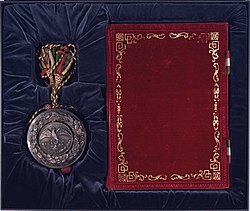
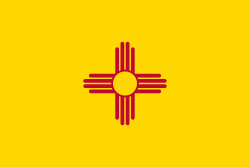
After decades of petitions, New Mexico became the 47th state of the Union, with Santa Fe remaining its capital. Statehood brought full representation in Congress and accelerated modernization of the state's institutions.
Image source: New Mexico
Mar 9, 1916
% complete
Mexican revolutionary Pancho Villa attacked the border town of Columbus, killing Americans and prompting General John J. Pershing's punitive expedition into Mexico. The raid highlighted border instability during the Mexican Revolution.
Image source: Columbus, New Mexico
1942
% complete
The U.S. Army secretly selected Los Alamos as the site of the Manhattan Project laboratory, where scientists including J. Robert Oppenheimer developed the world's first atomic bombs, forever changing the state's economy and global history.
Image source: Los Alamos National Laboratory
Jul 3, 1945
% complete
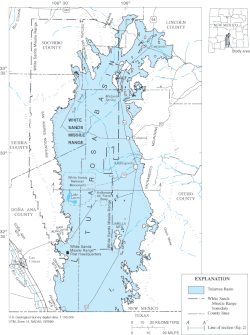
White Sands became America's premier rocket testing facility, launching captured German V-2 rockets after World War II and later supporting missile development, including Wernher von Braun's team's early work that led to spaceflight advances.
Image source: White Sands Missile Range
Jul 16, 1945
% complete
The first atomic bomb test in history took place near Alamogordo at the White Sands Proving Ground, ushering in the nuclear age. The blast vaporized the desert tower and left radioactive glass called trinitite across the site.
Image source: Trinity (nuclear test)
Jul 1947
% complete
A mysterious object crashed on a ranch near Roswell, and the military's initial explanation of a weather balloon fueled decades of speculation about extraterrestrials. The incident made Roswell a global icon of UFO lore and tourism.
Image source: Roswell incident
May 7, 1966
% complete
The Sandia Peak Tramway began carrying passengers from Albuquerque to the crest of the Sandia Mountains. At 2.7 miles long it was the longest passenger aerial tramway in the world and became a major tourist attraction.
Image source: Sandia Peak Tramway
Dec 19, 1980
% complete
Congress elevated Chaco Canyon from a national monument to Chaco Culture National Historical Park, recognizing its significance as a center of Ancestral Puebloan civilization. It was later designated a UNESCO World Heritage Site in 1987.
Image source: Chaco Culture National Historical Park
Mar 2014
% complete
Las Cruces continued rapid growth in the 21st century as New Mexico's second-largest city, expanding aerospace, logistics, and education sectors anchored by New Mexico State University and nearby White Sands facilities.
Image source: Las Cruces, New Mexico
Nov 6, 2018
% complete
Michelle Lujan Grisham won the governorship, becoming the second woman elected governor of New Mexico. Her administration focused on education funding, renewable energy development, and cannabis legalization.
Image source: Michelle Lujan Grisham
Or browse the full history timeline directory, with more than 2,000 topics.
This History of New Mexico timeline was generated with the help of AI, using information found on the internet.
We work hard to keep these timelines accurate, but mistakes do get through. If you spot one, email us at [email protected] and we'll fix it for future visitors.
Generate yours with AI or build it from scratch, for free.
Export your timeline, add your own events, edit or remove AI-generated events, and much more
No credit card required.
Cancel anytime.
Cancel anytime.
You can create an unlimited number of timelines with up to 10 events on each one, customize how they look, export them to PDF, PNG, PowerPoint, CSV, and Excel, and share them with a link. Paid plans raise the event limit and add features like spreadsheet imports and collaborators.
Yes. You can cancel your subscription from your account page at any time, and you will not be charged again. Your subscription stays active for the rest of the period you already paid for.
Yes. We will email you a reminder before the annual renewal, and we will also email you a receipt.
Yes. You can email us within 15 days of any payment, and we will issue you a full refund.
Check out our pricing docs or send us an email anytime: [email protected].