-
Use Cases
-
Resources
-
Pricing
New Orleans, founded in 1718 by Jean-Baptiste Le Moyne de Bienville, is one of America's most culturally distinctive cities. Shaped by French and Spanish colonial rule, the Louisiana Purchase, its role as a major slave trade port, the birth of jazz in the early 20th century, and the devastation and recovery following Hurricane Katrina in 2005, the city's history reflects a unique blend of Creole, African, Caribbean, and American influences. More Less
Apr 9, 1682
% complete
Explorer René-Robert Cavelier, Sieur de La Salle, traveled down the Mississippi River and claimed the entire Mississippi Valley for France, naming the territory Louisiana in honor of King Louis XIV. This claim laid the foundation for the eventual founding of New Orleans at the river's mouth.
Image source: René-Robert Cavelier, Sieur de La Salle
May 7, 1718
% complete
Jean-Baptiste Le Moyne, Sieur de Bienville, founded the city of Nouvelle-Orléans on behalf of the Mississippi Company on a crescent-shaped bend of the Mississippi River. The site was chosen for its access to the river and proximity to Lake Pontchartrain.
Image source: History of New Orleans
Jun 1, 1719
% complete
The first shiploads of enslaved Africans arrived in New Orleans in 1719, beginning the institution of slavery that would shape the city's economy, culture, and demographics for the next century and a half.
Image source: History of slavery in Louisiana
Sep 12, 1722
% complete
A powerful hurricane struck New Orleans in September 1722, destroying most of the young settlement's buildings. The disaster prompted the rebuilding of the town on higher ground with a more organized grid plan that became the French Quarter's layout.
Image source: Hurricane preparedness in New Orleans
Mar 21, 1788
% complete
A devastating fire on Good Friday destroyed over 850 buildings, including most of the original French colonial structures. The city was rebuilt largely in Spanish architectural style, giving the French Quarter its distinctive look with courtyards and wrought-iron balconies.
Image source: Great New Orleans Fire (1788)
Oct 1, 1800
% complete
Under the secret Third Treaty of San Ildefonso, Spain returned the Louisiana Territory to Napoleonic France, though Spanish administration continued until the Louisiana Purchase. The transfer set the stage for the sale of New Orleans to the United States.
Image source: Third Treaty of San Ildefonso
Dec 20, 1803
% complete
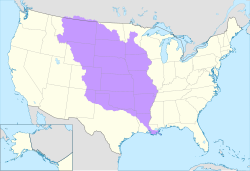
The United States formally took possession of New Orleans after purchasing the Louisiana Territory from France for $15 million. Control of the port city gave America command of the Mississippi River's mouth, transforming it into a gateway for westward expansion.
Image source: Louisiana Purchase
Feb 17, 1805
% complete
The Louisiana Territorial legislature officially incorporated New Orleans as an American city, establishing municipal government as the former colonial outpost transitioned into a growing urban center under U.S. rule.
Image source: New Orleans
Jan 8, 1815
% complete
General Andrew Jackson led American forces to a decisive victory over the British in the final major battle of the War of 1812, fought after the Treaty of Ghent had been signed but before news reached America. The triumph made Jackson a national hero and sparked a surge of American pride.
Image source: Battle of New Orleans
Jan 1, 1820 - Jan 1, 1860
% complete
During the antebellum decades, New Orleans grew into one of the busiest ports in the world, exporting vast quantities of cotton and sugar produced by enslaved labor along the Mississippi River. By 1840, it was among the largest cities in the United States.
Image source: Port of New Orleans
Feb 24, 1857
% complete
The Mystick Krewe of Comus staged the first organized Mardi Gras parade with themed floats, transforming the carnival tradition into the elaborate celebration New Orleans is famous for today. Krewes soon proliferated, each adding parades, balls, and pageantry.
Image source: Mardi Gras in New Orleans
Jan 26, 1861
% complete
Louisiana voted to secede from the Union following Abraham Lincoln's election, joining the Confederacy. New Orleans, the South's largest city and richest port, became a critical strategic prize in the coming Civil War.
Image source: Louisiana in the American Civil War
Apr 25, 1862 - May 1, 1862
% complete
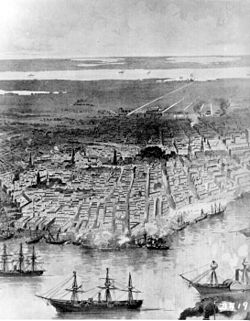
Flag Officer David Farragut's Union fleet ran past the forts guarding the Mississippi River approaches and captured New Orleans, the Confederacy's largest city. The occupation, administered partly by General Benjamin Butler, lasted for the rest of the war.
Image source: Capture of New Orleans
May 1, 1865 - Jan 1, 1877
% complete
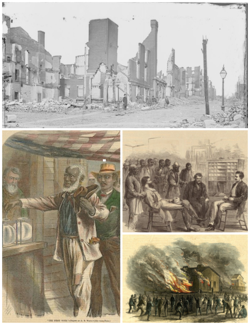
After the Civil War ended, New Orleans underwent Reconstruction, with federal troops overseeing new civil rights protections for freedpeople. The period saw political turmoil, including the 1866 New Orleans massacre, before white supremacist Democrats regained control in 1877.
Image source: Reconstruction era
Jan 1, 1895 - Jan 1, 1917
% complete
In the late 19th and early 20th centuries, musicians like Buddy Bolden pioneered jazz in New Orleans, blending African rhythms, blues, ragtime, and brass band traditions. Storyville, the city's legal red-light district, provided venues where the revolutionary musical form flourished.
Jan 1, 1897
% complete
Alderman Sidney Story's ordinance created a legalized red-light district that became legendary for its music, gambling, and nightlife. Storyville helped launch the careers of jazz pioneers like Jelly Roll Morton before it was closed by the Navy in 1917.
Image source: Storyville, New Orleans
Jul 23, 1900 - Jul 27, 1900
% complete
Violence erupted after Robert Charles, a Black laborer, resisted arrest and killed police officers, triggering days of white mob violence against the city's Black community. The riot exposed deep racial tensions and prompted thousands of African Americans to leave the city.
Image source: Robert Charles riots
Feb 26, 1917
% complete
The New Orleans-based Original Dixieland Jass Band recorded 'Livery Stable Blues' in New York, the first jazz record ever released. The recording spread New Orleans music nationwide and marked the beginning of the Jazz Age.
Image source: Original Dixieland Jass Band
Apr 1, 1927 - Jun 1, 1927
% complete
The catastrophic Mississippi River flood inundated vast areas of Louisiana, though New Orleans itself was spared when officials dynamited the levee at Caernarvon to divert water away from the city. The flood displaced hundreds of thousands and reshaped federal flood control policy.
Image source: Great Mississippi Flood of 1927
Sep 10, 1935
% complete
U.S. Senator Huey P. Long, Louisiana's dominant political figure who built infrastructure projects benefiting New Orleans, was shot in the state capitol and died two days later. His death transformed Louisiana politics and left his Longite machine to his allies.
Image source: Huey Long
Jan 1, 1941 - Aug 1, 1945
% complete
Andrew Higgins's New Orleans factories mass-produced LCVP landing craft, known as Higgins boats, which carried Allied troops ashore at D-Day and across the Pacific. The wartime boom brought prosperity and jobs to the city, and Eisenhower credited Higgins with winning the war.
Image source: LCVP (United States)
Nov 1, 1950
% complete
The Pontchartrain Expressway opened as New Orleans' first modern freeway, connecting downtown to Lake Pontchartrain. It was part of postwar highway construction that reshaped the city, sometimes cutting through historic neighborhoods.
Nov 14, 1960
% complete
Six-year-old Ruby Bridges famously integrated William Frantz Elementary School amid fierce protests, becoming an icon of the civil rights movement. Federal marshals escorted her past angry crowds as New Orleans schools were desegregated under court order.
Image source: New Orleans school desegregation crisis
Aug 3, 1975
% complete
The Louisiana Superdome opened as the world's largest indoor stadium, becoming home to the Saints and host to Super Bowls, concerts, and conventions. It anchored the city's tourism economy and later played a dramatic role during Hurricane Katrina.
Image source: Caesars Superdome
May 1, 1978
% complete
Ernest 'Dutch' Morial won election as New Orleans' first African American mayor, marking a milestone in the city's political history. He served two terms and championed minority business participation in city contracts.
Image source: Ernest Nathan Morial
May 12, 1984 - Nov 11, 1984
% complete
New Orleans hosted the Louisiana World Exposition along the Mississippi Riverfront, drawing millions of visitors despite financial struggles. The fair spurred redevelopment of the riverfront area and boosted the city's convention industry.
Image source: 1984 Louisiana World Exposition
Aug 29, 2005 - Aug 31, 2005
% complete
Hurricane Katrina's storm surge breached the federal levee system, flooding about 80 percent of New Orleans and killing over 1,500 people in Louisiana. Tens of thousands sheltered in the Superdome and Convention Center in dire conditions, and the disaster became one of the costliest in U.S. history.
Image source: Hurricane Katrina
May 20, 2006
% complete
Mayor Ray Nagin won reelection in a runoff against Mitch Landrieu as displaced residents returned to vote, many from out-of-state shelters. Nagin oversaw initial recovery efforts but was later convicted of corruption charges in 2014.
Image source: 2006 New Orleans mayoral election
Apr 20, 2010 - Sep 19, 2010
% complete
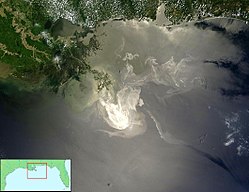
The explosion of the Deepwater Horizon rig caused the largest marine oil spill in history, devastating Gulf fisheries and coastal wetlands vital to Louisiana. New Orleans served as a hub for response efforts, and the spill dealt another economic blow to the recovering region.
Image source: Deepwater Horizon oil spill
Jan 1, 2018 - Dec 31, 2018
% complete
New Orleans marked 300 years since its founding in 1718 with a yearlong tricentennial celebration featuring festivals, exhibitions, and cultural events honoring the city's unique blend of French, Spanish, African, Caribbean, and American heritage.
Image source: NCIS: New Orleans season 4
Oct 12, 2019
% complete
The partially constructed Hard Rock Hotel in downtown New Orleans collapsed during construction, killing three workers and prompting investigations into building safety violations. The wreckage stood for months, becoming a symbol of construction oversight failures.
Aug 29, 2021 - Aug 30, 2021
% complete
Hurricane Ida made landfall in Louisiana on the 16th anniversary of Katrina as a Category 4 storm, knocking out power across New Orleans for days. Post-Katrina levee improvements largely protected the city from catastrophic flooding, demonstrating the rebuilt flood defenses.
Image source: Hurricane Ida
Or browse the full history timeline directory, with more than 2,000 topics.
This History of New Orleans timeline was generated with the help of AI, using information found on the internet.
We work hard to keep these timelines accurate, but mistakes do get through. If you spot one, email us at [email protected] and we'll fix it for future visitors.
Generate yours with AI or build it from scratch, for free.
Export your timeline, add your own events, edit or remove AI-generated events, and much more
No credit card required.
Cancel anytime.
Cancel anytime.
You can create an unlimited number of timelines with up to 10 events on each one, customize how they look, export them to PDF, PNG, PowerPoint, CSV, and Excel, and share them with a link. Paid plans raise the event limit and add features like spreadsheet imports and collaborators.
Yes. You can cancel your subscription from your account page at any time, and you will not be charged again. Your subscription stays active for the rest of the period you already paid for.
Yes. We will email you a reminder before the annual renewal, and we will also email you a receipt.
Yes. You can email us within 15 days of any payment, and we will issue you a full refund.
Check out our pricing docs or send us an email anytime: [email protected].