-
Use Cases
-
Resources
-
Pricing
The history of noodles spans thousands of years, beginning with ancient archaeological discoveries in China and evolving into one of the world's most beloved staple foods. This timeline traces the development of noodles across cultures, from hand-pulled Chinese la mian and Italian pasta traditions to the revolutionary invention of instant ramen in 1958. More Less
399 BC
% complete
Some Italian writers have argued that pasta in Italy dates back to the Etruscan civilization of the fourth century BC, citing implements found in a tomb dated to that period that show some resemblance to pasta-making equipment.
Image source: Etruscan civilization
100 BC
% complete
In the 1st century BCE, the Roman poet Horace wrote of fried sheets of dough called lagana, an early literary reference to a pasta-like food enjoyed in ancient Rome.
Image source: Laganas
Jan 1, 150
% complete
The 2nd-century Greek physician Galen described a homogenous mixture of flour and water called itrion, providing one of the earliest written accounts of a noodle-like foodstuff.
Image source: Galen
Jan 1, 200 - Dec 31, 500
% complete
The Jerusalem Talmud, compiled between the 3rd and 5th centuries, describes itrium among Jewish communities, documenting an early form of boiled dough strips.
Image source: Jerusalem Talmud

Jan 1, 300
% complete
Historian Gil Marks wrote that noodles spread from China along the Silk Road through Central Asia, reaching Persia by around the fourth century, carrying the food westward.
Image source: Silk Road
Jan 1, 400
% complete
In the fifth century, Arabs adapted noodles for long journeys across arid lands, producing what is considered the first written record of dry pasta.
Image source: Pasta
Jan 1, 850
% complete
The 9th-century physician and lexicographer Isho bar Ali defined itriyya, an Arabic borrowing from Greek, as string-like shapes made of semolina and dried before cooking.
Image source: Isho bar Ali
Jan 1, 1200
% complete
By the 13th century, kesme or erişte noodles had become established foods among Turkic peoples of Central Asia, reflecting the deep roots of noodle-making along the Silk Road.
Image source: Kesme
Jan 1, 1271 - Dec 31, 1295
% complete
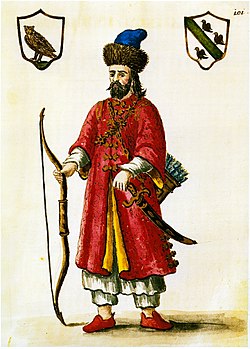
By the time Marco Polo traveled to China during the Yuan dynasty in the late 13th century, pasta-like foods had already been well established in Italy, contradicting the myth that he introduced pasta to Europe.
Image source: Marco Polo
Jan 1, 800
% complete
As early as the 9th century, wheat noodles known as udon were adapted in Japan from a Chinese recipe, becoming a lasting staple of Japanese cuisine.
Image source: Udon
Jan 1, 1392 - Dec 31, 1897
% complete
During the Joseon Dynasty of Korea (1392–1897), innovations continued with noodles made from buckwheat known as naengmyeon, which became a beloved Korean dish often served cold.
Image source: Naengmyeon
Jan 1, 800
% complete
Food writer Jeffrey Steingarten asserts that the Moors had introduced pasta in the Emirate of Sicily in the 9th century, bringing Arab noodle traditions to the Mediterranean island.
Image source: Emirate of Sicily
Jan 1, 900 - Dec 31, 1100
% complete
Food historians Françoise Sabban and Massimo Montanari noted in Pasta: The Story of a Universal Food that the first noodles to appear in Italy occurred in the 10th or 11th centuries.
Image source: Pasta
Jan 1, 1000
% complete
Historian Gil Marks documented in Encyclopedia of Jewish Food that pasta spread from Sicily to mainland Italy sometime after the tenth century, following its arrival via Arab influence.
Image source: Sicily
Jan 1, 1154
% complete
In 1154, the geographer Muhammad al-Idrisi wrote that itriyya was manufactured and exported from Norman Sicily, one of the clearest medieval records of a thriving pasta industry.
Image source: Muhammad al-Idrisi
Jan 1, 1200
% complete
References to pasta dishes only became increasingly frequent across the Italian peninsula starting in the 13th century, marking pasta's rise as a mainstream Italian food.
Image source: Italian cuisine
Jan 1, 1700 - Dec 31, 1799
% complete
The word for noodles in English was borrowed during the 18th century from the German word Nudel, embedding the food's Germanic heritage directly into the English language.
Image source: Noodle
Jan 1, 2005
% complete
In 2005, a team of archaeologists reported finding an earthenware bowl containing 4,000-year-old noodles at the Lajia archaeological site in China, made by the Qijia culture — the oldest physical evidence of noodles ever discovered.
Image source: Lajia
Jan 1, 1725
% complete
In Germany, documents dating from 1725 mention Spätzle, a small egg-based dumpling-noodle that remains a signature element of Swabian and German cuisine today.
Image source: Spätzle
Or browse the full history timeline directory, with more than 2,000 topics.
This History of Noodles timeline was generated with the help of AI, using information found on the internet.
We work hard to keep these timelines accurate, but mistakes do get through. If you spot one, email us at [email protected] and we'll fix it for future visitors.
Generate yours with AI or build it from scratch, for free.
Export your timeline, add your own events, edit or remove AI-generated events, and much more
No credit card required.
Cancel anytime.
Cancel anytime.
You can create an unlimited number of timelines with up to 10 events on each one, customize how they look, export them to PDF, PNG, PowerPoint, CSV, and Excel, and share them with a link. Paid plans raise the event limit and add features like spreadsheet imports and collaborators.
Yes. You can cancel your subscription from your account page at any time, and you will not be charged again. Your subscription stays active for the rest of the period you already paid for.
Yes. We will email you a reminder before the annual renewal, and we will also email you a receipt.
Yes. You can email us within 15 days of any payment, and we will issue you a full refund.
Check out our pricing docs or send us an email anytime: [email protected].