
-
Use Cases
-
Resources
-
Pricing
The hot dog is a beloved American food with roots tracing back to European sausage-making traditions. German and Austrian immigrants brought frankfurters and wienerwurst to the United States in the 1800s, where the served-in-a-bun innovation transformed it into an iconic street food. From Coney Island vendors to baseball parks and Nathan's Famous hot dog eating contest, the hot dog has become a symbol of American cuisine and culture. More Less
Sep 8, 1562
% complete
According to tradition, Frankfurter Würstchen were given to the people on the event of imperial coronations, starting with the coronation of Maximilian II, Holy Roman Emperor, as King.
Image source: Maximilian II, Holy Roman Emperor
Jan 1, 1800
% complete
In Germany, the consumption of dog meat was common in Saxony, Silesia, Anhalt, and Bavaria during the 19th and 20th centuries, a practice that contributed to speculation about the origin of the term 'hot dog'.
Image source: Dog meat
Jan 1, 1800
% complete
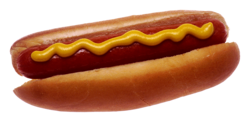
Johann Georg Lahner, an 18th/19th century butcher from the Franconian city of Coburg, is said to have brought the Frankfurter Würstchen to Vienna, where he added beef to the mixture and simply called it Frankfurter, creating the wiener-style sausage.
Image source: Hot dog
Jan 1, 1867
% complete
In 1867 Charles Feltman had a cart made with a stove on which to boil sausages, and a compartment to keep buns fresh, pioneering the sale of hot dogs with buns at Coney Island.
Image source: Charles Feltman
Jan 1, 1871
% complete
In 1871 Charles Feltman leased land to build a permanent restaurant, and the business grew rapidly, selling far more than just the 'Coney Island Red Hots' as they were known.
Jan 1, 1880
% complete
According to one account, Feuchtwanger's wife proposed the use of a bun in 1880: Feuchtwanger sold hot dogs on the streets of St. Louis, helping popularize the sausage-in-a-bun format.
May 1, 1893 - Oct 30, 1893
% complete
In one version of the story, Antoine Feuchtwanger, or Anton Ludwig Feuchtwanger, served sausages in rolls at the 1893 World's Columbian Exposition in Chicago, allegedly because the white gloves provided to customers to protect their hands were being kept as souvenirs.
Image source: World's Columbian Exposition
Jan 1, 1900
% complete
Although particularly connected with New York City and its cuisine, the hot dog eventually became ubiquitous throughout the US during the 20th century, becoming a staple of ballparks, street carts, and backyard cookouts nationwide.
Jan 1, 1901
% complete
The claim is that, while working at the New York Polo Grounds in 1901, Harry Stevens came upon the idea of using small French rolls to hold the sausages when the waxed paper they were using ran out.
Image source: Polo Grounds
Apr 30, 1904 - Dec 1, 1904
% complete
In another version of the story, Antoine Feuchtwanger served sausages in rolls at the 1904 Louisiana Purchase Exposition in St. Louis, again allegedly because customers kept the white gloves provided to protect their hands as souvenirs.
Image source: Louisiana Purchase Exposition
Jan 1, 1925
% complete
In 1925, Erwin O. Freund invented a process in Chicago for making 'skinless' hot dogs, in which a long tube of thin cellulose used as a cooking casing is removed between cooking and packaging.
Image source: Chicago-style hot dog
Jan 1, 1929
% complete
Skinner's Restaurant, in Lockport, Manitoba, is reputed to be Canada's oldest hot dog outlet in continuous operation. It was founded in 1929 by Jim Skinner Sr. and remains a landmark for hot dog lovers.
Jan 1, 1893
% complete
The term 'hot dog' appeared in newspapers in 1893, providing early documented use of the phrase that would become synonymous with the beloved sausage sandwich.
Jan 1, 1900
% complete
A popular legend claims that newspaper cartoonist Thomas Aloysius 'Tad' Dorgan coined the term 'hot dog' around 1900 after observing vendors selling 'red-hot dachshund sausages' at baseball games.
Image source: Tad Dorgan
Jan 1, 1906
% complete
Because 'hot dog' appeared in other newspapers in 1893, the legend that the term was coined by Thomas Aloysius 'Tad' Dorgan around 1900 is impossible; Dorgan's earliest documented use of the term dates to 1906.
Jan 1, 2015
% complete
In 2015, the National Hot Dog and Sausage Council (NHDSC) declared that a hot dog is not a sandwich, settling a long-running culinary debate with an official ruling from the industry body.
Jan 1, 2005
% complete
In 2005, the US-based National Hot Dog & Sausage Council (part of the American Meat Institute) found mustard to be the most popular hot dog condiment, preferred by 32% of respondents; 23% favored ketchup; 17% chili; 9% pickle relish, and 7% onions.
Aug 4, 2006
% complete
The hot dog and bun were the center of a media event in celebration of an Association's 50th anniversary on August 4, 2006, at the Akasaka Prince Hotel in Tokyo, highlighting the food's international appeal.
May 31, 2012
% complete
On May 31, 2012, Guinness World Records certified the world record for the most expensive hot dog at US$145.49, showcasing how far gourmet versions of the humble sausage have come.
Jul 4, 2020
% complete
Competitive eater Miki Sudo holds the record for most hot dogs eaten in 10 minutes by a female at 48.5 hot dogs, setting this record on July 4, 2020.
Image source: Miki Sudo
Sep 2, 2024
% complete
The 'Kobayashi: Unfinished Beef' event took place on September 2, 2024, pitting legendary competitive eaters against each other in a highly anticipated hot dog eating showdown.
Image source: Chestnut vs. Kobayashi: Unfinished Beef
Or browse the full history timeline directory, with more than 2,000 topics.
This History of Hot Dogs timeline was generated with the help of AI, using information found on the internet.
We work hard to keep these timelines accurate, but mistakes do get through. If you spot one, email us at [email protected] and we'll fix it for future visitors.
Generate yours with AI or build it from scratch, for free.
Export your timeline, add your own events, edit or remove AI-generated events, and much more
No credit card required.
Cancel anytime.
Cancel anytime.
You can create an unlimited number of timelines with up to 10 events on each one, customize how they look, export them to PDF, PNG, PowerPoint, CSV, and Excel, and share them with a link. Paid plans raise the event limit and add features like spreadsheet imports and collaborators.
Yes. You can cancel your subscription from your account page at any time, and you will not be charged again. Your subscription stays active for the rest of the period you already paid for.
Yes. We will email you a reminder before the annual renewal, and we will also email you a receipt.
Yes. You can email us within 15 days of any payment, and we will issue you a full refund.
Check out our pricing docs or send us an email anytime: [email protected].