
-
Use Cases
-
Resources
-
Pricing
The hot air balloon is the oldest successful human-carrying flight technology. Invented in France in 1783 by the Montgolfier brothers, it revolutionized humanity's dream of flying. Over the centuries, hot air balloons evolved from simple paper-and-fabric craft into modern nylon balloons with propane burners used for sport, tourism, science, and record-breaking adventures around the globe. More Less
1700
% complete
In the 18th century, the Portuguese Jesuit priest Bartolomeu de Gusmão in colonial Brazil envisioned an aerial apparatus named Passarola, which is considered the predecessor of the hot air balloon.
Image source: Bartolomeu de Gusmão
1709
% complete
In 1709, Gusmão wrote Manifesto summário para os que ignoram poderse navegar pelo elemento do ar (Short Manifesto for those who are unaware that it is possible to sail through the element air), leaving designs for a manned air vessel.
1709
% complete
In 1709, John V of Portugal funded Gusmão's project following a petition, and an unmanned demonstration was performed at Casa da Índia in the presence of John V and Queen Maria Anna of Austria, with several witnesses including Cardinal Michelangelo Conti. A later article dated October 20, 1786, by the London Daily Universal Register stated that the inventor was able to raise himself by the use of his prototype.
Jun 4, 1783
% complete
The French brothers Joseph-Michel and Jacques-Étienne Montgolfier developed a hot air balloon in Annonay, Ardèche, France, demonstrating it publicly on June 4, 1783 with an unmanned flight lasting 10 minutes.
Image source: Montgolfier brothers
Sep 19, 1783
% complete
On September 19, 1783, the Montgolfier brothers demonstrated their balloon publicly again, making an unmanned flight lasting about 10 minutes carrying animals, paving the way for manned flights later that year.
Oct 15, 1783
% complete
After experimenting with unmanned balloons and flights with animals, the first balloon flight with humans aboard, a tethered flight, was performed on or around October 15, 1783, by Jean-François Pilâtre de Rozier from the yard of the Reveillon workshop in the Faubourg Saint-Antoine.
Image source: Jean-François Pilâtre de Rozier
Nov 21, 1783
% complete
The first untethered manned hot air balloon flight in the world was performed in Paris by Jean-François Pilâtre de Rozier and François Laurent d'Arlandes on November 21, 1783, in a balloon created by the Montgolfier brothers.
Image source: Hot air balloon
1785
% complete
The Rozière balloon, introduced in 1785, is the main type of hybrid balloon, named after its creator Jean-François Pilâtre de Rozier. It combines features of different lifting gases and remains in use today.
Image source: Rozière balloon
Jun 26, 1794
% complete
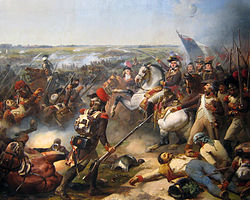
The first military use of a hot air balloon happened on June 26, 1794 during the Battle of Fleurus, when the French used the balloon l'Entreprenant for aerial observation.
Image source: Battle of Fleurus (1794)
Aug 2, 1861
% complete
On August 2, 1861, Thaddeus Lowe designed the first military funded balloon in America for the Union, marking the beginning of American military ballooning during the Civil War era.
Image source: Thaddeus S. C. Lowe
1885
% complete
Observation balloon usage skyrocketed in Britain by the Royal Engineers at the end of the 19th century, with deployments to Sudan in 1885 and later to South Africa.
Image source: Observation balloon
1899 - 1902
% complete
British Royal Engineers deployed observation balloons in South Africa during the Second Boer War from 1899 to 1902, demonstrating the continued military value of lighter-than-air observation platforms.
Image source: Second Boer War
1900
% complete
By the 20th century, hydrogen or illumination gas became the most used inflation fuel, as it was lighter than air, largely supplanting hot air for many ballooning applications until the modern propane era.
Image source: Balloon (aeronautics)
1950
% complete
Modern hot air balloons, with an onboard heat source, were developed by Ed Yost and Jim Winker beginning during the 1950s, revolutionizing recreational ballooning.
Image source: Ed Yost
Oct 22, 1960
% complete
The work of Ed Yost and Jim Winker resulted in the first successful flight of a modern hot air balloon with an onboard heat source on October 22, 1960, launching the modern ballooning era.
1967
% complete
The first modern hot air balloon to be made in the United Kingdom was the Bristol Belle, built in 1967, helping establish British balloon manufacturing.
Image source: Bristol Belle
Jun 6, 1988
% complete
Per Lindstrand set a world altitude record of 19,811 m (64,997 ft) on June 6, 1988, in Plano, Texas, a mark that stood for over seventeen years.
Jan 15, 1991
% complete
On January 15, 1991, Per Lindstrand and Richard Branson of the UK flew 7,671.91 km (4,767.10 mi) from Japan to Northern Canada in the Virgin Pacific Flyer, a landmark long-distance balloon flight.
Mar 1, 1999 - Mar 21, 1999
% complete
The balloon left Château-d'Oex, Switzerland, on March 1, 1999, and landed at 1:02 a.m., completing the first nonstop round-the-world balloon flight.
Image source: Breitling Orbiter
Jul 3, 2002
% complete
Steve Fossett, flying solo, exceeded the record for briefest time traveling around the world on July 3, 2002, on his sixth attempt, in 320 hours 33 minutes.
Image source: Steve Fossett
Nov 26, 2005
% complete
On November 26, 2005, Vijaypat Singhania set the world altitude record for highest hot air balloon flight, reaching 21,027 m (68,986 ft).
Image source: Vijaypat Singhania
Jan 2007
% complete
Raven Aerostar of Sioux Falls, South Dakota, was North America's largest balloon manufacturer and a close second in world manufacturing before ceasing to build balloons in January 2007.
Image source: Raven Industries
Jul 11, 2016 - Jul 23, 2016
% complete
Fedor Konyukhov flew solo round the world on his first attempt in a hybrid hot air/helium balloon from July 11 to July 23, 2016, setting a round-the-world time of 268 hours 20 minutes.
Image source: Fyodor Konyukhov
Aug 13, 1989
% complete
On August 13, 1989, two hot air balloons collided at Alice Springs, Northern Territory, Australia, causing one to fall and killing all 13 people on board.
Image source: 1989 Alice Springs hot air balloon crash
Jan 1, 2011
% complete
On January 1, 2011, a hot air balloon attempting a high-altitude flight crashed at Pratten's Bowls Club in Westfield, Somerset, near Bath, England, killing both people on board.
Image source: Hot air balloon
Jan 7, 2012
% complete
On January 7, 2012, a hot air balloon collided with a power line, caught fire and crashed at Carterton, North Island, New Zealand, killing all 11 people on board.
Image source: 2012 Carterton hot air balloon crash
Aug 23, 2012
% complete
On August 23, 2012, a storm blew a hot air balloon to the ground, causing it to catch fire on impact near Ljubljana, Slovenia.
Feb 26, 2013
% complete
On February 26, 2013, a hot air balloon carrying foreign tourists ignited and crashed near the ancient city of Luxor, Egypt, killing 19 of the 21 people on board, making it the deadliest balloon accident in history.
Image source: 2013 Luxor hot air balloon crash
Jul 30, 2016
% complete
On July 30, 2016, a hot air balloon carrying 16 people caught fire and crashed near Lockhart, Texas.
Image source: 2016 Lockhart hot air balloon crash
Jun 26, 2021
% complete
On June 26, 2021, a hot air balloon carrying five people made contact with a power line and crashed in Albuquerque, New Mexico.
Jan 14, 2024
% complete
On January 14, 2024, a hot air balloon crashed outside Eloy, Arizona, killing the three passengers and pilot.
Jun 21, 2025
% complete
On June 21, 2025, a hot air balloon crashed after catching fire in Praia Grande, Santa Catarina, Brazil, killing 8 of the 21 people on board.
Image source: 2025 Santa Catarina hot air balloon crash
Or browse the full history timeline directory, with more than 2,000 topics.
This History of Hot Air Balloons timeline was generated with the help of AI, using information found on the internet.
We work hard to keep these timelines accurate, but mistakes do get through. If you spot one, email us at [email protected] and we'll fix it for future visitors.
Generate yours with AI or build it from scratch, for free.
Export your timeline, add your own events, edit or remove AI-generated events, and much more
No credit card required.
Cancel anytime.
Cancel anytime.
You can create an unlimited number of timelines with up to 10 events on each one, customize how they look, export them to PDF, PNG, PowerPoint, CSV, and Excel, and share them with a link. Paid plans raise the event limit and add features like spreadsheet imports and collaborators.
Yes. You can cancel your subscription from your account page at any time, and you will not be charged again. Your subscription stays active for the rest of the period you already paid for.
Yes. We will email you a reminder before the annual renewal, and we will also email you a receipt.
Yes. You can email us within 15 days of any payment, and we will issue you a full refund.
Check out our pricing docs or send us an email anytime: [email protected].