
-
Use Cases
-
Resources
-
Pricing
960 - 1279
Written sources from the Song dynasty describe rotary fans for air conditioning as being used even more widely than they had been during the Han dynasty.
Image source: Song dynasty
1558
In Natural Magic, Giambattista della Porta described chilling ice far below its freezing point by mixing it with potassium nitrate, then called nitre. The technique demonstrated an early chemical approach to producing intense cooling.
Image source: Giambattista della Porta
1620
Cornelis Drebbel demonstrated “Turning Summer into Winter” for James I of England by chilling part of the Great Hall of Westminster Abbey with an apparatus of troughs and vats.
Image source: Cornelis Drebbel
1758
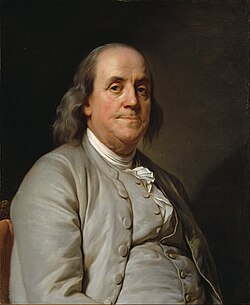
Benjamin Franklin and John Hadley, a chemistry professor at the University of Cambridge, conducted experiments showing how evaporation could rapidly cool an object.
Image source: Benjamin Franklin
1900 - 2000
Passive cooling techniques remained widespread until the twentieth century, when they fell out of fashion and were increasingly replaced by powered air conditioning.
1800 - 1899
The nineteenth century saw many developments in compression technology, creating the engineering foundation for mechanical refrigeration and later air-conditioning systems.
1820
Michael Faraday discovered that compressing and liquefying ammonia could chill air when the liquefied ammonia was allowed to evaporate. His work established an important refrigeration principle.
Image source: Michael Faraday
1842
Florida physician John Gorrie used compressor technology to create ice at his hospital in Apalachicola, Florida. He used the ice to cool air for his patients.
Image source: John Gorrie
1851
John Gorrie was granted a patent for his ice-making and cooling invention in 1851. After his main backer died, however, he could not successfully realize the invention commercially.
1851
James Harrison created the first mechanical ice-making machine in Geelong, Australia. His work advanced vapor-compression refrigeration and industrial ice production.
1855
James Harrison received a patent for an ether vapor-compression refrigeration system that produced three tons of ice per day, demonstrating the potential of mechanical refrigeration at industrial scale.
1860
In 1860, James Harrison established a second ice company, extending the commercial development of mechanical ice production.
1894
Hungarian engineer István Röck began manufacturing industrial ammonia compressors driven by electric motors. The compressors were developed in collaboration with the Ganz Works and represented a shift away from bulky reciprocating steam engines.
1896
By 1896, Röck's factory produced dry-air cooling apparatuses for cooling and dehumidifying hospitals, theaters, large public halls, and residential rooms, before modern air conditioning was widely commercialized.
1902
American engineer Willis Carrier designed what is widely regarded as the first modern electrical air-conditioning system for the Sackett-Wilhelms Lithographing & Publishing Company in Brooklyn, New York.
1906
Cramer, an engineer and textile-mill owner based in Charlotte, North Carolina, coined the term “air conditioning.” The phrase soon became associated with systems that controlled air temperature and humidity.
Image source: Air conditioning
1906
Carrier sold his spray-type apparatus to Chronicle Cotton Mills in Belmont, North Carolina, in Gaston County. The installation is identified by the Encyclopedia of North Carolina as the first air-conditioning system in the Southern United States.
Jan 2, 1906
Willis Carrier received U.S. patent 808,897 for an Apparatus for Treating Air. The spray-type system was designed to humidify or dehumidify air.
1907
Buffalo Forge established the Carrier Air Conditioning Company of America to manufacture Carrier equipment and engineer systems for customers, incorporating the newly coined term into its name.
1907
Using lessons from the Chronicle project, Carrier installed a counter-flow device at Lowell Cotton Mill elsewhere in Gaston County. The device introduced greater moisture into the air.
1915
Willis Carrier and six colleagues founded the Carrier Engineering Corporation to manufacture and sell heating, ventilation, and air-conditioning systems.
1914
The first domestic air-conditioning system was installed in Minneapolis in the home of Charles Gilbert Gates.
1931
H. H. Schultz and J. Q. Sherman developed what would become the most common type of individual room air conditioner: a unit designed to sit on a window ledge.
1932
Individual room air-conditioning units went on sale in 1932 for US$10,000 to $50,000, equivalent to approximately $200,000 to $1,200,000 in 2025 dollars.
1933
A year after room air conditioners went on sale, the first air-conditioning systems for cars were offered for sale.
Image source: Automotive air conditioning
1935
Chrysler Motors introduced the first practical semi-portable air-conditioning unit, an important step toward more flexible residential and commercial cooling.
1939
Packard became the first automobile manufacturer to offer an air-conditioning unit in its cars.
1945
Robert Sherman of Lynn, Massachusetts, invented a portable, in-window air conditioner that could cool, heat, humidify, dehumidify, and filter air.
1947
Henry Galson developed a more compact and inexpensive version of the in-window air conditioner. More than 43,000 units had been sold by 1947.
1954
Ned Cole, a 1939 architecture graduate of the University of Texas at Austin, developed the first experimental suburb with built-in air conditioning in every house.
1961
Toshiba sold the first mini-split system in Japan, beginning the development of a compact form of air conditioning suited to homes without extensive ductwork.
1968
Mitsubishi Electric sold the first wall-mounted mini-split air conditioner in Japan. Small home sizes in Japan helped motivate the development of this design.
1969
The first mini-split air conditioner was sold in the United States, extending the technology beyond its initial Japanese market.
1973
Daikin invented multi-zone ductless air-conditioning systems, allowing several indoor units to be connected within a larger system.
1980 - 1981
The first inverter air conditioners were released during 1980–1981. Inverter technology enabled more flexible control of compressor speed and cooling output.
1982
Daikin invented variable refrigerant flow systems, which can be understood as larger multi-split systems capable of serving multiple zones.
1995 - 2004
The proportion of urban households in China with air conditioners increased from 8% to 70% between 1995 and 2004.
2010 - 2023
Between 2010 and 2023, air-conditioner use in India tripled to 24 units per 100 households. Ownership was highest in Haryana, Chandigarh, Rajasthan, and Delhi, and lowest in Meghalaya, Tripura, Manipur, and Himachal Pradesh.
2015
Nearly 100 million homes in the United States, or about 87% of U.S. households, had air-conditioning systems as of 2015.
2016
An estimated 1.6 billion air-conditioning units were in use worldwide in 2016. More than half were in China and the United States, with a total cooling capacity of 11,675 gigawatts.
2019
In 2019, an estimated 90% of new single-family homes constructed in the United States included air conditioning, ranging from 99% in the South to 62% in the West.
2020
A 2020 survey estimated that 88% of all U.S. households used air conditioning. The share rose to 93% among homes built between 2010 and 2020.
2025
As of 2025, roughly half of homes in Italy, 40% of homes in Spain, and 20% to 25% of homes in France had air conditioning.
2000
Engineering studies of traditional buildings helped revive and modify passive cooling techniques for twenty-first-century architectural designs.
Aug 2003
The August 2003 heatwave in France resulted in approximately 15,000 deaths. About 80% of the victims were over 75 years old.
Image source: 2003 European heatwave
2010 - 2025
Passive radiative daytime cooling systems underwent a surge of research and development from the 2010s. They were predicted to represent an indoor-space-cooling market of approximately $27 billion by 2025.
2018 - 2050
In 2018, the International Energy Agency predicted that the number of air-conditioning units would grow to around four billion by 2050, with total cooling capacity reaching approximately 23,000 GW and the biggest increases occurring in India and China.
Image source: International Energy Agency
2018 - 2050
An IEA report predicted that electricity use for space cooling could reach around 6,200 TWh by 2050. Without stronger efficiency progress, greenhouse-gas emissions from space cooling were projected to rise from 1,135 million tons in 2016 to 2,070 million tons.
2019
A 2021 report estimated that around 345,000 people aged 65 and older died from heat in 2019, describing many of these deaths as preventable with air conditioning.
Image source: Heat wave
2020
A 2020 study found that areas with lower use of air conditioning correlated with higher rates of heat-related mortality and hospitalizations.
2022
As of 2022, air conditioning used about 7% of global electricity and emitted approximately 3% of global greenhouse gas emissions.
Or browse the full history timeline directory, with more than 2,500 topics.
This History of Air Conditioning timeline was generated with the help of AI, using information found on the internet.
We work hard to keep these timelines accurate, but mistakes do get through. If you spot one, email us at [email protected] and we'll fix it for future visitors.
Generate yours with AI or build it from scratch, for free.
Export your timeline, add your own events, edit or remove AI-generated events, and much more
No credit card required.
Cancel anytime.
Cancel anytime.
You can create an unlimited number of timelines with up to 10 events on each one, customize how they look, export them to PDF, PNG, PowerPoint, CSV, and Excel, and share them with a link. Paid plans raise the event limit and add features like spreadsheet imports and collaborators.
Yes. You can cancel your subscription from your account page at any time, and you will not be charged again. Your subscription stays active for the rest of the period you already paid for.
Yes. We will email you a reminder before the annual renewal, and we will also email you a receipt.
Yes. You can email us within 15 days of any payment, and we will issue you a full refund.
Check out our pricing docs or send us an email anytime: [email protected].