-
Resources
-
Pricing
The history of fireplaces traces how humans evolved from using open hearths for cooking and warmth to designing sophisticated, energy-efficient features for homes and public spaces. More Less
Build a timeline like this one in minutes, for free. Start Yours →
10000 BC - 4000 BC
As settled farming communities emerged, houses increasingly contained permanent hearths built from packed earth, clay, or stone. Their fixed position made the hearth a central architectural and social feature of early homes.
Image source: Neolithic Revolution

7400 BC - 6000 BC
The densely settled Neolithic site of Çatalhöyük in Anatolia contained numerous domestic hearths and ovens. Their placement within rooms illustrates how heating, cooking, craft production, and household life were integrated around fire.
Image source: Çatalhöyük
3300 BC - 1200 BC
Bronze Age houses across Europe, the Mediterranean, and western Asia commonly used clay-lined or stone hearths. Some were circular or horseshoe-shaped, while others were associated with raised platforms, cooking stands, and early flues.
Image source: Bronze Age
2000 BC - 1100 BC
Palaces and elite houses in Minoan Crete and Mycenaean Greece used prominent central hearths, often surrounded by columns or formal architectural spaces. These hearths served practical, ceremonial, and political functions.
Image source: Mycenaean Greece
100 BC - 400
Roman engineers developed the hypocaust, a system in which hot air from a furnace circulated beneath floors and through wall spaces. Although different from an open fireplace, it demonstrated an early move from localized hearth heat toward engineered whole-building heating.
Image source: Hypocaust
100 BC - 400
Roman homes used masonry hearths, braziers, and cooking fireplaces, particularly in kitchens and workshops. Many domestic rooms still relied on portable charcoal containers because open fires produced smoke and required substantial ventilation.
450 - 1066
Early medieval houses in England and northern Europe commonly placed an open hearth in the middle of a hall. Smoke escaped through a roof opening, or louver, because most dwellings lacked a dedicated chimney.
Image source: Anglo-Saxon settlement of Britain
900 - 1200
The open hearth became the organizing feature of the medieval great hall. Household members gathered around a fire positioned on the floor or on a low stone base, while smoke rose into the roof and gradually escaped through openings.
1000 - 1200
In parts of western Europe, builders began placing masonry hearths against walls and connecting them to vertical smoke passages. These arrangements marked the transition from the central open hearth to the built-in fireplace.
1066 - 1200
Norman castles in England and France incorporated large fireplaces into halls and private chambers. Their deep stone surrounds and broad hoods could burn substantial quantities of wood while signaling the status of the building's occupants.
Image source: Norman architecture
1100 - 1400
Permanent chimneys became increasingly common in castles, monasteries, urban houses, and prosperous rural buildings. Masonry flues improved smoke removal and allowed fireplaces to move from the center of the room to exterior walls.
Image source: Chimney
1200 - 1500
Medieval builders refined brick and stone chimney construction, using flues, corbels, and projecting stacks to carry smoke above increasingly complex roofs. These techniques made fireplaces safer and more practical in multi-room buildings.
1480 - 1519
Leonardo da Vinci designed and studied improved fireplaces, chimneys, and ventilation arrangements during the Italian Renaissance. His drawings explored better draft, heat circulation, and reduced smoke, anticipating later efforts to make fireplaces more efficient.
Image source: Leonardo da Vinci
1485 - 1603
Tudor houses commonly featured substantial fireplaces with brick or stone openings, carved overmantels, and multiple flues. The fireplace remained a major source of heat and an important focal point for domestic display.
1500 - 1650
Renaissance architects and craftsmen transformed fireplace surrounds into major decorative elements. Marble, carved stone, tile, heraldry, and elaborate mantels made the fireplace both a heating appliance and a statement of wealth and taste.
1742
Benjamin Franklin introduced his cast-iron Pennsylvania fireplace, commonly called the Franklin stove, in 1742. Its freestanding design exposed more metal to the room and used a rear flue arrangement intended to provide more heat with less wood than a conventional open fireplace.
Image source: Franklin stove
1796
Count Rumford published influential analyses of fireplace geometry in 1796. He advocated tall, shallow fireboxes with splayed side walls and carefully shaped throats, changes that improved radiant heat and smoke draft in open fireplaces.
1796 - 1830
Rumford's principles spread through Britain, Europe, and the United States during the late eighteenth and early nineteenth centuries. Builders adapted the tall, shallow opening for houses, public buildings, and institutional interiors.
1800 - 1900
Growing cities increasingly burned coal in domestic fireplaces and specialized coal grates. Coal produced sustained heat but also smoke, soot, and sulfur pollution, requiring new grate designs and better chimney maintenance.
1800 - 1860
Industrial foundries made cast-iron stoves more affordable and varied in form. Enclosed stoves generally used fuel more efficiently than open fireplaces, prompting many households to supplement or replace traditional hearths.
1837 - 1901
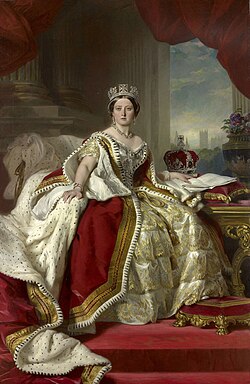
Victorian interiors often centered on compact coal fireplaces fitted with iron grates, tiled surrounds, carved mantels, and decorative overmantels. Improvements in mass production made fireplace components available to a broad middle class.
Image source: Victorian era
1850 - 1950
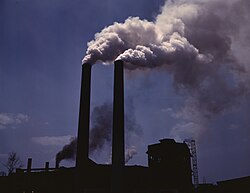
Dense urban use of coal fireplaces contributed heavily to smoke and soot pollution. Public concern encouraged chimney regulation, cleaner fuels, improved grates, and eventually the adoption of central heating systems.
Image source: Air pollution
1875 - 1930
Steam, hot-water, and later forced-air central heating systems spread through public buildings and affluent homes. Fireplaces increasingly became supplementary heaters or decorative focal points rather than the sole source of household warmth.
1880 - 1920
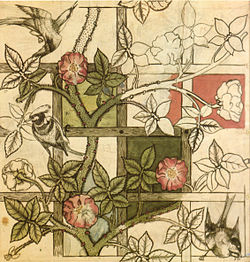
Arts and Crafts designers treated the fireplace as the symbolic heart of the home. They favored honest materials, handcraft, built-in seating, brick or stone surrounds, and restrained designs influenced by vernacular architecture.
Image source: Arts and Crafts movement
1893 - 1959
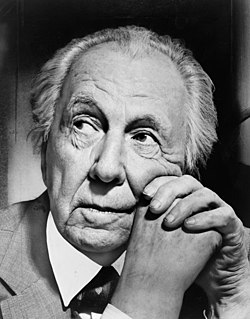
Frank Lloyd Wright made the fireplace a central organizing element in many Prairie, Usonian, and other houses. His designs often anchored living spaces with broad masonry masses, built-in hearths, and visual connections to surrounding rooms.
Image source: Frank Lloyd Wright
1900 - 1950
Manufactured gas burners and decorative gas fires offered an alternative to wood and coal. They provided controllable flames with less ash and labor, especially in urban homes connected to municipal gas networks.
1910 - 1950
Early electric fireplaces appeared in the first half of the twentieth century, using resistance heating and simulated flames. They could be installed without a chimney, expanding fireplace-style heating to apartments and other buildings.
1920 - 1960
Modernist architects simplified fireplaces into geometric openings, freestanding metal units, or plain masonry forms. The design emphasis shifted from ornament toward spatial integration, industrial materials, and functional clarity.
Image source: Modern architecture
1945 - 1975
Postwar houses frequently placed a prominent fireplace between living and dining areas or at the center of an open-plan room. Brick, stone, concrete, and prefabricated surrounds made the hearth a defining visual feature of mid-century interiors.
Image source: Mid-century modern
1970 - 2000
Factory-built zero-clearance fireplaces used insulated metal enclosures to reduce the space required between a firebox and combustible construction. They simplified installation and helped make fireplaces practical in modern wood-framed houses.
1973 - 1985
The oil crises of the 1970s increased interest in locally available firewood, wood-burning stoves, and supplemental fireplace heat. Manufacturers responded with improved airtight combustion chambers and more efficient stove designs.
Image source: 1970s energy crisis
1980 - 2000
Direct-vent gas fireplaces drew combustion air from outside and exhausted gases through a sealed wall or roof vent. This technology allowed installation without a traditional chimney and improved control, safety, and efficiency.
1980 - 2000
Pellet stoves became increasingly popular as automated heaters using compressed biomass fuel. Their controlled feed systems, thermostats, and comparatively consistent combustion offered an alternative to cordwood fireplaces and stoves.
1980 - 2010
Wood, gas, and pellet inserts were developed to fit inside existing masonry fireplaces. Sealed combustion chambers and fans allowed these appliances to deliver more usable heat while reducing the inefficiency of traditional open hearths.
1988
The United States Environmental Protection Agency began implementing national emission standards for residential wood heaters in 1988. The rules encouraged catalytic and noncatalytic combustion technologies that reduced particulate pollution compared with older stoves and inserts.
Image source: United States Environmental Protection Agency
1990 - 2025
Governments and municipalities tightened rules on wood smoke, chimney emissions, and installation practices. Restrictions, burn bans, and cleaner appliance standards increasingly balanced the cultural appeal of fireplaces against public-health concerns.
2010 - 2025
Contemporary gas, electric, and some biomass fireplaces added electronic ignition, thermostatic control, programmable timers, remote controls, and smartphone integration. These features shifted the fireplace further toward convenient, managed home climate and ambiance systems.
Image source: Home automation
Build a timeline like this one in minutes, for free. Start Yours →
Or browse the full history timeline directory, with more than 2,500 topics.
This History of Fireplaces timeline was generated with the help of AI, using information found on the internet.
We work hard to keep these timelines accurate, but mistakes do get through. If you spot one, email us at [email protected] and we'll fix it for future visitors.
Generate yours with AI or build it from scratch, for free.
Export your timeline, add your own events, edit or remove AI-generated events, and much more
No credit card required.
15-day money-back guarantee.
You can create an unlimited number of timelines with up to 10 events on each one, customize how they look, export them to PDF, PNG, PowerPoint, CSV, and Excel, and share them with a link. Timelines made with Timeline Maker AI keep every event the generator created, and you can add up to 5 events of your own. Paid plans remove the event limit, add spreadsheet imports and hide Preceden's branding, and the higher-priced plan also adds collaborators, a custom logo and a custom domain.
Yes. You can cancel your subscription from your account page at any time, and you will not be charged again. Your subscription stays active for the rest of the period you already paid for.
Yes. We email you a reminder 15 days before your annual renewal, and we email you a receipt after every payment.
Yes. You can email us within 15 days of any payment, and we will issue you a full refund.
Check out our pricing docs or send us an email anytime: [email protected].