
-
Use Cases
-
Resources
-
Pricing
The history of scissors traces the development of pivoted cutting instruments from ancient metal tools to the specialized scissors used worldwide today. More Less
Build a timeline like this one in minutes, for free. Start Yours →
1300 - 1399
Scissormaking in Japan evolved from sword making during the 14th century, linking the development of Japanese scissors to the country's established traditions of forging blades.
Image source: Scissors

1375 - 1399
The English word "scissors" entered usage in the late 14th century, providing the modern English name for the cutting tool.
1500 - 1599
Premana, in Lecco Province, Italy, developed from ironworks and knife manufacturing beginning in the 16th century. These metalworking traditions later supported local scissor production.
1500 - 1599
Scissor manufacturing began in Solsona, Spain, during the 16th century, establishing a craft tradition that would later become organized around a local guild.
1700 - 1799
At the peak of Solsona's scissor industry in the 18th century, 24 workshops were organized as the Guild of Saint Eligius, named for the patron saint of knife makers.
1727
Friedrich Herder was founded in Solingen in 1727. It remains one of the oldest scissors manufacturers still operating in Germany.
1760
William Whiteley, one of Sheffield's surviving scissor manufacturers, was founded in 1760 and became part of the city's long-running industrial scissor tradition.
1761
In 1761, Robert Hinchliffe of Sheffield produced the first pair of scissors made of cast steel intended for the mass market. The development helped make Sheffield a center of mass-produced scissors.
1761
Sheffield became home to the first mass production of scissors beginning in 1761, marking a major shift from individually crafted scissors toward industrial manufacture.
1775 - 1825
Several scissor-producing towns began with the manufacture of sabres, swords, and bayonets. During the late 18th and early 19th centuries, these communities transitioned toward scissors and other blades.
1775 - 1799
By the end of the 18th century, Solingen was estimated to have more than 300 scissorsmiths, reflecting the city's major role in blade production.
1800 - 1899
By the 19th century, Sheffield had an estimated 60 steel scissor companies, demonstrating the scale of the city's industrial specialization.
1869
Sanelli Ambrogio was founded in Premana in 1869. It became one of the oldest Premanese scissor manufacturing firms still in operation.
1900
Premana had ten scissor manufacturing workshops in 1900, documenting the early scale of its specialized local industry.
1902
Ernest Wright was established in Sheffield in 1902. It later became one of the two remaining Sheffield scissor manufacturers.
1917
Pallarès Solsona was founded in 1917 by Lluìs and Carles Pallarès Canal. The family-operated business later became Solsona's sole remaining artisanal scissor manufacturer.
1952
The number of scissor manufacturing workshops in Premana grew to 20 by 1952, continuing the town's expansion as a specialized blade-making center.
1960
By 1960, Premana had 48 scissor manufacturing workshops, a substantial increase from the ten workshops recorded in 1900.
2019
Germany was responsible for just under 7% of global scissors exports in 2019, reflecting the continuing importance of its blade-making industry.
2019
Italy exported 3.5% of scissors manufactured globally in 2019, supported by production centers such as Premana.
1580
Company founder Zhang Sijia pioneered the design of pivoted scissors with a hand-forged, hardened steel cutting edge inlaid in an iron frame during the Ming dynasty, as early as 1580.
1663
The Hangzhou Zhang Xiaoquan Company began manufacturing pivoted scissors in Hangzhou, China, in 1663. Its scissors used a hand-forged, hardened steel cutting edge inlaid in an iron frame.
1663
Founded in 1663, the Hangzhou Zhang Xiaoquan Company became one of the oldest continuously operating scissor manufacturers in the world.
1854
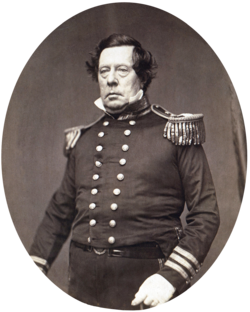
Sewing scissors were introduced to Japan by American Commodore Matthew Perry from the United States in 1854. They joined many specialized types of scissors already associated with Japanese production.
Image source: Matthew C. Perry
1867
A Japanese scissor company referenced in the history of specialized Japanese scissors has been in operation since 1867.
2019
China was responsible for 64.3% of worldwide scissors exports in 2019, making it the dominant exporter in the global scissors trade.
1930 - 1939
A law from the 1930s established restrictions on the use of "Made in Solingen" stamps, reserving the designation for products manufactured almost entirely in Solingen's old industrial area.
1958
The Hangzhou Zhang Xiaoquan Company was nationalized in 1958. In its modern operation, the company employs about 1,500 people.
1995
In 1995, the City of Solingen passed the Solingen Ordinance, updating the 1930s law that limited "Made in Solingen" stamps to products almost entirely manufactured in the city's old industrial area.
2018
In 2018, a Japanese scissor maker was profiled in a documentary featuring a pair of his bonsai snips that retailed for US$35,000.
2019
In 2019, the Solingen origin designation applied to approximately 150 companies making high-quality blades of all kinds, including scissors.
2019
By the modern period, Zhang Xiaoquan employed about 1,500 people and annually mass-produced an estimated seven million pairs of inexpensive scissors, retailing for an average of about US$4 each.
2020
In 2020, Ernest Wright was recognized with the Award for Endangered Crafts by the British Heritage Crafts Association, highlighting the vulnerability of traditional scissor making.
2021
By 2021, Sheffield's scissor industry consisted of only two local companies: William Whiteley, founded in 1760, and Ernest Wright, established in 1902.
2021
By 2021, Pallarès Solsona, founded in 1917 and still operated by the founding family, was Solsona's sole remaining artisanal scissor manufacturer.
Build a timeline like this one in minutes, for free. Start Yours →
Or browse the full history timeline directory, with more than 2,500 topics.
This History of Scissors timeline was generated with the help of AI, using information found on the internet.
We work hard to keep these timelines accurate, but mistakes do get through. If you spot one, email us at [email protected] and we'll fix it for future visitors.
Generate yours with AI or build it from scratch, for free.
Export your timeline, add your own events, edit or remove AI-generated events, and much more
No credit card required.
15-day money-back guarantee.
15-day money-back guarantee.
You can create an unlimited number of timelines with up to 10 events on each one, customize how they look, export them to PDF, PNG, PowerPoint, CSV, and Excel, and share them with a link. Timelines made with Timeline Maker AI keep every event the generator created, and you can add up to 5 events of your own. Paid plans remove the event limit, add spreadsheet imports and hide Preceden's branding, and the higher-priced plan also adds collaborators, a custom logo and a custom domain.
Yes. You can cancel your subscription from your account page at any time, and you will not be charged again. Your subscription stays active for the rest of the period you already paid for.
Yes. We email you a reminder 15 days before your annual renewal, and we email you a receipt after every payment.
Yes. You can email us within 15 days of any payment, and we will issue you a full refund.
Check out our pricing docs or send us an email anytime: [email protected].