-
Use Cases
-
Resources
-
Pricing
1300 BC
A depiction attributed to the Dubovac culture, dated to about 1300 BC, shows a male figure interpreted as a solar deity standing in a three-wheeled chariot with an attached umbrella held above him.
600 BC
Complex bronze socketed hinges with locking slides and bolts were found at an archaeological site near Luoyang and dated to the sixth century BC. The mechanisms could have been used for parasols or umbrellas.
Image source: Umbrella
500 BC
Umbrellas repeatedly appear in the carved art of Persepolis. Some sculptures show a king attended by a servant carrying an umbrella with stretchers and a runner.
Image source: Persepolis
450 BC
In late fifth-century BC Classical Greece, the umbrella, known as a skiadeion, became an indispensable accessory for a fashionable woman.
350 BC
Pausanias described a tomb near Triteia in Achaia decorated with a fourth-century BC painting attributed to Nikias. The scene included a woman accompanied by a female slave carrying a parasol.
Image source: Pausanias (geographer)
500 - 700
By the fall of the Roman Empire, during the fifth and sixth centuries, umbrellas and parasols were largely forgotten in Europe for several centuries.
600
Sculptures at Taghe-Bostan, believed to be at least twelve centuries old, show a king seated on a horse during a deer hunt while an attendant carries an umbrella over him.
Image source: Taq Kasra
1770 - 1799
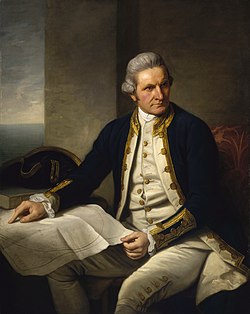
During voyages in the late eighteenth century, Captain James Cook reported seeing people on South Pacific islands using umbrellas made from palm leaves.
Image source: James Cook
700 - 1500
From the eighth century onward, contemporary depictions and descriptions of umbrellas and parasols became numerous during the Middle Ages, predominantly in connection with religious ceremonies.
700
By the eighth century, umbrellas and parasols were firmly established in the Christian church as honorific and symbolic objects, especially in religious ceremonies.
750
The earliest visual record of a medieval European umbrella is an eighth-century image of Bishop John of Pavia followed by a servant carrying an umbrella.
757 - 767
The earliest known written evidence of a European parasol dates to the eighth century, when Pope Paul I gave a jeweled parasol to Pepin the Short as part of a peace settlement.
1530
Girolamo dai Libri’s 1530 painting Madonna dell’Ombrello depicts the Virgin Mary sheltered by a cherub carrying a large red umbrella.
1600 - 1700
In his seventeenth-century Voyage to the East, Jean Baptiste Tavernier described umbrellas beside the Mogul’s throne and an umbrella-decorated hall belonging to the King of Ava.
Image source: Jean-Baptiste Tavernier
1611
The Oxford English Dictionary records 1611 as the first recorded use of the word umbrella in this sense.
1617
Fynes Moryson’s Itinerary, published in 1617, referred to the custom of carrying umbrellas in hot countries to avoid the sun’s rays.
1650
The use of parasols and parapluies in France and England was adopted, probably from China, around the middle of the seventeenth century.
1664
On 22 June 1664, John Evelyn recorded seeing rarities shown by a Roman Catholic priest, including objects sent by Jesuits from Japan and China to France.
Image source: John Evelyn
1676
During Streynsham Master’s 1676 visit to the East India Company factory at Masulipatnam, he noted that the town governor and the next three officials alone were permitted to carry a round umbrella.
1708
Kersey’s Dictionary of 1708 defined an umbrella as a screen commonly used by women to keep off rain.
1710
In 1710, Paris merchant Jean Marius introduced Europe’s first lightweight folding umbrella. His shop stood near the barrier of Saint-Honoré.
1712
The Princess Palatine purchased Jean Marius’s folding umbrella in 1712 and promoted it among her aristocratic friends, helping make it an essential fashion item for Parisiennes.
1718
The word parapluie, meaning against the rain and derived through French and Latin roots, did not enter the dictionary of the Académie française until 1718.
1750
Jonas Hanway is said to have carried an umbrella for thirty years before his death in 1786, placing his first use of one at about 1750.
1752
Writing from Paris in 1752, James Wolfe remarked that umbrellas were used for protection from sun and rain there and wondered why the practice had not become established in England.
Image source: James Wolfe
1759
In 1759, the French scientist Navarre presented the French Academy of Sciences with a new umbrella design combined with a cane.
1763
The French royal court inventory of 1763 listed eleven taffeta parasols in different colors and three waxed-cloth parasols decorated with gold and silver lace.
1768
A Paris magazine reported in 1768 that people commonly went out with umbrellas and endured carrying them under their arms for months, despite using them only occasionally.
1769
In 1769, Maison Antoine at the Magasin d’Italie on rue Saint-Denis became the first Paris store to rent umbrellas to people caught in rain. The practice soon became common.
1770
John Macdonald recalled that in 1770 he was taunted as a Frenchman and asked why he did not call a coach whenever he went out carrying an umbrella.
1780
Metal ribs were mentioned in the Encyclopédie Méthodique at the end of the eighteenth century and were on sale in London during the 1780s, preceding later claims about steel-ribbed umbrellas.
1808
By 1808, seven shops in Paris made and sold umbrellas. Sagnier on rue des Vieilles-Haudriettes received the first French patent for an umbrella invention.
1813
The number of Paris shops making umbrellas grew to 42 by 1813, reflecting the product’s increasing popularity and commercial importance.
1828
The first umbrella manufacturing company in the United States was established in 1828.
1848
By 1848, Paris had 377 small umbrella-making shops employing approximately 1,400 workers.
1920
Baltimore was long recognized as the umbrella capital of the United States. At the industry’s peak in 1920, seven companies in the city produced millions of umbrellas annually.
1835
In 1835, Baron Charles Random de Berenger described several ways readers of How to Protect Life and Property could use an umbrella as an improvised weapon against highwaymen.
1852
Samuel Fox is credited with inventing the steel-ribbed umbrella in 1852, although earlier references indicate that metal ribs had already existed in some forms.
1875
Bumbershoot emerged as a rare and fanciful Americanism for an umbrella during the late nineteenth century.
1880 - 1987
Umbrellas have been fashioned into hats since at least 1880, with examples continuing to appear as recently as 1987.
1897
Journalist J. F. Sullivan proposed the umbrella as a misunderstood weapon in a tongue-in-cheek article published in the Ludgate Monthly in 1897.
1899 - 1902
Between 1899 and 1902, umbrellas and walking sticks were incorporated into the self-defense repertoire of Bartitsu.
Image source: Bartitsu
1902
An article in The Daily Mirror in January 1902 instructed women on using an umbrella or parasol to defend themselves from attackers.
1923
The Balogh brothers invented a pocket, or foldable, umbrella in Uraiújfalu, Hungary. Their patent request was admitted in 1923 by the Royal Notary Public of Szombathely.
1928
Pocket umbrellas associated with Hans Haupt appeared in 1928, contributing to the development of compact umbrellas for everyday carrying.
1928 - 1929
In Vienna in 1928, sculpture student Slawa Horowitz developed an improved compact folding umbrella. She received a patent for it on 19 September 1929.
1955 - 1971
The first large convertible umbrellas were fixed installations at the 1955 Federal Garden Exhibition in Kassel. Frei Otto constructed the first convertible large umbrellas for the 1971 Federal Garden Exhibition in Cologne.
1958
Mitsuo Sudou invented transparent umbrellas, often made from plastic or composite materials, in 1958.
1964
Transparent umbrellas became popular fashion items during the 1964 Tokyo Olympics.
Image source: 1964 Summer Olympics
1969
In 1969, Bradford E. Phillips, owner of Totes Incorporated in Loveland, Ohio, obtained a patent for his working folding umbrella.
1978
In 1978, Frei Otto built a group of ten convertible umbrellas for British rock group Pink Floyd’s American tour.
1978
In 1978, Bulgarian dissident writer Georgi Markov was killed in London with ricin injected through a modified umbrella.
1993
Unicode encodes two umbrella variations in its Miscellaneous Symbols block: a plain umbrella, U+2602, and an umbrella with raindrops overhead, U+2614.
2005
In 2005, Brian Hahn, an associate professor at the University of Cape Town, was beaten to death with an umbrella by former doctoral student Maleafisha Steve Tladi.
2005
In 2005, Dutch design student Gerwin Hoogendoorn invented an aerodynamically streamlined storm umbrella. Its design could withstand wind force 10, resist turning inside out, and protect nearby people with eye-saving features.
2008
As of 2008, the relevant patent office had registered 3,000 active patents on umbrella-related inventions. Examples included stealth-shaped, scoop-shaped, and teardrop-shaped canopies.
2008
As of 2008, most umbrellas worldwide were made in China, especially in the provinces of Guangdong, Fujian, and Zhejiang.
2011
In March 2011, media reports revealed that French president Nicolas Sarkozy used a £10,000 armor-plated umbrella for protection from attackers.
Image source: Nicolas Sarkozy
2014
During the 2014 Hong Kong protests, often called the Umbrella Revolution, protesters used umbrellas as shields against pepper spray and tear gas deployed by riot police.
Image source: Umbrella Movement
2015
The 2015 film Kingsman: The Secret Service features a high-tech bullet-resistant umbrella used extensively as a weapon by Harry Hart and Eggsy Unwin.
Image source: Kingsman: The Secret Service
Or browse the full history timeline directory, with more than 2,500 topics.
This History of Umbrellas timeline was generated with the help of AI, using information found on the internet.
We work hard to keep these timelines accurate, but mistakes do get through. If you spot one, email us at [email protected] and we'll fix it for future visitors.
Generate yours with AI or build it from scratch, for free.
Export your timeline, add your own events, edit or remove AI-generated events, and much more
No credit card required.
Cancel anytime.
Cancel anytime.
You can create an unlimited number of timelines with up to 10 events on each one, customize how they look, export them to PDF, PNG, PowerPoint, CSV, and Excel, and share them with a link. Paid plans raise the event limit and add features like spreadsheet imports and collaborators.
Yes. You can cancel your subscription from your account page at any time, and you will not be charged again. Your subscription stays active for the rest of the period you already paid for.
Yes. We will email you a reminder before the annual renewal, and we will also email you a receipt.
Yes. You can email us within 15 days of any payment, and we will issue you a full refund.
Check out our pricing docs or send us an email anytime: [email protected].