-
Resources
-
Pricing
The history of safety pins traces the evolution of a simple fastening device from its 19th-century invention to its widespread practical, cultural, and fashion uses. More Less
Build a timeline like this one in minutes, for free. Start Yours →
800 BC
Greek and Roman makers produced many forms of fibula, including hinged and spring-based types. Their widespread use preserved and refined the mechanical principles later associated with the safety pin.
Image source: Fibula (brooch)
100 BC
By the late Roman Republic and early Empire, fibulae were common clothing fasteners across the Roman world. Some examples had mechanisms that kept the sharp point close to the body, making them important technological ancestors of the modern safety pin.
500
After antiquity, metal pins, brooches, and fibula-derived fasteners continued to secure clothing. Their forms varied by region, but the combination of a flexible metal shank and protective clasp remained part of European fastening traditions.
1760 - 1840
Industrialization brought improved wire drawing, rolling, and metalworking equipment. These advances made it practical to produce large quantities of uniform spring wire, a crucial prerequisite for inexpensive modern safety pins.
Image source: Industrial Revolution
1800 - 1849
During the early nineteenth century, manufacturers increasingly used iron and steel wire for pins, springs, and other small hardware. Better control of wire diameter and elasticity allowed designers to combine a resilient coil with a usable point.
1849 - 1850
The guarded clasp gave Hunt's device a practical advantage over ordinary straight pins, and the term safety pin became associated with the new form. Its name emphasized reduced risk rather than merely the presence of a pin.
Image source: Safety pin
1849
Walter Hunt sold or assigned rights connected with his safety-pin invention to businessman William Russell Grace. The transaction illustrates how inventors often depended on commercial intermediaries to manufacture and distribute patented household goods.
1850
Mechanized wireworking and the commercial exploitation of Hunt's patent helped bring safety pins into factory production. Their small size, low material cost, and usefulness made them suitable for mass-market distribution.
1850 - 1870
As patent protection, licensing, and industrial production expanded, safety pins reached European consumers. Local manufacturers produced comparable versions, helping establish the object as a standard sewing and haberdashery item.
1860
By the mid-nineteenth century, safety pins were commonly sold alongside needles, thread, buttons, hooks, and ordinary pins. Their standardized form made them an inexpensive staple of sewing shops and general stores.
1900 - 1920
Early twentieth-century machinery improved the speed and consistency of forming coils, bending wire, and attaching or shaping clasps. Automation helped drive prices down and made safety pins globally ubiquitous.
1900 - 1940
Manufacturers increasingly offered plated, galvanized, and later corrosion-resistant steel safety pins. These finishes improved appearance, durability, and suitability for damp environments and repeated use.
Image source: Stainless steel
1980 - 1990
Plastic diaper fasteners and hook-and-loop systems became more available, offering alternatives to traditional diaper safety pins. Safety pins remained in use, especially for cloth diapers, but their dominance in infant care declined.
1980 - 2000
Manufacturers marketed diaper pins with locking heads, enlarged grips, and protective features. These designs sought to reduce accidental opening and make fastening thicker, repeatedly washed cloth diapers easier.
1820 - 1849
Before Walter Hunt's patent, inventors and manufacturers experimented with clasped or guarded pins. These efforts addressed the recurring problem of keeping a sharp point from snagging fabric or injuring the wearer.
1849
American inventor Walter Hunt designed a pin made from a single piece of wire, using a coil to create spring tension and a clasp to cover the point. The design supplied both a secure closure and protection from the exposed needle tip.
Apr 10, 1849
Walter Hunt was granted U.S. patent 6,281 for an improvement in the construction of metallic pins. The patent described the familiar combination of a coiled spring, a pointed shank, and a clasp that received and guarded the point.
1850 - 1860
American households adopted safety pins for temporary repairs, fastening clothing, and securing diapers. They were especially useful because the clasp reduced the chance of the point catching skin or other garments.
1860
Caregivers used large safety pins to hold folded cloth diapers in place. The clasped point was safer and more convenient than an unguarded straight pin, though careful placement and later protective practices remained necessary.
1870
Larger safety-pin forms became useful for blankets, shawls, heavy cloth, and kilts. These versions combined the same guarded point with thicker wire and greater spring strength.
1880
Travelers, soldiers, sailors, and households increasingly carried safety pins as compact emergency fasteners. They could temporarily repair torn clothing, secure straps, and substitute for missing buttons or hooks.
1890
Safety pins became common contents of domestic and travel first-aid supplies. They could secure bandages or slings, although medical guidance generally distinguished clean, suitable pins from improvised or contaminated objects.
Image source: First aid
1914 - 1918
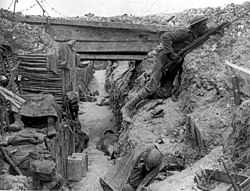
During World War I, safety pins were useful for repairing uniforms, equipment, and household textiles amid shortages and heavy wear. Their low cost and portability made them valuable to both civilians and military personnel.
Image source: World War I
1939 - 1945
World War II clothing repairs, rationing, and military logistics sustained demand for simple fasteners. Safety pins were carried in sewing kits and used for temporary repairs when replacement garments or specialized hardware were unavailable.
Image source: World War II
1970 - 1980
Punk designers and musicians turned safety pins from utilitarian objects into visible decoration. Pins were used to join, pierce, and ornament ripped garments, challenging conventional ideas about polished fashion and helping define punk's DIY aesthetic.
Image source: Punk fashion
1976
American musician and poet Richard Hell became strongly associated with torn clothing held together by safety pins. His deliberately unfinished appearance influenced the visual language of early punk and was later amplified by fashion media.
1977
Vivienne Westwood incorporated safety pins into clothing and styling at the London boutique associated with the Sex Pistols. Her work helped move the safety pin from street repair and subcultural dress into influential avant-garde fashion.
Image source: Vivienne Westwood
1980 - 1990
By the 1980s, safety-pin details appeared beyond punk scenes in editorial photography, high fashion, music videos, and mass-market clothing. The object could signify rebellion, deconstruction, or deliberate informality.
1980
Crafters used safety pins as bases for bracelets, earrings, brooches, and beadwork. These projects emphasized the pin's unusual dual role as both a functional fastener and a ready-made framework for decoration.
2000
Artists, designers, and craft communities continued to use safety pins in sculpture, jewelry, textiles, and conceptual works. Their recognizable shape allows makers to explore ideas of repair, restraint, vulnerability, and subcultural identity.
Image source: Installation art
Nov 2016
After the 2016 United States presidential election and related political tensions, some people wore safety pins as a public signal of support for vulnerable groups. The gesture drew on the pin's associations with protection, though it also prompted debate about symbolic versus practical allyship.
2020
Despite alternatives such as hook-and-loop tape, zippers, adhesives, and disposable fasteners, safety pins remain inexpensive and widely available. They continue to serve in sewing kits, clothing repair, diapering, crafts, costumes, and emergency household maintenance.
Build a timeline like this one in minutes, for free. Start Yours →
Or browse the full history timeline directory, with more than 2,500 topics.
This History of Safety Pins timeline was generated with the help of AI, using information found on the internet.
We work hard to keep these timelines accurate, but mistakes do get through. If you spot one, email us at [email protected] and we'll fix it for future visitors.
Generate yours with AI or build it from scratch, for free.
Export your timeline, add your own events, edit or remove AI-generated events, and much more
No credit card required.
15-day money-back guarantee.
You can create an unlimited number of timelines with up to 10 events on each one, customize how they look, export them to PDF, PNG, PowerPoint, CSV, and Excel, and share them with a link. Timelines made with Timeline Maker AI keep every event the generator created, and you can add up to 5 events of your own. Paid plans remove the event limit, add spreadsheet imports and hide Preceden's branding, and the higher-priced plan also adds collaborators, a custom logo and a custom domain.
Yes. You can cancel your subscription from your account page at any time, and you will not be charged again. Your subscription stays active for the rest of the period you already paid for.
Yes. We email you a reminder 15 days before your annual renewal, and we email you a receipt after every payment.
Yes. You can email us within 15 days of any payment, and we will issue you a full refund.
Check out our pricing docs or send us an email anytime: [email protected].