-
Use Cases
-
Resources
-
Pricing
700 BC - 601 BC
The earliest Etruscan candlestick may date from the 7th century BC, providing early evidence for candle-supporting objects in Italy.
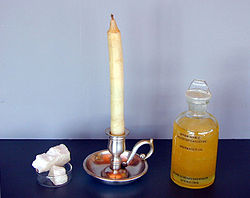
Image source: Candle

700 BC - 601 BC
A picture of a candlestick exists in an Etruscan tomb at Orvieto. This evidence is associated with the belief that wicked candles developed in Italy during the Etruscan period.
200 - 299
Wax candles, recorded by the Latin term candelae cereae at the end of the 3rd century, became part of the documented history of candle use in Europe.
300 - 399
An excavated earthenware bowl from the 4th century AD, now located at the Luoyang Museum, contains a hollowed socket with traces of wax, providing archaeological evidence associated with early candles.
300 - 399
Wax candles were documented as Easter candles in Spain and Italy during the 4th century, linking candle use to Christian religious observance.
300 - 399
The Christian festival Candlemas was named after the candle, reflecting the central role of candles in its religious ceremonies.
Image source: Candlemas

600 - 699
The Chinese may have begun cultivating the tallow tree in the Yangtze Delta region during the 7th century. Its waxy material later became relevant to candle production.
687
Pope Sergius I instituted a procession of lighted candles, strengthening the ceremonial importance of candles in the Christian church.
1061
A French candle-making guild was documented as early as 1061, showing that the craft had become organized in medieval Europe.
1200 - 1299
By the 13th century, candle making had become a guild craft in England and France, with guild structures regulating production and the trade.
This History of Candles timeline was generated with the help of AI, using information found on the internet.
We work hard to keep these timelines accurate, but mistakes do get through. If you spot one, email us at [email protected] and we'll fix it for future visitors.
Generate yours with AI or build it from scratch, for free.