
-
Use Cases
-
Resources
-
Pricing
3200 BC
The fourth millennium BC saw the invention of clay pipes, sewers, and toilets in Mesopotamia. Uruk contains the earliest known internal pit toilet, dating from around 3200 BC.
Image source: Toilet
3100 BC - 2500 BC
Skara Brae in Orkney, Scotland, was occupied from about 3100 to 2500 BC and included very early toilets that used flowing water to remove waste.
Image source: Skara Brae
3000 BC
The Neolithic village of Skara Brae contains internal small rooms positioned over a communal drain rather than individual pits, dating from around 3000 BC.
2800 BC
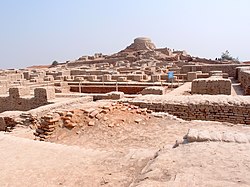
In Mohenjo-daro, toilets were built into the outer walls of homes around 2800 BC.
Image source: Mohenjo-daro
2350 BC
At Lothal, upper-class houses had private toilets connected to covered brick sewers. The network emptied into surrounding water bodies or cesspits that were regularly emptied and cleaned.
Image source: Lothal
1800 BC
Toilets started to appear in Pharaonic Egypt around the 18th century BC as part of the broader development of early sanitation systems.
Image source: Ancient Egypt
1800 BC
Around the 18th century BC, toilets began to appear in Minoan Crete, as well as in Pharaonic Egypt and ancient Persia.
Image source: Minoan civilization
1800 BC
Around the 18th century BC, toilets also began appearing in ancient Persia.
Image source: History of Iran
1500 BC
The latrine at Rạch Núi dates to about 1500 BC and provided important clues about early Southeast Asian society.
200 BC - 300
The Abhayagiri complex in Anuradhapura displays a highly developed stage of toilet and bath construction, with examples dating from the 2nd century BC to the 3rd century CE.
100 - 1800
The sanitation method represented by early toilets continued for hundreds of years, while shapes, sizes, and decorative variations changed throughout the centuries.
400 - 1300
Later toilets in Polonnaruwa and Anuradhapura, dating from the 5th to the 13th century CE, featured elaborate decorative motifs carved around them.
2012
In 2012, archaeologists found what is believed to be Southeast Asia's earliest latrine while excavating the Neolithic Rạch Núi archaeological site in southern Vietnam.
1500
By the 16th century, cesspits and cesspools were increasingly dug into the ground near European houses to collect waste.
1700
Toilets were generally functionally nonexistent in rural Denmark until the 18th century.
1800 - 1850
In the early 19th century, public officials and public hygiene experts studied and debated sanitation for several decades.
Image source: Sanitation
1849
Twyfords was founded in Hanley, Stoke-on-Trent, in 1849 by Thomas Twyford and his son Thomas William Twyford.
1850
Construction of underground pipe networks to carry away solid and liquid waste began in the mid-19th century, gradually replacing cesspools, although cesspools remained in use in parts of Paris into the 20th century.
Image source: Sewerage
1850
Water closets began moving from outside buildings to inside homes around 1850.
1860 - 1879
Integral water closets began being built into middle-class homes during the 1860s and 1870s, initially on principal bedroom floors and in maids' accommodation in larger houses.
1880
Working-class housing transitioned from rural cottages to urban back-to-back terraces with external privies, and then to through terraces of the 1880s with sculleries and individual external water closets.
1880
Adamsez, a long-established British sanitary ware manufacturer, was founded in Newcastle-upon-Tyne in 1880 by M. J. and S. H. Adams.
1900 - 2014
The practice of emptying one's own chamber pot, known as slopping out, continued in British prisons until as recently as 2014.
1906
The speed of adoption varied. In 1906, the predominantly working-class town of Rochdale had 750 water closets for a population of 10,000.
1918
The Tudor Walters Report of 1918 recommended suburban cottages with kitchens and internal water closets for semi-skilled workers.
2015 - 2030
Providing toilets and sanitation services for everyone by 2030 is one of the targets of Sustainable Development Goal 6.
2017
In July 2017, slopping out was still used in 85 cells in Ireland.
1540
Toilet was originally a French loanword, first attested in 1540, referring to the toilette, or little cloth, draped over the shoulders during hairdressing.
1600 - 1699
During the late 17th century, toilet came by metonymy to describe the broader complex of grooming and body care centered on a dressing table, including mirrors, hairbrushes, powder, and makeup containers.
1700 - 1922
Proposed origins for loo include French l'eau, the warning phrase gare à l'eau, lieu, lieu d'aisance, and lieu à l'anglaise, as well as theories involving hotel room 100, nautical usage, and the preacher Louis Bourdaloue.
1819
The use of toilet for a special room for grooming was first attested in 1819, following the French phrase cabinet de toilette.
1900
During the 20th century, the fixture and room senses of toilet completely supplanted its earlier meanings, except in the word toiletries.
1922
The Oxford English Dictionary notes the 1922 appearance of “How much cost? Waterloo. Watercloset.” in James Joyce's novel Ulysses and discusses proposed connections to the site of Napoleon's 1815 defeat.
Image source: Ulysses (novel)
1596
John Harington designed a precursor to the modern flush toilet system in 1596, though such systems did not become widely used until the late 19th century.
1770
The water closet, originating in Tudor times, began assuming its modern form around 1770, with an overhead cistern, S-bends, soil pipes, and valves.
1775
Scottish mechanic Alexander Cummings invented the S-trap in 1775. The plumbing advance remains in use today.
Image source: Trap (plumbing)
1850
Growing urbanization and industrial prosperity in the mid-19th century helped make the flush toilet a widely used and marketed invention.
1906
William Elvis Sloan invented the Flushometer in 1906. It used pressurized water directly from the supply line to provide a faster recycle time between flushes.
Image source: Flushometer
Or browse the full history timeline directory, with more than 2,500 topics.
This History of Toilets timeline was generated with the help of AI, using information found on the internet.
We work hard to keep these timelines accurate, but mistakes do get through. If you spot one, email us at [email protected] and we'll fix it for future visitors.
Generate yours with AI or build it from scratch, for free.
Export your timeline, add your own events, edit or remove AI-generated events, and much more
No credit card required.
Cancel anytime.
Cancel anytime.
You can create an unlimited number of timelines with up to 10 events on each one, customize how they look, export them to PDF, PNG, PowerPoint, CSV, and Excel, and share them with a link. Paid plans raise the event limit and add features like spreadsheet imports and collaborators.
Yes. You can cancel your subscription from your account page at any time, and you will not be charged again. Your subscription stays active for the rest of the period you already paid for.
Yes. We will email you a reminder before the annual renewal, and we will also email you a receipt.
Yes. You can email us within 15 days of any payment, and we will issue you a full refund.
Check out our pricing docs or send us an email anytime: [email protected].