
-
Use Cases
-
Resources
-
Pricing
General Motors (GM) is one of the world's largest automobile manufacturers, founded in 1908 by William C. Durant in Flint, Michigan. Over more than a century, GM grew by acquiring brands like Chevrolet, Buick, Cadillac, and Oldsmobile, becoming the world's largest automaker for much of the 20th century. The company faced major challenges including the 2009 bankruptcy and government bailout, but has since reinvented itself with a focus on electric vehicles and autonomous driving technology. More Less
Sep 16, 1908
% complete
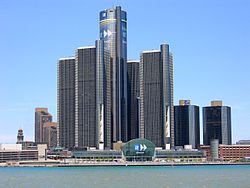
William C. Durant founded General Motors in Flint, Michigan, as a holding company for Buick. Durant's vision was to consolidate multiple automobile manufacturers under one umbrella, laying the foundation for what would become the world's largest automaker.
Image source: General Motors
Nov 12, 1908
% complete
Just two months after its founding, GM acquired Oldsmobile, one of America's oldest automobile brands. This acquisition marked the beginning of Durant's aggressive expansion strategy of buying up car companies and parts suppliers.
Image source: Oldsmobile
Sep 29, 1910
% complete
After overextending the company with rapid acquisitions, Durant lost control of GM to a banking consortium that restructured the company's debt. Durant would later regain control through his work at Chevrolet before returning to lead GM again in 1916.
Image source: William C. Durant
Nov 3, 1911
% complete
William C. Durant partnered with race car driver Louis Chevrolet to found the Chevrolet Motor Car Company. Durant used Chevrolet's success to regain control of General Motors, which he accomplished by 1916 when Chevrolet became part of GM.
Image source: Chevrolet
May 10, 1923
% complete
Alfred P. Sloan became president of General Motors and transformed it into a modern corporate enterprise. He introduced decentralized management, annual model changes, and a tiered brand strategy ('a car for every purse and purpose') that helped GM overtake Ford as America's top automaker.
Image source: Alfred P. Sloan
Jan 1, 1927
% complete
Thanks to Sloan's multi-brand strategy and emphasis on styling, comfort, and color options, GM surpassed Ford Motor Company in sales for the first time in 1927, becoming the leading automaker in the United States, a position it would hold for decades.
Jan 1, 1926
% complete
GM introduced the Oakland Motor Car Company's companion marque, Pontiac, which quickly outsold its parent brand. Pontiac eventually replaced Oakland entirely in 1932 and became known for affordable performance cars.
Image source: Pontiac (automobile)
Jan 1, 1927
% complete
Under designer Harley Earl, GM created the industry's first dedicated design department, the Art and Colour Section, and launched the LaSalle. This marked the beginning of styling as a key selling point in the American auto industry.
Image source: Harley Earl
Mar 17, 1929
% complete
General Motors acquired German automaker Adam Opel AG, giving GM a major foothold in the European market. Opel would become one of Europe's largest automakers and served as GM's primary European operation for most of the 20th century.
Image source: Opel

Dec 8, 1941 - Aug 15, 1945
% complete
During World War II, GM converted its factories to produce military equipment, including tanks, aircraft engines, ammunition, and trucks. The company produced more war material than any other private company, contributing significantly to the Allied victory.
Jan 1, 1946
% complete
Following the war, GM resumed civilian automobile production, meeting enormous pent-up consumer demand. The postwar boom made GM an industrial giant, and by the 1950s it controlled roughly half of the U.S. car market.
Jan 1, 1953
% complete
The Cadillac Eldorado, introduced in 1953, embodied the flamboyant styling of 1950s America with tailfins, chrome, and powerful V8 engines. Cadillac became the world's premier luxury car brand, symbolizing American prosperity.
Image source: Cadillac Eldorado
Jan 17, 1953
% complete
The Chevrolet Corvette, America's first mass-produced sports car, debuted at GM's Motorama show in New York City. Production began that June in Flint, Michigan, launching an iconic American sports car legacy that continues today.
Image source: Chevrolet Corvette
Jan 1, 1955
% complete
In 1955, General Motors became the first American corporation to earn more than $1 billion in net income in a single year, cementing its status as the world's largest and most profitable industrial enterprise.
Sep 26, 1966
% complete
GM introduced the Chevrolet Camaro to compete with the Ford Mustang in the emerging pony car market. The Camaro became one of America's most beloved muscle cars, with the first generation running through 1969.
Image source: Chevrolet Camaro
Feb 13, 1990
% complete
GM acquired a 50 percent stake in Swedish automaker Saab Automobile, taking full ownership in 2000. The quirky Swedish brand joined GM's global portfolio but struggled financially and was sold off after GM's bankruptcy.
Image source: Saab Automobile
Nov 30, 1965
% complete
Ralph Nader's book 'Unsafe at Any Speed' criticized the Chevrolet Corvair's handling and safety standards, sparking the modern consumer safety movement. The controversy led to federal auto safety regulations and damaged GM's public image.
Image source: Unsafe at Any Speed
Apr 29, 2004
% complete
GM shut down Oldsmobile, its oldest brand, after years of declining sales. The final Oldsmobile, an Alero, rolled off the line in April 2004, ending a 107-year automotive legacy.
Nov 21, 2005
% complete
Facing mounting losses and high labor costs, GM announced a major restructuring plan including plant closures and thousands of job cuts, foreshadowing the deeper crisis that would come with the Great Recession.
Jan 1, 2008
% complete
For the first time since 1931, GM lost its title as the world's largest automaker, as Toyota surpassed it in global sales. Rising gas prices had hurt GM's truck- and SUV-heavy lineup, accelerating its financial decline.
Jun 1, 2009 - Jul 10, 2009
% complete
Devastated by the financial crisis and collapsing sales, GM filed for Chapter 11 bankruptcy protection, one of the largest corporate bankruptcies in U.S. history. The U.S. government provided roughly $50 billion in bailout funds.
Jul 10, 2009
% complete
A leaner 'New GM' emerged from bankruptcy just 40 days after filing, shedding brands like Pontiac, Saturn, Hummer, and Saab. The U.S. Treasury held a majority stake until the government fully exited its investment in 2013.
Feb 2014
% complete
GM recalled millions of vehicles due to defective ignition switches linked to over 100 deaths. The crisis prompted congressional hearings, a compensation fund, and sweeping internal reforms under new CEO Mary Barra.
Image source: General Motors ignition switch recalls
Aug 1, 2017
% complete
GM sold its European operations, including Opel and Vauxhall, to France's PSA Group for about $2.3 billion, ending nearly nine decades of GM ownership in Europe as part of a strategy to focus on higher-margin markets.
Dec 5, 1996
% complete
GM launched the EV1, the first mass-produced electric vehicle from a major automaker, in California and Arizona. Though discontinued in 1999 and famously recalled, the EV1 pioneered modern electric vehicle technology.
Image source: General Motors EV1
Jan 15, 2014
% complete
Mary Barra became CEO of General Motors, making her the first woman to lead a major global automaker. She has since steered GM toward electrification, autonomous driving, and a renewed focus on quality and safety.
Image source: Mary Barra
Dec 2016
% complete
The Chevrolet Bolt EV went on sale as the first affordable long-range electric vehicle, offering over 200 miles per charge at around $37,500. It won North American Car of the Year and signaled GM's serious EV ambitions.
Image source: Chevrolet Bolt
Jan 21, 2020
% complete
GM's self-driving subsidiary Cruise unveiled the Origin, a purpose-built autonomous vehicle without a steering wheel or pedals, designed for shared robotaxi service and representing GM's vision of future mobility.
Image source: Cruise (autonomous vehicle)
Oct 20, 2020
% complete
GM revealed the all-electric GMC Hummer EV, resurrecting the Hummer nameplate as a 1,000-horsepower electric supertruck. The vehicle showcased GM's Ultium battery platform and its strategy of electrifying even its most gas-guzzling icons.
Image source: GMC Hummer EV
Jan 28, 2021
% complete
GM announced its ambition to eliminate tailpipe emissions from new light-duty vehicles by 2035 and become carbon neutral by 2040, committing $27 billion to electric vehicles and autonomous technology through 2025.
Or browse the full history timeline directory, with more than 2,000 topics.
This History of General Motors timeline was generated with the help of AI, using information found on the internet.
We work hard to keep these timelines accurate, but mistakes do get through. If you spot one, email us at [email protected] and we'll fix it for future visitors.
Generate yours with AI or build it from scratch, for free.
Export your timeline, add your own events, edit or remove AI-generated events, and much more
No credit card required.
Cancel anytime.
Cancel anytime.
You can create an unlimited number of timelines with up to 10 events on each one, customize how they look, export them to PDF, PNG, PowerPoint, CSV, and Excel, and share them with a link. Paid plans raise the event limit and add features like spreadsheet imports and collaborators.
Yes. You can cancel your subscription from your account page at any time, and you will not be charged again. Your subscription stays active for the rest of the period you already paid for.
Yes. We will email you a reminder before the annual renewal, and we will also email you a receipt.
Yes. You can email us within 15 days of any payment, and we will issue you a full refund.
Check out our pricing docs or send us an email anytime: [email protected].