-
Use Cases
-
Resources
-
Pricing
3100 BC
The earliest known base-10 system dates to around 3100 BC in Egypt. Egyptian numerals provided a decimal framework for recording quantities, administration, and calculation.
Image source: Egyptian numerals
300 BC
In The Sand Reckoner, Archimedes demonstrated a positional numeral system capable of expressing extremely large numbers. His method extended numerical notation beyond ordinary counting scales.
7 AD
By the seventh century, the decimal numeral concept had clearly reached Cambodia in the form of Khmer numerals. Later documentation shows related ideas spreading to China and the Islamic world.
Image source: Khmer numerals
1000 AD
The Hindu–Arabic numeral concept began reaching Europe through Islamic sources around the year 1000. Its adoption eventually displaced Roman numerals as Europe's dominant system of numerical representation.
Image source: Hindu–Arabic numeral system
1600 AD
By the seventeenth century, mathematicians generally used decimal fractions with notation resembling modern practice. Decimal notation made fractional quantities easier to calculate and communicate.
Image source: Decimal
1961 AD
In 1961, George I. Sánchez reported a base-4 and base-5 finger abacus. The report documented alternative bodily and manual methods for representing and manipulating numbers.
Image source: Abacus
1800 BC
Babylonian mathematicians recorded highly accurate approximations of irrational quantities such as the square root of 2 on clay tablets. Tablet YBC 7289 gives an approximation comparable to six decimal places.
1 AD
The earliest fleeting reference to square roots of negative numbers occurred in the work of Heron of Alexandria. He encountered such a quantity while considering the volume of an impossible frustum of a pyramid.
Image source: Hero of Alexandria
1500 AD
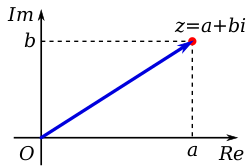
Sixteenth-century Italian mathematicians including Niccolò Fontana Tartaglia and Gerolamo Cardano discovered closed formulas for roots of third- and fourth-degree polynomials. These formulas made quantities involving square roots of negative numbers more prominent.
Image source: Complex number
1600 AD
René Descartes introduced the concept of real numbers in the seventeenth century. The idea grouped ordinary positive and negative quantities with rational and irrational values on a continuous number line.
Image source: Real number
1637 AD
In 1637, René Descartes is sometimes credited with coining the term imaginary for quantities involving square roots of negative numbers. He intended the term as a derogatory description of their puzzling status.
Image source: Imaginary number
1683 AD
While studying compound interest in 1683, Jacob Bernoulli found that as compounding intervals became shorter, exponential growth converged to a base of approximately 2.71828. This constant later became known as Euler's number, e.
1685 AD
Wallis's De algebra tractatus contained an early appearance of the graphic representation of complex numbers, predating the later formal geometric interpretation.
1700 AD
Irrational numbers began to be studied systematically in the eighteenth century, particularly through the work of Leonhard Euler. Euler connected irrationality with nonfinite simple continued fractions and proved that e is irrational.
Image source: Irrational number
1761 AD
Johann Lambert proved in 1761 that π is irrational. The result established that π cannot be expressed as a ratio of two integers.
Image source: Johann Heinrich Lambert
1799 AD
Caspar Wessel described a geometrical interpretation of complex numbers in 1799. His account helped establish that complex numbers could be represented as points or directed quantities in a plane.
1844 AD - 1851 AD
Joseph Liouville first established the existence of transcendental numbers in work published in 1844 and 1851. These numbers are not roots of any nonzero polynomial with integer coefficients.
1850 AD
In 1850, Victor Alexandre Puiseux took a key step in distinguishing poles from branch points and introduced the concept of essential singular points in complex analysis.
1869 AD - 1883 AD
The second half of the nineteenth century brought rigorous definitions of real and irrational numbers. Contributions came from Augustin-Louis Cauchy, Charles Méray in 1869, Karl Weierstrass and Eduard Heine in 1872, Richard Dedekind in 1872, and Georg Cantor in 1883.
1873 AD
Charles Hermite proved in 1873 that e is transcendental. Thus Euler's number is not the root of any nonzero polynomial with integer coefficients.
1882 AD
Ferdinand von Lindemann proved in 1882 that π is transcendental. This result resolved the ancient problem of squaring the circle with straightedge and compass.
Image source: Lindemann–Weierstrass theorem
500 BC
In the fifth century BC, Pāṇini used a null, or zero, operator in the Ashtadhyayi. This was an early algebraic treatment of absence or null value in a formal grammatical system.
Image source: Pāṇini
3 AD
The first reference to negative numbers in a Western work appeared in Greece during the third century AD. The concept remained controversial and was not broadly accepted in Europe for many centuries.
Image source: Negative number
1150 AD
In the twelfth century, Bhaskara gave negative roots for quadratic equations. He nevertheless cautioned that a negative value was inadequate in the case under discussion because people did not approve of negative roots.
Image source: Bhāskara II
1202 AD
Fibonacci allowed negative solutions in financial problems in Liber Abaci, interpreting them as debts. He later used negative values to represent losses in Flos.
Image source: Liber Abaci
1484 AD
Nicolas Chuquet was an early European experimenter with negative numbers during the fifteenth century. His work helped preserve and develop ideas that European mathematicians generally resisted.
Image source: Nicolas Chuquet
1500 AD
The sixteenth century brought final European acceptance of negative integers and fractional numbers. This marked a major expansion of the kinds of quantities treated as legitimate numbers.
1655 AD
John Wallis introduced the symbol ∞ in a mathematical context in 1655. The symbol became widely associated with an infinite quantity.
1700 AD
As late as the eighteenth century, it was common practice to ignore negative results returned by equations on the assumption that they were meaningless. This illustrates the delayed acceptance of negative numbers in European mathematics.
1800 AD
Traditionally, the natural numbers began with 1, and ancient Greeks did not even regard 0 as a number. During the nineteenth century, set theorists and other mathematicians increasingly included 0, relating it to the cardinality of the empty set.
1800 AD
During the nineteenth century, mathematicians developed systems now called algebraic structures. These systems share selected properties of numbers and can be viewed as generalizations or extensions of the concept.
1895 AD
In 1895, Georg Cantor published a book on his new set theory. He introduced transfinite numbers and formulated the continuum hypothesis, extending the study of number beyond finite quantities.
Image source: Georg Cantor
2000 AD
The numbers π and e have both been approximated by computer to trillions of digits. These computations demonstrate the continuing use of numerical methods to investigate constants with nonterminating expansions.
1000 AD
Around 1000 AD, Ibn al-Haytham discovered the result later known as Wilson's theorem, a characterization of prime numbers through the factorial of one less than the prime.
1202 AD
In Liber Abaci, published in 1202, Fibonacci communicated Islamic mathematical contributions to Europe and became the first known European writer to describe the method of trial division.
Image source: Fibonacci sequence
1796 AD
In 1796, Adrien-Marie Legendre conjectured the prime number theorem, describing the asymptotic distribution of prime numbers. The theorem predicts how the number of primes below a given size grows.
Image source: Prime number theorem
1800 AD
Ernst Kummer made a major advance in the theory of algebraic numbers and introduced ideal numbers. These ideas were later expressed as geometrical entities by Felix Klein in 1893.
1859 AD
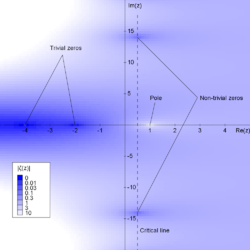
Bernhard Riemann formulated the Riemann hypothesis in 1859. The conjecture concerns the distribution of prime numbers through the locations of the nontrivial zeros of the zeta function.
Image source: Riemann hypothesis
1893 AD
In 1893, Felix Klein expressed Kummer's ideal numbers as geometrical entities. This connected abstract algebraic number ideas with geometric representation.
1896 AD
Jacques Hadamard and Charles de la Vallée-Poussin finally proved the prime number theorem in 1896. Their independent proofs established the predicted asymptotic distribution of primes.
Or browse the full history timeline directory, with more than 2,500 topics.
This History of Numbers timeline was generated with the help of AI, using information found on the internet.
We work hard to keep these timelines accurate, but mistakes do get through. If you spot one, email us at [email protected] and we'll fix it for future visitors.
Generate yours with AI or build it from scratch, for free.
Export your timeline, add your own events, edit or remove AI-generated events, and much more
No credit card required.
Cancel anytime.
Cancel anytime.
You can create an unlimited number of timelines with up to 10 events on each one, customize how they look, export them to PDF, PNG, PowerPoint, CSV, and Excel, and share them with a link. Paid plans raise the event limit and add features like spreadsheet imports and collaborators.
Yes. You can cancel your subscription from your account page at any time, and you will not be charged again. Your subscription stays active for the rest of the period you already paid for.
Yes. We will email you a reminder before the annual renewal, and we will also email you a receipt.
Yes. You can email us within 15 days of any payment, and we will issue you a full refund.
Check out our pricing docs or send us an email anytime: [email protected].