-
Use Cases
-
Resources
-
Pricing
Number theory is one of the oldest branches of mathematics, studying the properties and relationships of integers. Its history spans over four thousand years, beginning with ancient civilizations' work on prime numbers and divisibility, flourishing through the classical contributions of Euclid and Diophantus, and maturing into a rigorous modern discipline through the work of Fermat, Euler, Lagrange, and Gauss, whose 1801 treatise Disquisitiones Arithmeticae laid the foundation for contemporary research, including applications in cryptography today. More Less
600 BC - 599 BC
% complete
The Pythagoreans laid early foundations for number theory through their mystical and mathematical study of whole numbers, exploring properties such as figurate numbers and ratios that would influence later Greek arithmetic.
Image source: Pythagoreanism
100
% complete
Building on the works of the earlier Pythagoreans, Nicomachus of Gerasa wrote an Introduction to Arithmetic that was to be influential in later centuries, transmitting Pythagorean number theory to the medieval world.
Image source: Nicomachus
110
% complete
Theon of Smyrna's Mathematics Useful For Understanding Plato discusses the idea of congruences, an early appearance of a concept that would become central to modern number theory.
Image source: Theon of Smyrna
250
% complete
The most important late antique author was arguably Diophantus of Alexandria, who probably lived in the 3rd century AD. His Arithmetica studied solutions to polynomial equations in integers and rationals, founding Diophantine analysis.
Image source: Diophantus
300 - 500
% complete
The Chinese remainder theorem appears as an exercise in Sunzi Suanjing (between the third and fifth centuries), giving a method for solving systems of simultaneous congruences.
Image source: Chinese remainder theorem
813 - 833
% complete
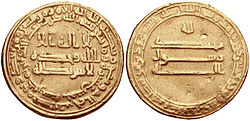
In the early ninth century, the caliph al-Ma'mun ordered translations of many Greek mathematical works and at least one Sanskrit work, preserving and transmitting number-theoretic knowledge to Islamic scholars and eventually back to Europe.
Image source: Al-Ma'mun
950
% complete
A general procedure for solving Pell's equation was probably found by Jayadeva; the earliest surviving exposition appears in Bhāskara II's Bīja-gaṇita (twelfth century).
Image source: Pell's equation
1029
% complete
The eleventh-century chakravala method amounts—in modern terms—to an algorithm for finding the units of a real quadratic number field, an Indian technique for solving Pell-type equations efficiently.
1150
% complete
Bhāskara II's Bīja-gaṇita (twelfth century) contains the earliest surviving exposition of a general procedure for solving Pell's equation, building on Jayadeva's earlier work.
Image source: Bhāskara II
1247
% complete
The Chinese remainder result was later generalized with a complete solution called Da-yan-shu (大衍術) in Qin Jiushao's 1247 Mathematical Treatise in Nine Sections.
Image source: Qin Jiushao
1630 - 1665
% complete
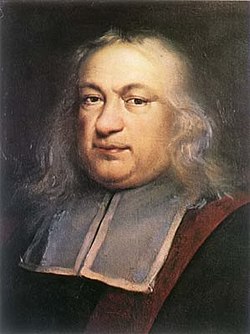
French mathematician Pierre de Fermat (1607–1665) never published his writings but communicated through correspondence and wrote in marginal notes instead. He founded modern number theory with results such as Fermat's little theorem, which was famously proved 358 years after its formulation as Fermat's Last Theorem.
Image source: Pierre de Fermat
1637
% complete
Fermat wrote in a margin that he had found a proof too large for it to fit, claiming no positive integers satisfy xn + yn = zn for n > 2. It remained unproven for 358 years, becoming one of the most famous open problems in mathematics.
Image source: Fermat's Last Theorem
1729
% complete
The interest of Leonhard Euler (1707–1783) in number theory was first spurred in 1729, when a friend of his, the amateur Christian Goldbach, pointed him towards some of Fermat's work on the subject. Goldbach's conjecture remains unsolved since the 18th century.
Image source: Christian Goldbach
1730 - 1783
% complete
Building on Fermat's work introduced to him by Goldbach, Euler proved many of Fermat's claims, generalized Fermat's little theorem, and made fundamental contributions to partitions, quadratic forms, and the distribution of primes.
Image source: Leonhard Euler
1742
% complete
Goldbach conjectured in a letter to Euler that every even integer greater than two is the sum of two primes. The conjecture remains unsolved since the 18th century, despite extensive computational verification.
Image source: Goldbach's conjecture
1770 - 1773
% complete
Joseph-Louis Lagrange (1736–1813) gave full proofs of the four-square theorem, Wilson's theorem, and developed the basic theory of Pell's equations, putting many previously asserted results on rigorous footing.
Image source: Joseph-Louis Lagrange
1785
% complete
Adrien-Marie Legendre (1752–1833) stated the law of quadratic reciprocity, describing when a prime is a quadratic residue modulo another prime. He also conjectured the prime number theorem.
Image source: Quadratic reciprocity
1796
% complete
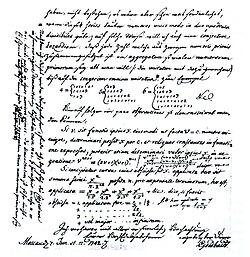
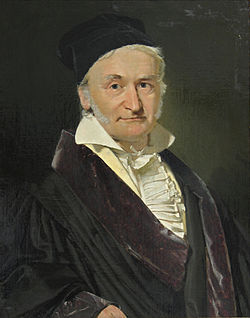
Gauss provided the first rigorous proof of the law of quadratic reciprocity at age nineteen and returned to it throughout his career, ultimately giving several distinct proofs that opened new avenues in number theory.
Image source: Carl Friedrich Gauss
1801
% complete
Carl Friedrich Gauss (1777–1855) wrote Disquisitiones Arithmeticae (1801), which had an immense influence in the area of number theory and set its agenda for much of the 19th century. Gauss once remarked, "Mathematics is the queen of the sciences—and number theory is the queen of mathematics."
1837
% complete
A conventional starting point for analytic number theory is Dirichlet's theorem on arithmetic progressions (1837), whose proof introduced L-functions and involved some asymptotic analysis and a limiting process on a real variable.
Image source: Dirichlet's theorem on arithmetic progressions
1839
% complete
Jacobi's four-square theorem (1839), which gives an exact formula for the number of representations of an integer as a sum of four squares, belongs to a strand of analytic number theory connected to modular forms that has now taken a leading role.
1859
% complete
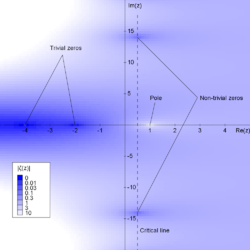
The use of complex analysis in number theory comes into its own with Bernhard Riemann's 1859 paper on the zeta function, the canonical starting point for analytic prime-counting methods. It introduced the Riemann hypothesis, still unresolved today.
Image source: Riemann hypothesis
1870 - 1900
% complete
The grounds of algebraic number theory were set in the late nineteenth century, when ideal numbers, the theory of ideals and valuation theory were introduced—three complementary ways of dealing with the lack of unique factorization in algebraic number fields.
1880 - 1950
% complete
The classification of abelian extensions of number fields was the object of the programme of class field theory, initiated in the late nineteenth century partly by Kronecker and Eisenstein and carried out largely between 1900 and 1950.
1896
% complete
The prime number theorem, describing the asymptotic distribution of primes, was first proven using complex analysis in 1896 by Hadamard and de la Vallée Poussin, building on Riemann's zeta-function insights.
Image source: Prime number theorem
1910 - 1920
% complete
By the early twentieth century, the term 'number theory' had been widely adopted, replacing older names like 'arithmetic' for the discipline devoted to the integers and their generalizations.
Image source: Number theory
1919
% complete
The number theorist Leonard Dickson (1874–1954) said "Thank God that number theory is unsullied by any application", reflecting the view of number theory as the epitome of pure mathematics before its cryptographic uses emerged.
1949
% complete
For example, although the prime number theorem was first proven using complex analysis in 1896, an elementary proof avoiding complex analysis was found only in 1949 by Erdős and Selberg.
1970
% complete
Number theory was long regarded as having no applications outside mathematics, until the 1970s, when prime numbers became the basis for the creation of public-key cryptography algorithms, such as the RSA cryptosystem.
Image source: RSA cryptosystem
1974
% complete
In 1974, Donald Knuth said "virtually every theorem in elementary number theory arises in a natural, motivated way in connection with the problem of making computers do high-speed numerical calculations", marking number theory's growing role in computer science.
Image source: Donald Knuth
Or browse the full history timeline directory, with more than 2,000 topics.
This History of Number Theory timeline was generated with the help of AI, using information found on the internet.
We work hard to keep these timelines accurate, but mistakes do get through. If you spot one, email us at [email protected] and we'll fix it for future visitors.
Generate yours with AI or build it from scratch, for free.
Export your timeline, add your own events, edit or remove AI-generated events, and much more
No credit card required.
Cancel anytime.
Cancel anytime.
You can create an unlimited number of timelines with up to 10 events on each one, customize how they look, export them to PDF, PNG, PowerPoint, CSV, and Excel, and share them with a link. Paid plans raise the event limit and add features like spreadsheet imports and collaborators.
Yes. You can cancel your subscription from your account page at any time, and you will not be charged again. Your subscription stays active for the rest of the period you already paid for.
Yes. We will email you a reminder before the annual renewal, and we will also email you a receipt.
Yes. You can email us within 15 days of any payment, and we will issue you a full refund.
Check out our pricing docs or send us an email anytime: [email protected].