
-
Use Cases
-
Resources
-
Pricing
The history of set theory traces the development of one of mathematics' foundational disciplines, beginning with Georg Cantor's pioneering work on infinite sets in the 1870s. His revolutionary ideas about different sizes of infinity sparked both fascination and controversy, leading to the discovery of paradoxes like Russell's Paradox, which prompted the formal axiomatization of the theory through Zermelo-Fraenkel set theory (ZFC). Today, set theory serves as the standard foundation for virtually all of mathematics. More Less
450 BC
% complete
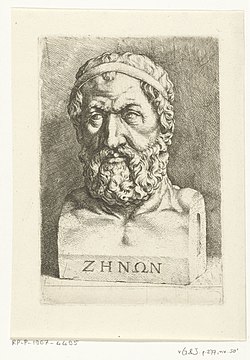
Beginning in the 5th century BC, Greek philosopher Zeno of Elea raised profound paradoxes concerning motion, divisibility, and the infinite. His famous paradoxes forced Western thinkers to confront deep difficulties in the concept of infinity, initiating a struggle that would occupy mathematicians for more than two millennia.
Image source: Zeno of Elea
400 BC
% complete
In the East, early Indian mathematicians independently wrestled with the notion of the infinite around the 5th century BC. Their work on very large numbers and endless processes contributed an Eastern counterpart to the Western philosophical struggle over infinity that Zeno had begun.
Image source: Indian mathematics
270
% complete
The Tree of Porphyry, from the 3rd century CE, represents one of the earliest known treatments of groupings as objects in their own right. By organizing genera and species into a hierarchical diagram, it anticipated the modern idea that a collection or class can itself be treated as a single entity of study.
Image source: Porphyrian tree
1670 - 1700
% complete
With the development of calculus in the late 17th century by Newton and Leibniz, philosophers began to generally distinguish between potential and actual infinity. Under this view, mathematics was only considered to deal with potential infinity — unbounded processes — rather than completed, actually infinite totalities.
1847
% complete
Bernard Bolzano composed his work on the infinite during the 1840s, offering careful analysis of infinite collections. Although published posthumously, it is generally considered the first rigorous introduction of sets to mathematics, treating infinite sets as legitimate mathematical objects.
Image source: Bernard Bolzano
1851
% complete
Bernard Bolzano's Paradoxien des Unendlichen (Paradoxes of the Infinite) was published in 1851, three years after his death. The book rigorously examined infinite sets, one-to-one correspondences, and the counterintuitive properties of the infinite, laying essential groundwork for Cantor's later theory.
Jun 10, 1854
% complete
Bernhard Riemann delivered his groundbreaking lecture On the Hypotheses which lie at the Foundations of Geometry at Göttingen in 1854. The lecture proposed bold new ideas about topology and the structure of space, ideas that would later influence Dedekind and Cantor in their development of set-theoretic thinking.
Image source: Set theory
1868
% complete
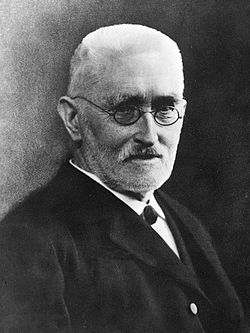
In 1868, Richard Dedekind published Riemann's lecture on geometry, along with Riemann's paper on trigonometric series, which introduced the Riemann integral. These publications disseminated Riemann's revolutionary ideas widely and directly shaped Dedekind's own subsequent work with sets.
Image source: Richard Dedekind
1871
% complete
Around 1871, influenced by Riemann's ideas, Richard Dedekind began working openly with sets in his publications. He dealt very clearly and precisely with equivalence relations, partitions of sets, and homomorphisms — concepts that became central to twentieth-century mathematics.
1872
% complete
Around the same time, Richard Dedekind famously constructed the real numbers in 1872 using what are now called Dedekind cuts. This construction treated real numbers as partitions of rational numbers — a set-theoretic procedure — giving rigorous foundations for analysis and demonstrating the power of set-based reasoning.
Image source: Dedekind cut
1874
% complete
Set theory as understood by modern mathematicians is generally considered to have been founded by Georg Cantor's single 1874 paper, On a Property of the Collection of All Real Algebraic Numbers. In it, Cantor demonstrated that the real numbers cannot be put in one-to-one correspondence with the natural numbers, proving the existence of different sizes of infinity.
Image source: Set theory
1874 - 1900
% complete
Cantor's theory of actual infinities provoked fierce controversy among mathematicians and philosophers of his day. Critics objected to treating infinite collections as completed wholes, and Cantor faced significant opposition from figures who regarded his work as undermining traditional mathematics.
Image source: Georg Cantor
1888 - 1900
% complete
Following the publication of Dedekind's formal set theory, many of the usual set-theoretic procedures of twentieth-century mathematics — equivalence relations, partitions, homomorphisms, and mappings between sets — trace their origins back to his clear and precise formulations.
1888
% complete
Although Dedekind had been working with sets since around 1871, he did not publish a formal explanation of his set theory until 1888, in his booklet What are numbers and what should they be? It gave a rigorous set-theoretic definition of natural numbers via chains and established many standard set-theoretic procedures.
Image source: Richard Dedekind
1897
% complete
Cesare Burali-Forti discovered a paradox showing that the collection of all ordinals leads to contradiction, since the order type of all ordinals would be an ordinal greater than itself. Along with other paradoxes, it revealed serious inconsistencies in the naive, unrestricted conception of sets.
1897 - 1902
% complete
Despite the controversy surrounding it, Cantor's set theory gained remarkable ground around the turn of the 20th century through the work of several notable mathematicians and philosophers, who recognized its power for analysis, topology, and the foundations of arithmetic.
1899
% complete
Georg Cantor himself discovered Cantor's paradox: the set of all sets would have to be strictly larger than itself, contradicting its maximality. Communicated privately in correspondence, this paradox further undermined the idea of an unrestricted universal set and deepened the foundational crisis.
1901
% complete
Bertrand Russell discovered the paradox of the set of all sets that do not contain themselves — if such a set contains itself, it must not; if it does not, it must. Russell's paradox, along with Cantor's and Burali-Forti's, et al., showed that intuitive set formation principles were inconsistent and demanded reform.
Image source: Russell's paradox
1904 - 1940
% complete
The axiom of choice, used by Zermelo in his well-ordering proof, sparked intense debate about whether it should be accepted as a valid principle of set theory. Its eventual incorporation into the standard ZFC system reflected a broad consensus on its utility despite its nonconstructive character.
Image source: Axiom of choice
1908
% complete
In response to the paradoxes that had plagued naive set theory, Ernst Zermelo proposed an axiomatic system for set theory in 1908. His axioms restricted set formation enough to avoid the known contradictions while preserving the useful parts of Cantor's theory.
Image source: Ernst Zermelo
1922
% complete
Abraham Fraenkel, along with Thoralf Skolem, improved and strengthened Zermelo's axioms, most notably replacing the vague separation principle with the replacement schema. The resulting system, Zermelo–Fraenkel set theory (ZF), became the standard foundation for mathematics.
Image source: Abraham Fraenkel
1922 - 1950
% complete
Of the various axiomatic systems proposed in the early twentieth century in response to the paradoxes, Zermelo–Fraenkel set theory with or without the axiom of choice emerged as still the best-known and most studied. It remains the dominant framework in which virtually all of modern mathematics is formalized.
Image source: Zermelo–Fraenkel set theory
1938 - 1940
% complete
Kurt Gödel showed in his work on the constructible universe that if ZF is consistent, then so is ZF together with the axiom of choice and the continuum hypothesis. This result legitimized these contested principles relative to the base theory and advanced axiomatic set theory enormously.
Image source: Kurt Gödel
1963
% complete
Paul Cohen developed the method of forcing to prove that the continuum hypothesis cannot be proved from ZFC if ZFC is consistent. Together with Gödel's earlier work, this established the independence of the continuum hypothesis and opened vast new areas of research in set theory.
Image source: Paul Cohen
1977
% complete
In 1977, Edward Nelson proposed internal set theory, an enrichment of Zermelo–Fraenkel set theory with choice (ZFC). It adds new primitives and axioms for infinitesimals, providing a conservative extension of ZFC that allows nonstandard elements within ordinary sets and supports nonstandard analysis.
Or browse the full history timeline directory, with more than 2,000 topics.
This History of Set Theory timeline was generated with the help of AI, using information found on the internet.
We work hard to keep these timelines accurate, but mistakes do get through. If you spot one, email us at [email protected] and we'll fix it for future visitors.
Generate yours with AI or build it from scratch, for free.
Export your timeline, add your own events, edit or remove AI-generated events, and much more
No credit card required.
Cancel anytime.
Cancel anytime.
You can create an unlimited number of timelines with up to 10 events on each one, customize how they look, export them to PDF, PNG, PowerPoint, CSV, and Excel, and share them with a link. Paid plans raise the event limit and add features like spreadsheet imports and collaborators.
Yes. You can cancel your subscription from your account page at any time, and you will not be charged again. Your subscription stays active for the rest of the period you already paid for.
Yes. We will email you a reminder before the annual renewal, and we will also email you a receipt.
Yes. You can email us within 15 days of any payment, and we will issue you a full refund.
Check out our pricing docs or send us an email anytime: [email protected].