-
Use Cases
-
Resources
-
Pricing
The history of probability theory traces the mathematical study of chance from its origins in gambling problems of the 16th and 17th centuries through its formalization by pioneers like Blaise Pascal, Pierre-Simon Laplace, Andrey Kolmogorov, and Thomas Bayes. What began as an attempt to solve games of chance evolved into a rigorous discipline foundational to statistics, physics, economics, cryptography, and machine learning. More Less
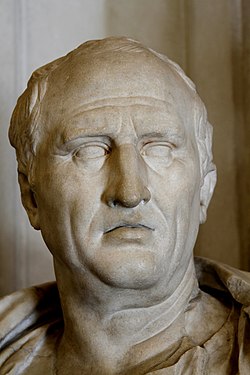
44 BC
Cicero argued that randomness, such as the casting of lots, was governed by no fixed rules, reflecting a widespread classical view that chance events lay outside rational analysis. This philosophical stance discouraged any systematic development of probability for centuries.
Image source: Cicero
200
Indian scholars, including later commentators on the Chandahsastra of Pingala, developed methods for counting arrangements and combinations. These counting techniques would prove essential building blocks for the later mathematical treatment of probability.
750
The Arab philologist Al-Khalil wrote the Book of Cryptographic Messages, systematically analyzing possible permutations of Arabic letters with and without repetition. His work represented one of the earliest rigorous treatments of combinatorics, foundational to later probability calculations.
Image source: Al-Khalil ibn Ahmad al-Farahidi

1250
The Latin poem De Vetula, attributed to Richard de Fournival, correctly counted the number of ways three dice could land, distinguishing equally likely outcomes from sums. It represents one of the earliest European attempts at quantifying chance.
Image source: De vetula

1564
Girolamo Cardano composed his Book on Games of Chance, the first systematic mathematical treatment of gambling odds. He defined probability as a ratio of favorable to equally likely outcomes, though the work was only published posthumously in 1663.
Image source: Gerolamo Cardano

1620
In his fragment Sopra le Scoperte dei Dadi, Galileo correctly explained why certain totals appear more frequently when throwing three dice, using careful enumeration of equally likely outcomes. His analysis confirmed and extended Cardano's approach to combinatorial reasoning about chance.
Image source: Galileo Galilei

1654
Blaise Pascal and Pierre de Fermat corresponded about how to fairly divide stakes in an interrupted game of chance. Their solutions, based on expected value and recursive reasoning, are traditionally regarded as the birth of modern probability theory as a mathematical discipline.
1657
Huygens published the first printed treatise devoted entirely to probability, introducing the concept of expectation and solving numerous gambling problems. For half a century it served as the standard introduction to the calculus of chances in Europe.
Image source: Christiaan Huygens

1662
Graunt's Natural and Political Observations upon the Bills of Mortality analyzed London death records statistically, estimating life expectancies and population trends. His work founded demography and demonstrated the practical power of probabilistic and statistical reasoning.
Image source: John Graunt

1670
Leibniz wrote extensively on probability as a degree of certainty applicable to law, insurance, and rational decision-making. He envisioned a universal calculus of probabilities that would extend mathematical rigor beyond games of chance to human affairs.
Image source: Gottfried Wilhelm Leibniz

This History of Probability Theory timeline was generated with the help of AI, using information found on the internet.
We work hard to keep these timelines accurate, but mistakes do get through. If you spot one, email us at [email protected] and we'll fix it for future visitors.
Generate yours with AI or build it from scratch, for free.