-
Use Cases
-
Resources
-
Pricing
Oslo, the capital of Norway, has a rich history spanning nearly a millennium. Founded in the Viking era around 1040 CE, it grew into an important medieval trading hub under Norwegian kings. After being destroyed by fire in 1624, it was rebuilt by King Christian IV and renamed Christiania. The city served as Norway's political center through the union with Denmark, independence in 1905, and German occupation during World War II. In 1925, the original name Oslo was restored, and the city has since grown into a modern capital known for its maritime heritage, culture, and prosperity. More Less
1040
% complete
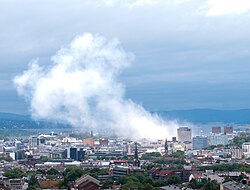
Oslo was established as a trading post at the head of the Oslofjord in eastern Norway, traditionally dated to around 1040 under King Harald Hardrada. Its location made it a natural hub for commerce between the inland regions and the Baltic.
Image source: Oslo
1053
% complete
Hallvard Vebjørnsson, martyred while defending an innocent woman, became the patron saint of Oslo. The city's seal depicting St. Hallvard with a millstone and arrows dates from this tradition.
Image source: Hallvard Vebjørnsson
1070
% complete
The medieval Icelandic historian Snorri Sturluson recorded the founding of Oslo by Harald Hardrada, providing one of the earliest written references to the town and helping fix its traditional founding date.
Image source: Oslo
1299
% complete
King Haakon V began construction of Akershus Fortress on a promontory overlooking the fjord to protect the city. It would become Norway's most important stronghold and royal residence for centuries.
Image source: Akershus Fortress
1348
% complete
The Black Death reached Norway via ships arriving near Oslo in 1348, killing perhaps half the population and plunging the city into decline that lasted well over a century.
Image source: Black Death in Norway
1350
% complete
During the 14th century, Oslo developed significant trade links with the Hanseatic League, exporting timber, furs, and fish through German merchants who dominated the city's commerce for generations.
Image source: Hanseatic League
1397
% complete
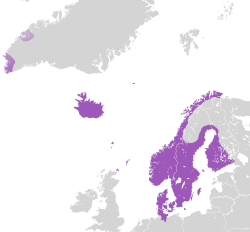
Norway joined Denmark and Sweden in the Kalmar Union under Queen Margaret I, beginning nearly four centuries of Danish dominance during which Oslo's political importance waned.
Image source: Kalmar Union
1624
% complete
A devastating fire destroyed most of medieval Oslo. King Christian IV ordered the city rebuilt closer to Akershus Fortress and renamed it Christiania after himself.
Image source: Freetown Christiania
1624
% complete
After the fire, King Christian IV decreed the new city be named Christiania, a name it retained until 1925, symbolizing Danish royal authority over the rebuilt Norwegian capital.
1814
% complete
Following Norway's separation from Denmark and union with Sweden, Christiania was formally confirmed as the capital, hosting government institutions and later the parliament (Storting), spurring rapid growth.
Image source: Kingdom of Norway (1814)
1824 - 1849
% complete
Designed by Hans Ditlev Franciscus von Linstow, the Royal Palace took 25 years to complete and became the official residence of the Norwegian monarch, anchoring the city's ceremonial heart.
Image source: Royal Palace, Oslo
1877
% complete
The city's official spelling was changed to Kristiania, reflecting Norwegian linguistic reforms; the name remained until the restoration of 'Oslo' in 1925.
1811
% complete
Founded as the Royal Frederick University, the University of Oslo became Norway's leading institution of higher learning and a center of national romanticism and scientific achievement.
Image source: University of Oslo
Sep 1, 1854
% complete
The Trunk Line (Hovedbanen) opened as Norway's first railway, linking the capital to Lake Mjøsa and dramatically improving transport of goods and people to and from Christiania.
Image source: Trunk Line
1860 - 1900
% complete
Christiania experienced explosive growth in the second half of the 19th century, with population rising from about 30,000 to over 200,000 as industry, shipping, and immigration transformed the cityscape.
1891
% complete
Christiania embraced electrification early, introducing electric street lighting powered by hydroelectric resources, reflecting Norway's pioneering use of hydropower for urban development.
Image source: Electricity sector in Norway
Jun 7, 1905
% complete
Norway peacefully dissolved its union with Sweden, and Christiania became capital of fully independent Norway, cementing its role as the political and cultural center of the nation.
Image source: Dissolution of the union between Norway and Sweden
Jan 1, 1925
% complete
After Norway's independence, the old Norse name Oslo was restored, replacing Kristiania, marking a symbolic break with the Danish era and a reclamation of medieval heritage.
Apr 9, 1940 - May 8, 1945
% complete
German forces invaded Norway and occupied Oslo throughout World War II. The city suffered censorship, resistance activity, and repression until liberation in May 1945.
Image source: Norwegian campaign
Dec 10, 1947
% complete
The annual Nobel Peace Prize ceremony was permanently moved to Oslo, where it is presented each December 10 in recognition of the city's role in honoring peace efforts worldwide.
Image source: Nobel Peace Prize
Feb 14, 1952 - Feb 25, 1952
% complete
Oslo hosted the sixth Winter Olympic Games, using venues like Bislett Stadium and Holmenkollen, showcasing the city internationally and boosting its winter sports infrastructure.
Image source: 1952 Winter Olympics
1993
% complete
Secret talks conducted in Oslo between Israeli and Palestinian representatives produced the landmark Oslo Accords, earning international attention for the Norwegian capital's diplomatic role.
Image source: Oslo I Accord
Apr 12, 2008
% complete
The striking white marble Oslo Opera House opened in Bjørvika, becoming an architectural icon with its walkable roof and home of the Norwegian National Opera and Ballet.
Image source: Oslo Opera House
Jul 22, 2011
% complete
A bombing in central Oslo killed eight people, followed by a massacre on Utøya island, shocking the nation and prompting renewed commitment to openness and democracy in Norway.
Image source: 2011 Norway attacks
Oct 22, 2021
% complete
The Munch Museum relocated to a modern high-rise in the Bjørvika waterfront district, housing the world's largest collection of works by Edvard Munch, including versions of The Scream.
Image source: Munch Museum
Or browse the full history timeline directory, with more than 2,000 topics.
This History of Oslo timeline was generated with the help of AI, using information found on the internet.
We work hard to keep these timelines accurate, but mistakes do get through. If you spot one, email us at [email protected] and we'll fix it for future visitors.
Generate yours with AI or build it from scratch, for free.
Export your timeline, add your own events, edit or remove AI-generated events, and much more
No credit card required.
Cancel anytime.
Cancel anytime.
You can create an unlimited number of timelines with up to 10 events on each one, customize how they look, export them to PDF, PNG, PowerPoint, CSV, and Excel, and share them with a link. Paid plans raise the event limit and add features like spreadsheet imports and collaborators.
Yes. You can cancel your subscription from your account page at any time, and you will not be charged again. Your subscription stays active for the rest of the period you already paid for.
Yes. We will email you a reminder before the annual renewal, and we will also email you a receipt.
Yes. You can email us within 15 days of any payment, and we will issue you a full refund.
Check out our pricing docs or send us an email anytime: [email protected].