-
Use Cases
-
Resources
-
Pricing
Pfizer is one of the world's largest pharmaceutical companies. Founded in 1849 by Charles Pfizer and Charles Erhart in Brooklyn, New York, it began as a fine chemicals business and grew into a global biopharmaceutical giant known for breakthrough drugs like penicillin, Viagra, Lipitor, and the COVID-19 vaccine developed with BioNTech. More Less
1849
% complete
Charles Pfizer, a German immigrant chemist, founded Charles Pfizer & Company in Brooklyn, New York, with financing from his cousin Charles Erhart. The company initially produced fine chemicals, with its first success being a palatable form of santonin, an antiparasitic drug blended with almond toffee flavoring.
Image source: Pfizer

1868
% complete
Following growth in its early years, Pfizer moved its headquarters and operations from Williamsburg, Brooklyn to a larger facility in Manhattan, positioning itself for expanded chemical production in the growing New York market.
1880
% complete
Pfizer developed expertise in fermentation technology and became one of the leading American producers of citric acid, which was widely used in foods and beverages. This business became a cornerstone of the company's revenue for decades.
1942
% complete
Pfizer adapted its deep-tank fermentation expertise from citric acid production to mass-produce penicillin. The company became the world's largest producer of the antibiotic, supplying much of the penicillin used by Allied forces during World War II.
Image source: Penicillin

Jun 1942
% complete
Pfizer offered shares to the public for the first time, listing on the New York Stock Exchange. The move provided capital for expansion and marked the company's transition into a publicly traded corporation.
1952
% complete
Under CEO John McKeen, Pfizer reorganized to emphasize research-driven pharmaceutical development, establishing divisions dedicated to discovering and marketing new drugs rather than relying primarily on commodity chemicals.
1972
% complete
Edmund Pratt became CEO of Pfizer and refocused the company on high-value pharmaceuticals while divesting non-core businesses such as agricultural chemicals over time, setting the stage for Pfizer's emergence as a pure-play pharma leader.
2001
% complete
Henry McKinnell succeeded William Steere as CEO, continuing Pfizer's strategy of growth through large-scale acquisitions and expanding the company's global footprint.
2006
% complete
Jeffrey Kindler, a former lawyer, became CEO amid investor pressure following declining stock performance. He focused on cost-cutting and diversification beyond traditional pharmaceuticals.
Dec 2010
% complete
Ian Read replaced Jeffrey Kindler as CEO and refocused Pfizer on core pharmaceuticals, spinning off or divesting businesses including nutrition and animal health to sharpen strategic focus.
Image source: Ian Read (musician)
1950
% complete
Pfizer scientists discovered oxytetracycline, marketed as Terramycin, marking the company's first proprietary pharmaceutical discovery. This shifted Pfizer's focus from bulk chemicals toward innovative prescription medicines.
Image source: Oxytetracycline
1960
% complete
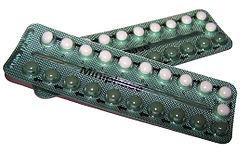
The first oral contraceptive, Enovid, was introduced in the United States. Pfizer supplied key steroid intermediates used in its production, benefiting from the revolutionary growth of the birth control market.
Image source: Combined oral contraceptive pill
1967
% complete
Pfizer introduced Vibramycin (doxycycline), a broad-spectrum tetracycline antibiotic that became one of the most widely prescribed antibiotics in the world and remains in use today.
Image source: Doxycycline
1980
% complete
Feldene (piroxicam), a once-daily nonsteroidal anti-inflammatory drug for arthritis, became Pfizer's first product to achieve $1 billion in annual sales, demonstrating the company's ability to create blockbuster drugs.
Image source: Piroxicam
Dec 30, 1991
% complete
The FDA approved Zoloft (sertraline), a selective serotonin reuptake inhibitor for depression. It became one of the best-selling antidepressants in history and a major revenue driver for Pfizer.
Image source: Sertraline
1992
% complete
Pfizer received approval for Norvasc (amlodipine), a calcium channel blocker for hypertension and angina. It grew into one of the world's top-selling cardiovascular medications.
Image source: Amlodipine
Dec 17, 1996
% complete
The FDA approved Lipitor (atorvastatin), a statin for lowering cholesterol. It went on to become the best-selling pharmaceutical product in history, earning more than $125 billion before patent expiration.
Image source: Atorvastatin
Mar 27, 1998
% complete
The FDA approved Viagra (sildenafil) for erectile dysfunction, originally studied as a cardiovascular drug. It became a cultural phenomenon and one of the fastest-selling drugs ever, generating billions in annual revenue.
Image source: Sildenafil
1961
% complete
Pfizer continued expanding internationally during the 1960s, establishing manufacturing and sales operations across Europe, Latin America, and Asia as global demand for antibiotics and other medicines grew.
1990
% complete
William Steere took over as CEO and aggressively pursued mergers and acquisitions, transforming Pfizer through deals that added products and research capabilities, including the acquisition of SmithKline Beecham's animal health assets.
2000
% complete
Pfizer completed a $90 billion acquisition of Warner-Lambert after a bidding contest with American Home Products, gaining full ownership of Lipitor and becoming one of the largest pharmaceutical companies in the world.
Apr 2003
% complete
Pfizer acquired Pharmacia Corporation for approximately $60 billion, adding products like Celebrex and Xalatan and strengthening its position as the world's largest pharmaceutical company.
Image source: Pharmacia
Oct 15, 2009
% complete
Pfizer completed its $68 billion acquisition of Wyeth, gaining vaccines, biologics, and consumer health products. The deal diversified Pfizer's portfolio ahead of Lipitor's looming patent expiration.
Image source: Wyeth
Feb 1, 2013
% complete
Pfizer spun off its animal health division as Zoetis, the largest animal health company in the world, via an initial public offering, completing its strategy of focusing on human biopharmaceuticals.
Image source: Zoetis
Nov 16, 2020
% complete
Pfizer completed the spinoff and merger of its Upjohn off-patent branded medicines unit with generic drugmaker Mylan, creating Viatris and leaving Pfizer focused on innovative medicines and vaccines.
Image source: Viatris
2018
% complete
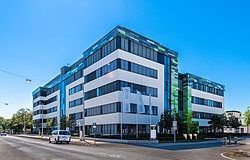
Pfizer partnered with German biotech BioNTech to develop mRNA-based influenza vaccines, building a relationship that would prove pivotal when the companies pivoted to develop a COVID-19 vaccine in 2020.
Image source: BioNTech
Jan 1, 2019
% complete
Albert Bourla, a veterinarian who had spent decades at Pfizer, became CEO. He championed a science-focused strategy and bold bets on innovation, including mRNA technology, just before the COVID-19 pandemic.
Image source: Albert Bourla
Nov 9, 2020
% complete
Pfizer and BioNTech announced that their mRNA COVID-19 vaccine candidate, BNT162b2, showed more than 90% efficacy in late-stage trials, marking a landmark moment in the fight against the pandemic.
Image source: Pfizer–BioNTech COVID-19 vaccine
Dec 11, 2020
% complete
The FDA issued emergency use authorization for the Pfizer-BioNTech COVID-19 vaccine, making it the first authorized COVID vaccine in the United States. Mass vaccination campaigns began within days.
Aug 23, 2021
% complete
The FDA granted full approval to the Pfizer-BioNTech COVID-19 vaccine under the brand name Comirnaty, the first COVID-19 vaccine to receive complete approval in the United States, cementing Pfizer's role in ending the pandemic.
Image source: Pfizer–BioNTech COVID-19 vaccine
Or browse the full history timeline directory, with more than 2,000 topics.
This History of Pfizer timeline was generated with the help of AI, using information found on the internet.
We work hard to keep these timelines accurate, but mistakes do get through. If you spot one, email us at [email protected] and we'll fix it for future visitors.
Generate yours with AI or build it from scratch, for free.
Export your timeline, add your own events, edit or remove AI-generated events, and much more
No credit card required.
Cancel anytime.
Cancel anytime.
You can create an unlimited number of timelines with up to 10 events on each one, customize how they look, export them to PDF, PNG, PowerPoint, CSV, and Excel, and share them with a link. Paid plans raise the event limit and add features like spreadsheet imports and collaborators.
Yes. You can cancel your subscription from your account page at any time, and you will not be charged again. Your subscription stays active for the rest of the period you already paid for.
Yes. We will email you a reminder before the annual renewal, and we will also email you a receipt.
Yes. You can email us within 15 days of any payment, and we will issue you a full refund.
Check out our pricing docs or send us an email anytime: [email protected].