-
Use Cases
-
Resources
-
Pricing
Johnson & Johnson is an American multinational healthcare company founded in 1886 by the Johnson brothers in New Brunswick, New Jersey. Starting as a producer of sterile surgical supplies, it pioneered consumer health products like Band-Aid bandages and baby powder, and grew into one of the world's largest pharmaceutical and medical device corporations. More Less
1886
% complete
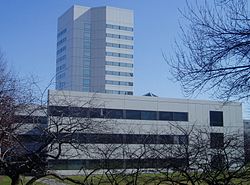
Three brothers, Robert Wood Johnson I, James Wood Johnson, and Edward Mead Johnson, founded Johnson & Johnson in New Brunswick, New Jersey, to produce ready-to-use surgical dressings, revolutionizing antiseptic surgical practices in American medicine.
Image source: Johnson & Johnson
1888
% complete
Johnson & Johnson created the first commercial first aid kits, initially designed for railroad workers who were often injured far from medical care. The innovation helped establish the company's reputation for safety products.
Image source: First aid kit
1894
% complete
Robert Wood Johnson II, son of the founder, joined the family business as a teenager. He would later lead the company for decades and shape its corporate philosophy, including the famous Credo.
Image source: Robert Wood Johnson II
1932
% complete
Robert Wood Johnson II took over leadership of the company during the Great Depression. Under his guidance, J&J expanded internationally and maintained employment through economic hardship, earning employee loyalty.
1943
% complete
Robert Wood Johnson II penned Our Credo, a one-page document outlining the company's responsibilities to customers, employees, communities, and shareholders. It became a landmark statement of business ethics still guiding the company today.
Image source: Johnson & Johnson
1890
% complete
Inspired by Joseph Lister's antiseptic principles, the founders developed mass-produced sterile surgical dressings and sutures, making modern aseptic surgery accessible to hospitals across America.
Image source: Joseph Lister
1894
% complete
The company introduced Johnson's Baby Powder, made of talc, which became one of its most iconic consumer products and helped launch the company's baby care business that would dominate the category for over a century.
Image source: Johnson's Baby
1920
% complete
Earle Dickson, a cotton buyer at Johnson & Johnson, invented the Band-Aid adhesive bandage for his wife, who frequently cut herself while cooking. The company began commercial production in 1921, creating one of history's most recognizable consumer products.
Image source: Adhesive bandage
1955
% complete
McNeil Laboratories, acquired by Johnson & Johnson, launched Tylenol Elixir for Children, introducing acetaminophen to the American market. Tylenol would become the best-selling pain reliever in the United States.
Image source: Tylenol
1977
% complete
Johnson & Johnson introduced Reach dental floss, expanding its consumer health portfolio into oral care and becoming a leading player in the dental hygiene market.
Image source: Dental floss
1944
% complete
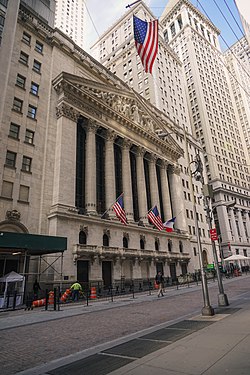
Johnson & Johnson listed its shares on the New York Stock Exchange under the ticker symbol JNJ, opening ownership to public investors and providing capital for postwar expansion.
Image source: New York Stock Exchange
1945 - 1960
% complete
Following World War II, Johnson & Johnson rapidly expanded overseas, establishing operations in Europe, Latin America, and Asia, transforming itself into a truly global healthcare enterprise.
Image source: Multinational corporation
1959
% complete
Johnson & Johnson acquired McNeil Laboratories, bringing the Tylenol brand into its portfolio and strengthening its position in the over-the-counter pharmaceutical market.
1959
% complete
The acquisition of Ortho Pharmaceutical expanded Johnson & Johnson's presence in prescription pharmaceuticals, particularly in women's health and dermatology products.
1961
% complete
Johnson & Johnson acquired Belgian firm Janssen Pharmaceutica, founded by Dr. Paul Janssen, one of the most prolific drug discoverers in history. The deal laid the foundation for J&J's global pharmaceutical powerhouse.
1986
% complete
Johnson & Johnson acquired LifeScan, maker of blood glucose monitoring systems, marking a major entry into diabetes care and medical device diagnostics.
1994
% complete
Johnson & Johnson purchased skincare company Neutrogena for $924 million, significantly bolstering its beauty and dermatological consumer brands portfolio.
Image source: Neutrogena
1999
% complete
Johnson & Johnson acquired Centocor for $4.9 billion, gaining Remicade (infliximab), a blockbuster biologic drug for autoimmune diseases like rheumatoid arthritis and Crohn's disease.
2006
% complete
Johnson & Johnson acquired Pfizer's consumer healthcare division for $16.6 billion, adding brands such as Listerine, Band-Aid competitor products, Nicorette, and Sudafed to its consumer portfolio.
Image source: Pfizer
2011 - Jun 2012
% complete
Johnson & Johnson completed its largest acquisition to date, buying Swiss trauma device maker Synthes for $21.3 billion, dramatically expanding its DePuy orthopedics business.
Jan 2017
% complete
Johnson & Johnson acquired Swiss biotech Actelion for $30 billion, gaining a portfolio of treatments for pulmonary arterial hypertension and strengthening its rare disease pipeline.
Image source: Actelion
May 2023
% complete
Johnson & Johnson spun off its consumer health division, including Tylenol, Band-Aid, Neutrogena, and Listerine, into a new publicly traded company called Kenvue, refocusing J&J entirely on pharmaceuticals and medical devices.
Image source: Kenvue
Sep 29, 1982
% complete
Seven people died in Chicago after taking Extra-Strength Tylenol capsules laced with cyanide by an unknown perpetrator. Johnson & Johnson recalled 31 million bottles nationwide, costing over $100 million but widely praised as a model of crisis management and corporate responsibility.
Image source: Chicago Tylenol murders
1983
% complete
In response to the Tylenol poisonings, Johnson & Johnson pioneered tamper-evident packaging, and new federal regulations soon required it across the industry, permanently changing how consumer medicines are packaged.
Image source: Packaging
2009 - 2010
% complete
Quality control problems led to recalls of Tylenol, Motrin, Benadryl, and other products, including a massive 2010 recall of children's liquid medicines. The scandals damaged consumer trust and prompted congressional investigations and FDA enforcement actions.
Aug 2010
% complete
Johnson & Johnson recalled the DePuy ASR metal-on-metal hip implant after high failure rates caused pain and metal toxicity in patients. The recall led to thousands of lawsuits and billions of dollars in settlements.
Image source: DePuy Synthes
2013
% complete
Lawsuits alleging that Johnson's Baby Powder containing talc was linked to ovarian cancer and mesothelioma resulted in multi-billion dollar verdicts and tens of thousands of claims, becoming one of the largest product liability litigations in U.S. history.
2020 - 2021
% complete
Johnson & Johnson agreed to pay billions of dollars to settle claims that it deceptively marketed opioid painkillers, part of broader national settlements addressing the U.S. opioid epidemic.
Image source: Opioid epidemic in the United States
1993
% complete
The FDA approved Risperdal (risperidone), an antipsychotic developed by Janssen Pharmaceutica. It became one of the world's best-selling antipsychotic drugs, though later faced litigation over undisclosed side effects.
Image source: Risperidone
1998
% complete
FDA approval of Remicade ushered in the era of anti-TNF biologics. The drug generated billions in annual revenue and established J&J as a leader in immunology therapeutics.
Image source: Infliximab
Nov 2015
% complete
FDA approval of Darzalex (daratumumab), a monoclonal antibody acquired through the Genmab partnership, revolutionized multiple myeloma therapy and became one of J&J's top-selling drugs with billions in annual sales.
Image source: Daratumumab
Feb 27, 2021
% complete
The FDA granted emergency use authorization to Johnson & Johnson's single-dose adenovirus vector COVID-19 vaccine, developed by Janssen. It played a significant role in global vaccination efforts, though later use was limited by rare blood clot concerns.
Image source: Janssen COVID-19 vaccine
Or browse the full history timeline directory, with more than 2,000 topics.
This History of Johnson & Johnson timeline was generated with the help of AI, using information found on the internet.
We work hard to keep these timelines accurate, but mistakes do get through. If you spot one, email us at [email protected] and we'll fix it for future visitors.
Generate yours with AI or build it from scratch, for free.
Export your timeline, add your own events, edit or remove AI-generated events, and much more
No credit card required.
Cancel anytime.
Cancel anytime.
You can create an unlimited number of timelines with up to 10 events on each one, customize how they look, export them to PDF, PNG, PowerPoint, CSV, and Excel, and share them with a link. Paid plans raise the event limit and add features like spreadsheet imports and collaborators.
Yes. You can cancel your subscription from your account page at any time, and you will not be charged again. Your subscription stays active for the rest of the period you already paid for.
Yes. We will email you a reminder before the annual renewal, and we will also email you a receipt.
Yes. You can email us within 15 days of any payment, and we will issue you a full refund.
Check out our pricing docs or send us an email anytime: [email protected].