-
Use Cases
-
Resources
-
Pricing
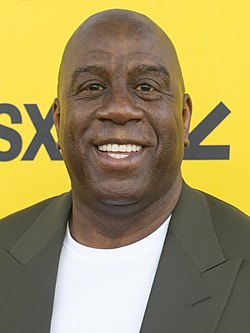
Magic Johnson, born Earvin Johnson Jr. on August 14, 1959, is an American retired professional basketball player widely regarded as one of the greatest point guards in NBA history. Playing his entire 13-year career with the Los Angeles Lakers, he won five NBA championships, three MVP awards, and became famous for his dazzling passing and rivalry with Larry Bird. After announcing in 1991 that he had contracted HIV, he became a prominent advocate for HIV/AIDS awareness and later built a successful business career as an entrepreneur and investor. More Less
Aug 14, 1959
% complete
Earvin Johnson Jr. was born in Lansing, Michigan, the sixth of seven children. He grew up in a working-class family and developed a love for basketball at an early age, earning the nickname 'Magic' after a high school game in which he recorded 36 points, 16 rebounds, and 16 assists.
Image source: Magic Johnson
Mar 1977
% complete
Johnson led Everett High School to the Michigan Class A state championship as a senior, capping an extraordinary prep career and cementing his reputation as one of the nation's top high school players.
Sep 1977
% complete
Johnson chose to stay close to home and play for Michigan State rather than distant powers like Indiana or UCLA, a decision that would soon pay off spectacularly.
Mar 26, 1979
% complete
In one of the most-watched college basketball games ever, Magic Johnson's Michigan State Spartans defeated Larry Bird's undefeated Indiana State team, beginning the legendary Johnson-Bird rivalry that revitalized the NBA.
Image source: 1979 NCAA Division I basketball championship game
Jun 25, 1979
% complete
After declaring for the draft following his sophomore season, Johnson was selected first overall by the Los Angeles Lakers, launching what would become one of the most celebrated careers in NBA history.
Image source: 1979 NBA draft
May 16, 1980
% complete
Playing center in place of the injured Kareem Abdul-Jabbar in Game 6, rookie Magic Johnson scored 42 points with 15 rebounds and 7 assists to win the title over the Philadelphia 76ers, becoming the only rookie ever named NBA Finals MVP.
Image source: 1980 NBA Finals
Jun 1981
% complete
Johnson signed a then-record 25-year, $25 million contract extension with the Lakers, reflecting his immense value to the franchise and making him one of the highest-paid athletes in sports.
Jun 9, 1982
% complete
Johnson led the Lakers past Julius Erving's Philadelphia 76ers in six games, capturing the franchise's second title of the Showtime era.
Jun 12, 1985
% complete
After losing to Boston in 1984, Johnson redeemed himself by leading the Lakers to victory over the Celtics in six games, winning his third NBA championship and finally conquering their archrivals.
Image source: 1985 NBA Finals
Jun 1987
% complete
Johnson earned his first NBA Most Valuable Player Award after averaging a career-high 23.9 points per game during the 1986–87 season.
Jun 9, 1987
% complete
In Game 4 of the Finals, Johnson sank his famous 'junior sky hook' over Robert Parish and Kevin McHale with seconds remaining to seal a dramatic road win, one of the signature moments of the Lakers-Celtics rivalry.
Image source: 1987 NBA Finals
Jun 14, 1987
% complete
Johnson averaged over 21 points per game in the Finals as the Lakers beat Boston in six games, winning his fourth ring and his first Finals MVP since his rookie year.
Jun 21, 1988
% complete
The Lakers became the first team in nearly two decades to repeat as champions, beating Isiah Thomas' Detroit Pistons in seven grueling games, with James Worthy delivering a triple-double in Game 7.
Image source: 1988 NBA Finals
Jun 1989 - Jun 1990
% complete
Johnson captured consecutive league MVP honors in 1989 and 1990, solidifying his status as the best player in basketball during the late 1980s.
Image source: NBA Most Valuable Player Award
Jan 1987
% complete
Long before his retirement, Johnson founded Magic Johnson Enterprises, which grew into a billion-dollar conglomerate spanning movie theaters, Starbucks franchises, real estate, restaurants, and financial services aimed at underserved urban communities.
Nov 1995
% complete
Partnering with Sony and later AMC, Johnson opened multiplex cinemas in historically underserved neighborhoods, bringing jobs and entertainment to communities like Baldwin Hills and Harlem.
Jan 1998
% complete
Through Urban Coffee Opportunities, Johnson co-owned dozens of Starbucks franchises in diverse urban areas, becoming one of the coffee giant's most successful partners before selling his stake in 2010.
Mar 27, 2012
% complete
Johnson joined Guggenheim Baseball Management's $2.15 billion purchase of the Dodgers, becoming a part-owner of his hometown baseball franchise and one of the most prominent Black owners in American sports.
Image source: Los Angeles Dodgers
Feb 2014
% complete
Johnson joined a group investing in the WNBA's Los Angeles Sparks, demonstrating his commitment to growing women's professional basketball.
Nov 7, 1991
% complete
At a stunning press conference, Johnson announced he had contracted HIV and would retire immediately. His announcement shattered misconceptions about HIV/AIDS, showing it could affect anyone and helping transform public awareness of the disease.
Image source: Magic Johnson
Dec 1991
% complete
Johnson established the Magic Johnson Foundation to combat HIV/AIDS through education, prevention, and research programs, later expanding its mission to address broader community needs including scholarships and urban development.
Feb 9, 1992
% complete
In an emotional comeback appearance, Johnson played in the 1992 NBA All-Star Game in Orlando, winning MVP honors after hitting a closing three-pointer over Michael Jordan and Isiah Thomas.
Aug 8, 1992
% complete
Despite having retired months earlier, Johnson joined Michael Jordan, Larry Bird, and other superstars on the 'Dream Team,' which dominated the 1992 Olympics in Barcelona and globalized the sport of basketball.
Oct 1992
% complete
Johnson released his autobiography 'My Life,' co-written with William Novak, detailing his childhood, career, and life with HIV, which became a bestseller.
Image source: Who Moved My Cheese?
Apr 1994 - May 1994
% complete
Johnson took over as interim head coach of the struggling Lakers for the final 16 games of the 1993–94 season, posting a 5–11 record before stepping down and returning to business pursuits.
Jan 30, 1996 - May 1996
% complete
After four years away, Johnson returned mid-season to play forward for the Lakers alongside a young Kobe Bryant, averaging 14.6 points per game before retiring for good after a playoff loss to Houston.
Oct 29, 1996
% complete
The NBA honored Johnson as one of the 50 greatest players in league history during its 50th anniversary celebration, a fitting tribute to his transformative impact on the game.
Image source: 50 Greatest Players in NBA History
Sep 27, 2002
% complete
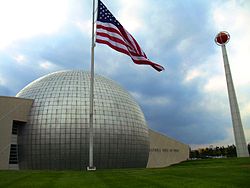
In his first year of eligibility, Johnson was enshrined in the Hall of Fame, recognized as one of the greatest point guards and winners in basketball history.
Image source: Naismith Memorial Basketball Hall of Fame
Feb 21, 2017 - Apr 9, 2019
% complete
Johnson returned to the Lakers front office as president of basketball operations, overseeing moves including the signing of LeBron James, before abruptly resigning in April 2019.
Apr 22, 2022
% complete
A four-part documentary chronicling Johnson's life, career, and HIV advocacy premiered on Apple TV+, offering an intimate look at his journey from Lansing to global icon. His enduring influence spans sports, business, and public health advocacy worldwide.
Image source: They Call Me Magic
Or browse the full history timeline directory, with more than 2,000 topics.
This Magic Johnson timeline was generated with the help of AI, using information found on the internet.
We work hard to keep these timelines accurate, but mistakes do get through. If you spot one, email us at [email protected] and we'll fix it for future visitors.
Generate yours with AI or build it from scratch, for free.
Export your timeline, add your own events, edit or remove AI-generated events, and much more
No credit card required.
Cancel anytime.
Cancel anytime.
You can create an unlimited number of timelines with up to 10 events on each one, customize how they look, export them to PDF, PNG, PowerPoint, CSV, and Excel, and share them with a link. Paid plans raise the event limit and add features like spreadsheet imports and collaborators.
Yes. You can cancel your subscription from your account page at any time, and you will not be charged again. Your subscription stays active for the rest of the period you already paid for.
Yes. We will email you a reminder before the annual renewal, and we will also email you a receipt.
Yes. You can email us within 15 days of any payment, and we will issue you a full refund.
Check out our pricing docs or send us an email anytime: [email protected].