-
Resources
-
Pricing
The History of Stage Magic traces the development of illusion, conjuring, escapology, and theatrical spectacle from ancient performances to contemporary magic shows. More Less
Build a timeline like this one in minutes, for free. Start Yours →
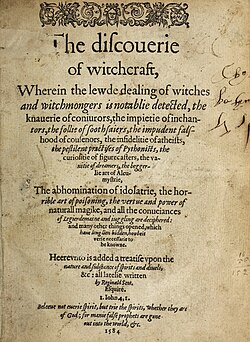
1584
Reginald Scot published The Discoverie of Witchcraft, a skeptical work that exposed numerous conjuring methods. Its explanations of tricks helped preserve practical knowledge of early European magic while challenging supernatural interpretations.
Image source: The Discoverie of Witchcraft
1634
Hocus Pocus Junior, an English manual of conjuring, described cups-and-balls, rope, coin, and card effects. It is among the earliest substantial printed sources showing how professional street and stage performers worked.
1720 - 1731
Isaac Fawkes became one of Britain’s most successful eighteenth-century performers, presenting mechanical wonders, sleight of hand, and automata at fairs and theaters. His career helped establish conjuring as a commercial entertainment.
1780
Giuseppe Pinetti introduced elaborate European conjuring to London audiences at the Haymarket Theatre. His theatrical presentation, polished apparatus, and publicity helped move magic from fairground demonstrations toward modern stage spectacle.
1798 - 1830
Phantasmagoria shows used hidden lanterns, moving projections, smoke, and darkened rooms to create apparently supernatural apparitions. Étienne-Gaspard Robertson and other exhibitors transformed optical technology into immersive theatrical illusion.
1814 - 1862
Scottish performer John Henry Anderson developed a large-scale touring act that combined sleight of hand, apparatus, comedy, and lavish staging. Known as the Wizard of the North, he helped popularize magic across Britain and abroad.
1845
Jean Eugène Robert-Houdin opened the Théâtre Robert-Houdin in Paris, presenting elegant mechanical illusions in a refined salon setting. His work recast the conjurer as a modern gentleman and profoundly influenced later stage magic.
1850
Robert-Houdin introduced a celebrated suspension illusion in which a participant appeared to float while supported by concealed mechanical principles. The effect exemplified his fusion of engineering, theatrical design, and magical misdirection.
1855 - 1865
Ira and William Davenport toured with cabinet séances in which musical instruments and objects appeared to move while they were restrained. Their performances blurred the boundary between stage magic and spiritualism and influenced generations of illusionists.
1873 - 1905
John Nevil Maskelyne and George Alfred Cooke established a long-running magic attraction at London’s Egyptian Hall. Their productions emphasized theatrical illusion, elaborate machinery, and skepticism toward spiritualist claims.
Image source: John Nevil Maskelyne
1876
Angelo Lewis, writing as Professor Hoffmann, published Modern Magic, a highly influential technical handbook. Its detailed explanations of apparatus and sleight of hand helped standardize the education of English-speaking magicians.
Image source: Professor Hoffmann
1890 - 1930
Newspaper reports and magical literature popularized the story of an Indian fakir making a rope stand upright and causing a boy to climb it. Although no reliable historical performance was established, the legend became one of magic’s most famous myths.
1882 - 1908
Harry Kellar built one of the most successful American touring magic shows, featuring spiritualist demonstrations, levitations, escapes, and large illusions. His branding and stagecraft helped define the traveling theatrical magic spectacle.
1899 - 1926
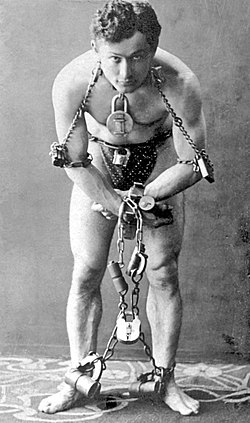
Harry Houdini developed a career centered on escapes from handcuffs, locked containers, straitjackets, and underwater restraints. His publicity campaigns, physical skill, and dramatic presentation made him the most internationally famous magician of the early twentieth century.
Image source: Harry Houdini
1902
The Society of American Magicians was founded in New York to promote fellowship, ethical standards, and the exchange of knowledge among performers. It became one of the world’s leading organizations for professional and amateur magicians.
Image source: Society of American Magicians
1905
The Magic Circle was founded in London by a group of magicians seeking to improve performance standards and create a professional community. It became a major institution for magical scholarship, examinations, and fellowship.
1908 - 1936
Howard Thurston succeeded Kellar as a leading American illusionist and toured with a vast company and repertoire of stage effects. His productions demonstrated the scale, logistics, and spectacle of golden-age theatrical magic.
1910 - 1940
The Great Raymond, born Maurice Raymond Saunders, became a major touring illusionist known for lavish scenery, stage machinery, and spectacular productions. His work represented the international reach of early twentieth-century stage magic.
Image source: Jim Raymond
1918
William Robinson, performing as Chung Ling Soo, was fatally shot during his bullet-catching act in London. The accident exposed the physical danger of elaborate stage effects and became a defining episode in magic history.
1922
The International Brotherhood of Magicians was founded in North America to connect performers and promote the art. It grew into the world’s largest member organization devoted to magic.
Image source: International Brotherhood of Magicians
1922
The International Brotherhood of Magicians launched The Linking Ring, a periodical that became an important source of magical instruction, history, news, and community discussion for performers worldwide.
1923
An international gathering of magicians in London helped establish the tradition of global magical congresses. Such meetings encouraged competition, lectures, technical exchange, and international professional networks.
1948
The Fédération Internationale des Sociétés Magiques held its first world congress and competition in Lausanne, Switzerland. FISM became the leading international platform for recognizing excellence in stage, close-up, and specialty magic.
1963
The Academy of Magical Arts opened the Magic Castle in Hollywood, creating a private performance club with close-up, parlor, and stage venues. It became a central meeting place for professional magicians and a showcase for emerging talent.
Image source: Magic Castle
1964 - 2014
James Randi increasingly combined his skills as a magician with organized skepticism, investigating paranormal and psychic claims. His work reinforced the distinction between entertainment magic and claims of genuine supernatural power.
1974 - 1982
Doug Henning’s Broadway show The Magic Show and subsequent television specials brought colorful, optimistic stage magic to a mass audience. His success helped renew interest in large-scale illusion during the 1970s.
Image source: Doug Henning
1975
Penn Jillette and Teller developed a distinctive act combining magic, comedy, theatrical provocation, and open discussion of deception. Their long career expanded public ideas about how magic could be presented and analyzed.
Image source: Penn & Teller
1977
David Copperfield’s television specials introduced cinematic staging, narrative presentation, and large illusions to millions of viewers. His career made him one of the most commercially successful illusionists in modern history.
1997 - 1998
The television series Breaking the Magician's Code featured a masked performer revealing methods behind familiar illusions. The program sparked debate about secrecy, entertainment ethics, and the relationship between explanation and appreciation.
2005 - 2010
Criss Angel Mindfreak brought street-style demonstrations, gothic imagery, escapes, and large illusions to cable television. Its highly edited visual style helped shape the presentation of magic for a new television audience.
Jun 18, 2011
Penn & Teller: Fool Us created a competitive television format in which magicians performed for experts while attempting to conceal their methods. The series provided broad exposure for working performers and celebrated technical craft.
2012
The Illusionists assembled multiple specialists in a single touring production, including performers focused on escapology, mentalism, close-up magic, and grand illusion. Its international success demonstrated the continuing appeal of live stage magic.
May 31, 2013
The film Now You See Me made a team of theatrical illusionists central to a contemporary heist story. Although fictionalized, its success renewed mainstream interest in magic, secrecy, spectacle, and the mechanics of deception.
Build a timeline like this one in minutes, for free. Start Yours →
Or browse the full history timeline directory, with more than 2,500 topics.
This History of Stage Magic timeline was generated with the help of AI, using information found on the internet.
We work hard to keep these timelines accurate, but mistakes do get through. If you spot one, email us at [email protected] and we'll fix it for future visitors.
Generate yours with AI or build it from scratch, for free.
Export your timeline, add your own events, edit or remove AI-generated events, and much more
No credit card required.
15-day money-back guarantee.
You can create an unlimited number of timelines with up to 10 events on each one, customize how they look, export them to PDF, PNG, PowerPoint, CSV, and Excel, and share them with a link. Timelines made with Timeline Maker AI keep every event the generator created, and you can add up to 5 events of your own. Paid plans remove the event limit, add spreadsheet imports and hide Preceden's branding, and the higher-priced plan also adds collaborators, a custom logo and a custom domain.
Yes. You can cancel your subscription from your account page at any time, and you will not be charged again. Your subscription stays active for the rest of the period you already paid for.
Yes. We email you a reminder 15 days before your annual renewal, and we email you a receipt after every payment.
Yes. You can email us within 15 days of any payment, and we will issue you a full refund.
Check out our pricing docs or send us an email anytime: [email protected].