-
Use Cases
-
Resources
-
Pricing
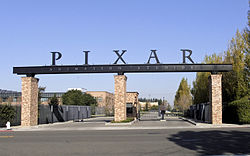
Pixar Animation Studios, founded in 1986 after Steve Jobs purchased Lucasfilm's computer graphics division, revolutionized animation with fully computer-generated feature films. Its debut film, Toy Story (1995), was the first entirely CGI-animated feature, launching a legacy of critically acclaimed hits such as Finding Nemo, The Incredibles, Up, and Inside Out. Acquired by Disney in 2006, Pixar remains a dominant force in animated storytelling, earning numerous Academy Awards and shaping the industry's technological and creative evolution. More Less
1974
% complete
Edwin Catmull, a pioneering computer scientist, joined the New York Institute of Technology's Computer Graphics Laboratory, where he began developing foundational technologies for digital animation that would later underpin Pixar.
Image source: Pixar
1979
% complete
George Lucas recruited Ed Catmull from NYIT to lead the new Computer Division at Lucasfilm, tasked with exploring digital film editing, visual effects, and computer animation for motion pictures.
1984
% complete
Animator John Lasseter left Disney to join Lucasfilm's Computer Division, bringing traditional animation storytelling sensibilities together with emerging computer graphics technology.
Image source: John Lasseter
Feb 3, 1986
% complete
After Lucas sold the Computer Division amid financial pressures following his divorce, Apple co-founder Steve Jobs bought the group for $5 million plus $5 million in capital, establishing it as an independent company named Pixar.
Nov 29, 1995
% complete
One week after Toy Story's release, Pixar held its initial public offering, becoming one of the year's most successful IPOs and giving Steve Jobs a controlling stake worth billions.
1984
% complete
This short film, directed by John Lasseter with technical work by Alvy Ray Smith's team, premiered at SIGGRAPH and demonstrated groundbreaking character animation techniques on computers.
Image source: The Adventures of André & Wally B.
1986
% complete
Pixar launched its high-end computer designed for visualization in medical imaging, aerospace, and animation. Sales were disappointing, pushing the company toward animation production as its core business.
Image source: Pixar Image Computer
1986
% complete
John Lasseter's short film about two animated desk lamps stunned audiences with emotionally convincing character animation. The lamp Luxo Jr. became Pixar's mascot, appearing in its logo ever since.
Image source: Luxo Jr.
1988
% complete
Pixar developed RenderMan, a rendering system based on its Reyes architecture, which became an industry standard for photorealistic visual effects and won multiple Academy Awards for technical achievement.
Mar 27, 1989
% complete
Lasseter's short Tin Toy, featuring a wind-up toy and a mischievous baby, became the first computer-animated film to win an Oscar, proving CGI could carry genuine emotional storytelling.
Image source: Tin Toy
Mar 23, 1998
% complete
Pixar's short about an old man playing chess against himself won the Oscar for Best Animated Short, showcasing advances in human skin rendering and cloth simulation.
Image source: Geri's Game
May 1991
% complete
After years of financial struggle, Pixar signed a landmark agreement with Disney to produce three computer-animated feature films, with Disney handling marketing and distribution while Pixar created the films.
Jan 24, 2006 - May 5, 2006
% complete
The Walt Disney Company acquired Pixar in an all-stock deal valued at $7.4 billion. Ed Catmull became president of both studios, John Lasseter became chief creative officer, and Steve Jobs joined Disney's board as its largest individual shareholder.
1993
% complete
Production commenced on the world's first fully computer-animated feature film. After a difficult story process, Lasseter and his team reworked the script around Woody and Buzz Lightyear's rivalry-turned-friendship.
Image source: Toy Story
Nov 22, 1995
% complete
Toy Story opened to critical acclaim and massive box office success, grossing over $370 million worldwide and revolutionizing the animation industry by proving computer animation could anchor a feature film.
Nov 25, 1998
% complete
Pixar's second feature, a retelling of Aesop's ant fable, grossed over $360 million worldwide and demonstrated the studio could deliver consistent hits beyond its debut success.
Image source: A Bug's Life
Nov 24, 1999
% complete
Originally planned as a direct-to-video sequel, Toy Story 2 was elevated to theatrical release after the team produced a superior story. It grossed nearly $500 million and earned widespread critical praise.
Image source: Toy Story 2
Nov 2, 2001
% complete
Pixar's fourth feature introduced Sulley and Mike Wazowski and featured breakthrough fur simulation technology. It became one of the highest-grossing films of 2001.
Image source: Monsters, Inc.
May 30, 2003
% complete
The underwater adventure about a clownfish searching for his son became the highest-grossing animated film at the time and won the Academy Award for Best Animated Feature.
Image source: Finding Nemo
Nov 5, 2004
% complete
Brad Bird's superhero family film won the Oscar for Best Animated Feature and pushed Pixar's technology with complex human characters, hair, and action sequences.
Image source: The Incredibles
Jun 9, 2006
% complete
Directed by John Lasseter and inspired by Route 66 nostalgia, Cars launched a multibillion-dollar merchandising franchise despite more modest critical reception than earlier films.
Image source: Cars (film)
Jun 29, 2007
% complete
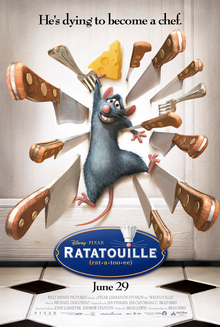
Brad Bird's tale of a rat who dreams of becoming a chef was a critical triumph, winning the Academy Award for Best Animated Feature and cementing Pixar's reputation for sophisticated storytelling.
Image source: Ratatouille (film)
Jun 27, 2008
% complete
The near-silent first act of this environmental fable about a lonely trash-compacting robot was hailed as a masterpiece of visual storytelling, earning Pixar another Best Animated Feature Oscar.
Image source: WALL-E
May 29, 2009
% complete
Pete Docter's adventure about a widower flying his house with balloons opened the Cannes Film Festival, a first for an animated film, and won Oscars including Best Animated Feature.
Image source: Up (2009 film)
Jun 18, 2010
% complete
The emotional conclusion to the original trilogy grossed over $1 billion worldwide and won the Academy Award for Best Animated Feature, becoming one of the most acclaimed sequels in cinema history.
Image source: Toy Story 3
Jun 24, 2011
% complete
Pixar's spy-themed Cars sequel received its weakest critical reception to date, marking a rare stumble for the studio even as it performed well commercially.
Image source: Cars 2
Jun 22, 2012
% complete
Pixar's first fairy tale and first film with a female protagonist, set in medieval Scotland, won the Academy Award for Best Animated Feature and showcased advanced hair simulation for Merida's curls.
Image source: Brave (2012 film)
Jun 19, 2015
% complete
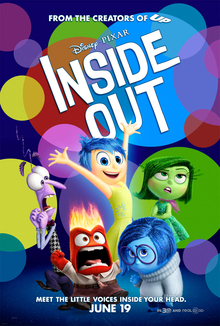
Pete Docter's exploration of emotions inside a young girl's mind returned Pixar to critical dominance, winning the Best Animated Feature Oscar and grossing over $850 million worldwide.
Image source: Inside Out (2015 film)
Nov 22, 2017
% complete
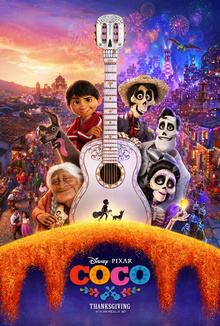
The celebration of Mexican culture and Día de los Muertos won two Academy Awards, including Best Animated Feature and Best Original Song for 'Remember Me,' and became a massive hit in Mexico.
Image source: Coco (2017 film)
Jun 21, 2019
% complete
Woody's journey with Bo Peep grossed over $1 billion worldwide and won the Academy Award for Best Animated Feature, extending the beloved franchise nine years after its predecessor.
Image source: Toy Story 4
Dec 25, 2020
% complete
Pixar's meditation on purpose and passion, featuring Pixar's first Black protagonist, debuted on Disney+ during the pandemic and won the Academy Award for Best Animated Feature.
Image source: Soul (2020 film)
Jun 18, 2021 - Mar 11, 2022
% complete
Due to the COVID-19 pandemic, Pixar shifted several features to direct streaming releases on Disney+, beginning with Luca in June 2021 and followed by Turning Red in March 2022.
Image source: Luca (2021 film)
Jun 17, 2022
% complete
This sci-fi spinoff depicting the 'real' astronaut who inspired the Buzz Lightyear toy marked Pixar's return to theaters, though its box office performance fell short of expectations.
Image source: Lightyear (film)
Jun 16, 2023
% complete
Peter Sohn's story of fire and water elements falling in love had a slow start but strong word-of-mouth carried it past $495 million worldwide, becoming a sleeper hit.
Image source: Elemental (2023 film)
Or browse the full history timeline directory, with more than 2,000 topics.
This History of Pixar timeline was generated with the help of AI, using information found on the internet.
We work hard to keep these timelines accurate, but mistakes do get through. If you spot one, email us at [email protected] and we'll fix it for future visitors.
Generate yours with AI or build it from scratch, for free.
Export your timeline, add your own events, edit or remove AI-generated events, and much more
No credit card required.
Cancel anytime.
Cancel anytime.
You can create an unlimited number of timelines with up to 10 events on each one, customize how they look, export them to PDF, PNG, PowerPoint, CSV, and Excel, and share them with a link. Paid plans raise the event limit and add features like spreadsheet imports and collaborators.
Yes. You can cancel your subscription from your account page at any time, and you will not be charged again. Your subscription stays active for the rest of the period you already paid for.
Yes. We will email you a reminder before the annual renewal, and we will also email you a receipt.
Yes. You can email us within 15 days of any payment, and we will issue you a full refund.
Check out our pricing docs or send us an email anytime: [email protected].