-
Use Cases
-
Resources
-
Pricing
The history of animation traces the evolution of creating the illusion of movement through sequential images, beginning with pre-cinematic devices like the zoetrope, advancing through the golden age of hand-drawn cartoons led by studios like Disney and Warner Bros., and culminating in today's computer-generated imagery (CGI) and digital streaming-era productions. More Less
1832
Belgian physicist Joseph Plateau invented the phenakistoscope, a spinning disc device that created the illusion of motion. It was one of the first devices to demonstrate persistence of vision and laid the groundwork for the future of animation.
Image source: Phenakistiscope

1834
William George Horner invented the zoetrope, a cylindrical spinning device with sequential images viewed through slits that created the illusion of movement. It became a popular Victorian parlor toy and advanced early animation technology.
Image source: Zoetrope
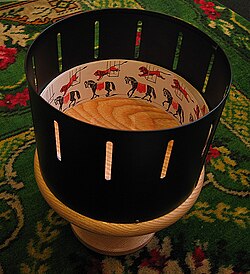
Oct 28, 1892
Charles-Émile Reynaud presented his Théâtre Optique at the Musée Grévin in Paris, projecting animated stories to live audiences. His 'Pantomimes Lumineuses' are considered the first public screenings of animated films.
Image source: Théâtre Optique

1906
J. Stuart Blackton's short film 'Humorous Phases of Funny Faces' used stop-motion techniques with drawn faces and is widely regarded as the first animated film on standard picture film, marking the birth of American animation.
Image source: Humorous Phases of Funny Faces
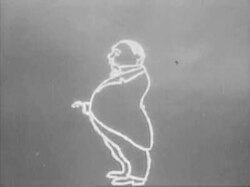
Aug 17, 1908
French animator Émile Cohl created 'Fantasmagorie', one of the earliest fully animated films, made from hundreds of hand-drawn stick-figure frames. It demonstrated the creative potential of traditional animation techniques.
Image source: Fantasmagorie (film)

Feb 8, 1914
Winsor McCay introduced 'Gertie the Dinosaur', featuring character animation with personality and timing that was revolutionary for its era. Gertie became an iconic figure and influenced generations of animators.
Image source: Gertie the Dinosaur

1919
Felix the Cat, created by Otto Messmer at Pat Sullivan's studio, became the first animated character to achieve widespread popularity and merchandising success, predating Mickey Mouse as cinema's leading cartoon star.
Image source: Felix the Cat
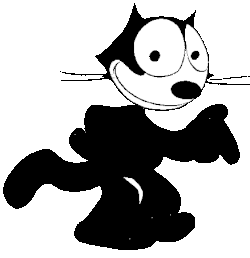
Nov 18, 1928
Walt Disney's 'Steamboat Willie' premiered as one of the first cartoons with fully synchronized sound, starring Mickey Mouse. Its success launched Disney into prominence and revolutionized the animation industry.
Image source: Steamboat Willie

1929
Disney's Silly Symphonies series began, serving as a testing ground for new animation techniques, Technicolor processes, and character development. The series won multiple Academy Awards and pushed artistic boundaries.
Image source: Silly Symphony

Nov 10, 1932
Disney's 'Flowers and Trees' became the first film to win the Academy Award for Best Animated Short Subject and the first cartoon produced in full three-strip Technicolor, setting a new standard for color animation.
Image source: Flowers and Trees

This History of Animation timeline was generated with the help of AI, using information found on the internet.
We work hard to keep these timelines accurate, but mistakes do get through. If you spot one, email us at [email protected] and we'll fix it for future visitors.
Generate yours with AI or build it from scratch, for free.