-
Use Cases
-
Resources
-
Pricing
Animals in Space covers the pioneering use of living creatures to test the safety and feasibility of spaceflight before human missions. Beginning with fruit flies in 1947 and including famous animals like Laika the dog, Albert II the rhesus monkey, and Belka and Strelka, these missions provided critical data on radiation, weightlessness, and survival in orbit, paving the way for human space exploration. More Less
Sep 19, 1783
% complete
The Montgolfier brothers sent a sheep, a duck, and a rooster aloft in a hot air balloon to test whether ground-dwelling animals could survive flight, with the duck serving as the experimental control. This marked the first use of animals in aeronautic exploration.
Image source: Montgolfier brothers
Jan 1, 1806
% complete
In the early 19th century, French pyrotechnician Claude Ruggieri launched animals with rockets, pioneering the idea of rocket-borne animal flights long before the space age.
Image source: Claude Ruggieri
Jan 1, 1947 - Dec 31, 1960
% complete
From 1947 to 1960, high-altitude balloon flights tested radiation exposure, physiological response, life support and recovery systems using various animals, laying groundwork for human spaceflight.
Feb 20, 1947
% complete
The US launched the first living beings into space when fruit flies flew aboard a U.S.-launched V-2 rocket from White Sands Missile Range, New Mexico. The flies were recovered alive after surviving the sub-orbital flight.
Jun 14, 1949
% complete
Albert II, a rhesus monkey, became the first monkey, first primate, and first mammal in space on a U.S.-launched V-2 rocket, following the failure of the original Albert's mission on ascent.
Image source: Albert II (monkey)
Aug 31, 1950
% complete
On 31 August 1950, the U.S. launched mice aboard an Aerobee rocket, continuing its program of testing biological payloads in sub-orbital spaceflight.
Image source: Animals in space
Dec 13, 1958
% complete
A Jupiter IRBM, AM-13, was launched from Cape Canaveral, Florida, with a United States Navy-trained South American squirrel monkey named Gordo on board. The nose cone sank at sea and Gordo was lost despite surviving the flight.
Image source: Gordo (monkey)
May 28, 1959
% complete
On 28 May 1959, aboard Jupiter IRBM AM-18, rhesus monkey Able from Independence, Kansas, and squirrel monkey Baker from Peru became the first monkeys to survive spaceflight. Baker lived until 29 November 1984 at the U.S. Space & Rocket Center.
Image source: Operation Crossroads
Sep 19, 1959
% complete
A Jupiter AM-23 launch carried two frogs and 12 mice, but the rocket was destroyed during launch, killing all the animals aboard.
Dec 4, 1959
% complete
A rhesus macaque named Sam flew on the Little Joe 2 mission of Project Mercury to an altitude of 85 km (53 mi), testing life support systems for future human astronauts.
Image source: Little Joe 2
Oct 13, 1960
% complete
The US sent three black mice, Sally, Amy, and Moe, 1,000 km up and 8,000 km downrange from Cape Canaveral using an Atlas D 71D launch vehicle.
Jan 31, 1961
% complete
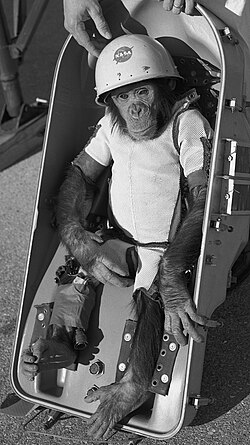
Ham, a chimpanzee, was launched into sub-orbital space in a Mercury capsule aboard a Redstone rocket, becoming the first great ape in space and paving the way for Alan Shepard's flight months later.
Image source: Ham (chimpanzee)
Nov 29, 1961
% complete
Enos became the first and only chimpanzee to reach Earth orbit when he flew two orbits in a Mercury capsule on the Mercury-Atlas 5 mission, preceding John Glenn's orbital flight.
Image source: Enos (chimpanzee)
Dec 14, 1966 - Dec 31, 1967
% complete
The US launched Biosatellite I in 1966 and Biosatellite II in 1967 carrying fruit flies, parasitic wasps, flour beetles and frog eggs, along with bacteria, amoebae, plants and fungi.
Image source: Biosatellite program
Jun 28, 1969 - Jul 7, 1969
% complete
The US launched the monkey Bonny, a macaque, on Biosatellite 3 in what was intended to have been a 30-day orbit around the Earth, with the monkey fed by food pellets from a dispenser he had been trained to operate. The mission ended early due to Bonny's declining health.
Nov 9, 1970
% complete
Two bullfrogs were launched on a one-way mission on the Orbiting Frog Otolith satellite to help scientists understand more about space motion sickness.
Image source: Orbiting Frog Otolith
Apr 16, 1972
% complete
Apollo 16, launched on 16 April 1972, carried nematodes as part of its biological experiments during the lunar mission.
Image source: Apollo 16
Dec 7, 1972 - Dec 19, 1972
% complete
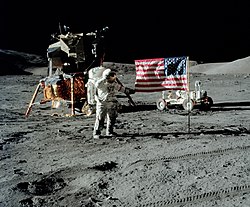
Apollo 17 carried five pocket mice nicknamed Fee, Fi, Fo, Fum, and Phooey, who stayed in the command module America with astronaut Ronald Evans as it circled the Moon a record 75 times over six days.
Image source: Apollo 17
Jul 28, 1973 - Sep 25, 1973
% complete
Skylab 3 carried pocket mice, the first fish in space (a mummichog), and the first spiders in space—garden spiders named Arabella and Anita—which spun webs in microgravity.
Image source: Skylab 3
Jul 15, 1975 - Jul 24, 1975
% complete
The Apollo-Soyuz joint mission, launched 15 July 1975, included biological experiments with organisms aboard both spacecraft during this historic first international crewed spaceflight.
Image source: Apollo–Soyuz
Mar 13, 1989
% complete
After an experiment was lost in the Space Shuttle Challenger disaster, chicken embryos (fertilized eggs) were sent into space in an experiment on STS-29 in 1989.
Image source: STS-29
Jan 16, 2003 - Feb 1, 2003
% complete
The last flight of Columbia in 2003 carried silkworms, garden orb spiders, carpenter bees, harvester ants, and Japanese killifish (medaka) as part of its science payload.
Image source: STS-107
Mar 15, 2009
% complete
During the countdown of STS-119, a free-tailed bat was seen clinging to the fuel tank of Space Shuttle Discovery and reportedly rode along during launch.
Image source: STS-119
Nov 16, 2009
% complete
STS-129 took painted lady and monarch butterfly larvae into space for a school experiment, allowing students to observe metamorphosis in microgravity.
Image source: STS-129
May 16, 2011 - Jun 1, 2011
% complete
The last flight of Space Shuttle Endeavour (STS-134) carried two golden orb spiders, named Gladys and Esmeralda, as well as a fruit fly colony as their food source, to study the effects of microgravity on spiders' behavior.
Image source: STS-134
Jul 22, 1951
% complete
The Soviet Union launched the R-1 IIIA-1 flight carrying the dogs Tsygan and Dezik into space, though not into orbit. Both dogs were recovered successfully, marking the first Soviet sub-orbital dog flights.
Image source: Dezik and Tsygan
Nov 3, 1957
% complete
On 3 November 1957, the second-ever orbiting spacecraft carried the first animal into orbit: the dog Laika, launched aboard the Soviet Sputnik 2 spacecraft, nicknamed 'Muttnik' in the West. Laika died hours into the mission from overheating.
Image source: Laika
Jul 2, 1959
% complete
A launch of a Soviet R-2 rocket, which reached 212 kilometres (132 mi), carried two space dogs and Marfusha, the first rabbit to go into space.
Aug 19, 1960
% complete
The Soviet Union launched Sputnik 5 (Korabl-Sputnik 2), which carried the dogs Belka and Strelka along with a gray rabbit, 40 mice, 2 rats, and 15 flasks of fruit flies and plants. All were safely recovered, proving orbital flight survivable.
Image source: Belka and Strelka
Jan 1, 1961
% complete
One of Strelka's pups, Pushinka, bred and born after her mother's mission, was given as a present to Caroline Kennedy by Nikita Khrushchev in 1961, and many descendants are known to exist.
Image source: Pushinka
Mar 9, 1961
% complete
The Soviet Union launched Korabl-Sputnik 4 carrying a dog named Chernushka, some mice, and, for the first time into space, a guinea pig. All occupants were recovered safely.
Image source: Korabl-Sputnik 4
Feb 22, 1966 - Mar 16, 1966
% complete
During the Voskhod program, Soviet space dogs Veterok and Ugolyok were launched on board Cosmos 110 and spent 22 days in orbit before landing on 16 March. This record for dogs still stands and was not surpassed by humans until Soyuz 11 in 1971.
Sep 14, 1968 - Sep 21, 1968
% complete
Two tortoises and several varieties of plants became the first living beings to circle the Moon on the Zond 5 mission, launched 14 September 1968. They were also the first animals in deep space and the first tortoises in space.
Image source: Zond 5
Nov 10, 1968 - Aug 11, 1969
% complete
More turtles followed on the circumlunar Zond 6 mission of November 1968, ahead of the crewed Apollo 8 mission, and four turtles flew on Zond 7, which flew around the Moon on August 11, 1969, three weeks after Apollo 11's Moon walk.
Image source: Zond 6
Nov 17, 1975
% complete
On Soyuz 20, launched 17 November 1975, tortoises set the duration record for an animal in space when they spent 90.5 days in space.
Image source: Soyuz 20
Jun 22, 1976
% complete
Salyut 5, launched on 22 June 1976, carried tortoises and a fish (a zebra danio) as part of its biological research payload.
Image source: Salyut 5
Sep 27, 1985
% complete
Bion 7 had 10 newts (Pleurodeles waltl) on board, used to study regeneration and other physiological processes in microgravity.
Image source: Kosmos 1667
Mar 22, 1990
% complete
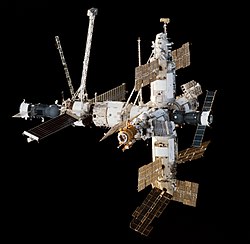
The first animal born in space was a quail born on the Mir space station on 22 March 1990, following quail eggs that hatched there.
Image source: Mir
Jul 19, 2014 - Sep 1, 2014
% complete
Russia launched its Foton-M4 satellite into low Earth orbit with one male and four female geckos as the payload. Control was lost on 24 July but restored on 28 July. On 1 September 2014 Russia confirmed all five geckos died, apparently freezing to death.
Feb 22, 1961
% complete
France flew its first rat, Hector, into space on 22 February 1961, successfully recovering him upon his return. Two more rats followed in October 1962.
Image source: Nutria
Oct 18, 1963
% complete
France launched Félicette the cat aboard Veronique AGI sounding rocket No. 47, making her the first cat in space; she was successfully recovered. A second cat launched on 24 October 1963 could not be recovered. In 2019, a bronze statue honoring Félicette was inaugurated in Strasbourg.
Image source: Félicette
Jan 1, 1964 - Dec 31, 1966
% complete
China launched mice and rats in 1964 and 1965, and two dogs in 1966, beginning its own program of biological spaceflight experiments.
Jan 1, 1967
% complete
In 1967, France launched two pig-tailed macaque monkeys into suborbital space, continuing its national bioastronautics research program.
Apr 11, 1967
% complete
Argentina launched the rat Belisario atop a Yarará rocket from Cordoba military range; the rat was recovered successfully.
Dec 23, 1969 - Feb 1, 1970
% complete
As part of 'Operación Navidad' (Operation Christmas), Argentina launched Juan, a cai monkey native of Misiones Province, using a Canopus II rocket. On 1 February 1970 the experience was repeated with a female monkey of the same species using a X-1 Panther rocket.
Jan 1, 1990
% complete
China launched guinea pigs in 1990, expanding its biological spaceflight research program.
Dec 2, 1990 - Dec 10, 1990
% complete
Toyohiro Akiyama, a Japanese journalist, carried Japanese tree frogs with him during his trip to the Mir space station in December 1990.
Image source: Toyohiro Akiyama
Jul 8, 1994 - Jul 23, 1994
% complete
Four Japanese rice fish successfully mated and laid eggs that hatched to produce healthy fry aboard STS-65, making them the first animals to conceive and bear offspring in space.
Image source: STS-65
Mar 18, 1995
% complete
Japan launched its first animals, a species of newt, into space on 18 March 1995 aboard the Space Flyer Unit.
Image source: Space Flyer Unit
Jan 28, 2013
% complete
Iranian news agencies reported that Iran sent a monkey in a 'Pishgam' rocket to a height of 116 km (72 mi) and retrieved a 'shipment'. On 3 February 2013, Iran became the latest country to launch animals into space.
Image source: Safir (rocket)
Jul 12, 2006
% complete
Bigelow Aerospace launched their Genesis I inflatable space module, containing many small items such as toys and simple experiments chosen by company employees that would be observed via camera.
Image source: Genesis I (space habitat)
Jun 28, 2007
% complete
Bigelow launched Genesis II, a near-twin to Genesis I, continuing private-sector inflatable habitat demonstrations in low Earth orbit.
Image source: Genesis II (film)
Sep 14, 2007
% complete
During the European Space Agency's FOTON-M3 mission, tardigrades, also known as water-bears, were able to survive 10 days of exposure to open space with only their natural protection.
Image source: Tardigrade
Nov 8, 2011
% complete
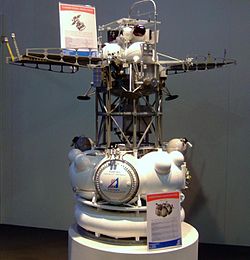
The Living Interplanetary Flight Experiment on the Fobos-Grunt mission planned to carry tardigrades to Mars and back; however, the mission failed to leave Earth orbit and re-entered the atmosphere in January 2012.
Image source: Fobos-Grunt
Oct 23, 2012
% complete
32 medaka fish were delivered to the International Space Station by Soyuz TMA-06M for the new Aquatic Habitat in the Kibo module, supporting vertebrate research in orbit.
Image source: Kounotori 3
Jan 1, 2014
% complete
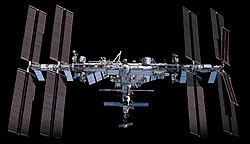
In January 2014, the search strategies of pavement ants were studied on the International Space Station, examining how ants navigate collectively without gravity.
Image source: International Space Station
Sep 23, 2014
% complete
The SpaceX CRS-4 mission delivered 20 mice to live on the ISS for study of the long-term effects of microgravity on rodents.
Image source: SpaceX CRS-4
Apr 14, 2015
% complete
The SpaceX CRS-6 delivered 20 C57BL/6NTAC mice to live on the ISS for evaluating microgravity as the extreme opposite of a healthy active lifestyle.
Image source: SpaceX CRS-6
Apr 8, 2016
% complete
Rodent Research 3 delivered 20 mice on SpaceX CRS-8 to continue studying how microgravity affects rodent physiology and bone density.
Image source: SpaceX CRS-8
Jun 29, 2018 - Jul 2, 2018
% complete
A SpaceX Dragon spaceship blasted off from Florida carrying 20 mice; the rodent crew arrived at the ISS on 2 July 2018 for further microgravity research.
Image source: SpaceX CRS-15
Apr 11, 2019
% complete
The Israeli spacecraft Beresheet crashed into the Moon during a failed landing attempt, possibly scattering thousands of dehydrated tardigrades it carried onto the lunar surface.
Image source: Beresheet
Jun 3, 2021
% complete
SpaceX CRS-22 launched tardigrades (water bears) and Hawaiian bobtail squid to the ISS, where researchers studied their survival and symbiotic relationships in microgravity.
Image source: SpaceX CRS-22
Or browse the full history timeline directory, with more than 2,000 topics.
This Animals in Space timeline was generated with the help of AI, using information found on the internet.
We work hard to keep these timelines accurate, but mistakes do get through. If you spot one, email us at [email protected] and we'll fix it for future visitors.
Generate yours with AI or build it from scratch, for free.
Export your timeline, add your own events, edit or remove AI-generated events, and much more
No credit card required.
Cancel anytime.
Cancel anytime.
You can create an unlimited number of timelines with up to 10 events on each one, customize how they look, export them to PDF, PNG, PowerPoint, CSV, and Excel, and share them with a link. Paid plans raise the event limit and add features like spreadsheet imports and collaborators.
Yes. You can cancel your subscription from your account page at any time, and you will not be charged again. Your subscription stays active for the rest of the period you already paid for.
Yes. We will email you a reminder before the annual renewal, and we will also email you a receipt.
Yes. You can email us within 15 days of any payment, and we will issue you a full refund.
Check out our pricing docs or send us an email anytime: [email protected].