-
Use Cases
-
Resources
-
Pricing
The Space Shuttle Program was NASA's human spaceflight program spanning three decades, featuring the world's first reusable orbital spacecraft. It launched 135 missions, deployed satellites, built and serviced the International Space Station, repaired the Hubble Space Telescope, and advanced scientific research before its retirement in 2011. More Less
1969
% complete
The official program name of the Space Shuttle was carried over from the 1969 plan for the Space Transportation System (STS) of reusable spacecraft, which envisioned a comprehensive system for routine Earth-to-orbit transportation.
1972
% complete
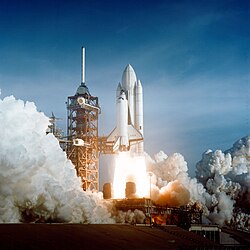
NASA's Space Shuttle program formally commenced in 1972, becoming the sole focus of NASA's human spaceflight operations after the Apollo, Skylab, and Apollo–Soyuz programs concluded in 1975. The shuttle was presented to the public as a 'Space Truck' to build a US space station in low Earth orbit during the 1980s.
Image source: Space Shuttle program
1972
% complete
Only the shuttle and supporting rockets were funded for development; a proposed nuclear lunar shuttle that was part of the 1969 Space Transportation System plan was canceled in 1972.
Feb 18, 1977
% complete
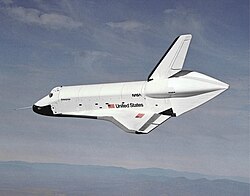
Enterprise's first test flight took place on February 18, 1977, only five years after the Shuttle program was formally initiated, paving the way for orbital flights of the operational fleet.
Image source: Space Shuttle Enterprise
Mar 25, 1979
% complete
The space-worthy orbiter Columbia was delivered to Kennedy Space Center on March 25, 1979, preparing it for its historic first launch two years later.
Image source: Space Shuttle Columbia
Jul 1982
% complete
Challenger (OV-099) was delivered to Kennedy Space Center in July 1982, expanding the shuttle fleet as missions became more frequent.
Image source: Space Shuttle Challenger
Nov 1983
% complete
Discovery (OV-103) was delivered to Kennedy Space Center in November 1983, becoming one of the workhorses of the shuttle fleet.
Image source: Space Shuttle Discovery
Apr 1985
% complete
Atlantis (OV-104) was delivered to Kennedy Space Center in April 1985, joining the growing shuttle fleet.
Image source: Space Shuttle Atlantis
May 1991
% complete
Endeavour (OV-105) was built to replace Challenger using structural spare parts originally intended for the other orbiters, and was delivered to Kennedy Space Center in May 1991; it was first launched a year later.
Image source: Space Shuttle Endeavour
1972
% complete
Early during development, NASA estimated the program would cost $7.45 billion ($43 billion in 2011 dollars) in development costs and $9.3 million ($54 million in 2011 dollars) per flight. Payload delivery to low-Earth orbit was estimated as low as $118 per pound based on marginal launch costs.
1993
% complete
The HL-20 lifting body concept, studied as a potential crew transport vehicle, was cancelled in 1993.
Image source: HL-20 Personnel Launch System
1994
% complete
NASA initiated the Reusable Launch Vehicle (RLV) program in 1994 as an effort toward next-generation space transportation, spending about US$1 billion developing the X-33 in hopes of operation by 2005.
Image source: Reusable launch vehicle
2004
% complete
According to President George W. Bush's 2004 Vision for Space Exploration, the next human NASA program would be Constellation, with Ares I and Ares V launch vehicles and the Orion spacecraft; however, Constellation was never fully funded.
Image source: Vision for Space Exploration
2006
% complete
The COTS program began in 2006 with the purpose of creating commercially operated uncrewed cargo vehicles to service the ISS after the Shuttle's retirement.
Image source: Commercial Orbital Transportation Services
2010
% complete
In early 2010, the Obama administration asked Congress to endorse a plan with heavy reliance on the private sector for delivering cargo and crew to low Earth orbit, moving away from the Constellation program. That same year, the incremental cost per Shuttle flight was $409 million.
Image source: Development of the Commercial Crew Program
2010
% complete
The CCDev program was initiated in 2010 to create commercially operated crewed spacecraft capable of delivering at least four crew members to the ISS, staying docked for 180 days, and returning them safely to Earth.
Image source: Commercial Crew Program
Dec 5, 2014
% complete
Exploration Flight Test-1, an uncrewed test flight of the Orion spacecraft, launched on December 5, 2014, on a Delta IV Heavy rocket, advancing NASA's post-Shuttle deep space exploration goals.
Image source: Exploration Flight Test-1
Apr 1, 2026
% complete
Artemis II, the first crewed mission of the Artemis program, launched on April 1, 2026, on a free-return flyby of the Moon at a distance of 8,520 kilometers, continuing the human spaceflight legacy built by the Shuttle program.
Image source: Artemis II
Apr 12, 1981
% complete
Columbia launched on April 12, 1981—the 20th anniversary of Yuri Gagarin's space flight—on mission STS-1 with a crew of two, beginning NASA's era of routine Earth-to-orbit crew and cargo transportation.
Image source: STS-1
1983
% complete
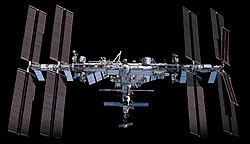
President Ronald Reagan formally initiated plans for a space station in 1983, which evolved into the International Space Station. Long delays, design changes, and cost over-runs forced the service life of the Space Shuttle to be extended several times until 2011.
Image source: International Space Station
Apr 24, 1990
% complete
On April 24, 1990, Discovery carried the Hubble Space Telescope into space during STS-31, one of the program's most celebrated scientific achievements.
Image source: STS-31
Oct 31, 2006
% complete
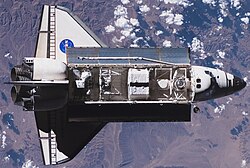
On October 31, 2006, NASA announced approval of the launch of Atlantis for the fifth and final shuttle servicing mission to the Hubble Space Telescope, scheduled for August 28, 2008. However, SM4/STS-125 eventually launched in May 2009.
Image source: STS-125
Aug 2007
% complete
Following the success of STS-121, all subsequent missions were completed without major foam problems, and construction of the ISS was completed. During STS-118 in August 2007, the orbiter was struck by a foam fragment on liftoff, but damage was minimal compared to Columbia.
Image source: STS-118
1986
% complete
Plans to use Vandenberg Air Force Base for Space Shuttle launches were canceled after the Challenger disaster in 1986.
Image source: Vandenberg Space Force Base
Jan 28, 1986
% complete
Close-up video footage of Challenger during its final launch on January 28, 1986, clearly showed that problems began due to an O-ring failure on the right solid rocket booster. All seven crew members were killed, and there was a delay of 32 months before the next Shuttle launch.
Image source: Space Shuttle Challenger disaster
Feb 1, 2003
% complete
After operating accident-free for seventeen years and 88 missions following the Challenger disaster, Columbia broke up on reentry on February 1, 2003, killing all seven crew members. A delay of 29 months followed before the next Shuttle launch.
2005
% complete
While the 'Return to Flight' mission STS-114 in 2005 was successful, a similar piece of foam from a different portion of the external tank was shed, prompting further safety modifications.
Image source: STS-114
Jul 4, 2006 - Jul 17, 2006
% complete
The second 'Return to Flight' mission, STS-121, launched on July 4, 2006, at 14:37 EDT. Discovery touched down successfully on July 17, 2006, at 09:14 EDT at Kennedy Space Center, restoring confidence in the fleet.
Image source: STS-121
Jul 8, 2011 - Jul 21, 2011
% complete
The final flight of the Space Shuttle program was STS-135, flown by Atlantis, launching on July 8, 2011. It marked the end of 135 missions and the retirement of the final Shuttle in the fleet.
Image source: STS-135
Aug 31, 2011
% complete
The Space Shuttle program formally ended on August 31, 2011, after accomplishing routine transportation for Earth-to-orbit crew and cargo from 1981 to 2011—serving twice as long as originally designed. Its total 30-year cost through 2011, adjusted for inflation, was $196 billion.
2012
% complete
By 2012, cargo to the International Space Station was being delivered commercially under NASA's Commercial Resupply Services by SpaceX's partially reusable Dragon spacecraft, followed by Orbital Sciences' Cygnus spacecraft in late 2013.
Image source: SpaceX Dragon
Apr 2012 - Jul 19, 2012
% complete
Enterprise was moved to New York City in April 2012 to be displayed at the Intrepid Museum, whose Space Shuttle Pavilion opened on July 19, 2012.
Oct 14, 2012
% complete
On October 14, 2012, Endeavour completed an unprecedented 12-mile drive on city streets from Los Angeles International Airport to the California Science Center, where it went on display later that year in the temporary Samuel Oschin Pavilion.
Jun 29, 2013
% complete
Atlantis formed part of the Space Shuttle Exhibit at the Kennedy Space Center visitor complex and has been on display there since June 29, 2013, following its refurbishment.
Nov 15, 2020
% complete
Since the Shuttle's retirement, crew service to the ISS was provided by Russian Soyuz until SpaceX's Dragon 2 crew capsule began operations, launched on the reusable Falcon 9 rocket as part of NASA's Commercial Crew Development program. The first operational SpaceX mission launched on November 15, 2020.
Image source: SpaceX Crew-1
Or browse the full history timeline directory, with more than 2,000 topics.
This Space Shuttle Program timeline was generated with the help of AI, using information found on the internet.
We work hard to keep these timelines accurate, but mistakes do get through. If you spot one, email us at [email protected] and we'll fix it for future visitors.
Generate yours with AI or build it from scratch, for free.
Export your timeline, add your own events, edit or remove AI-generated events, and much more
No credit card required.
Cancel anytime.
Cancel anytime.
You can create an unlimited number of timelines with up to 10 events on each one, customize how they look, export them to PDF, PNG, PowerPoint, CSV, and Excel, and share them with a link. Paid plans raise the event limit and add features like spreadsheet imports and collaborators.
Yes. You can cancel your subscription from your account page at any time, and you will not be charged again. Your subscription stays active for the rest of the period you already paid for.
Yes. We will email you a reminder before the annual renewal, and we will also email you a receipt.
Yes. You can email us within 15 days of any payment, and we will issue you a full refund.
Check out our pricing docs or send us an email anytime: [email protected].