-
Use Cases
-
Resources
-
Pricing
The History of Power Rangers covers the evolution of the long-running American live-action superhero franchise, which adapted footage from the Japanese Super Sentai series. Beginning in 1993 with Mighty Morphin Power Rangers, the franchise has spanned dozens of television seasons, multiple films, comic books, video games, and a dedicated fan base, becoming a defining part of 1990s and 2000s children's television culture. More Less
Apr 5, 1975
% complete
The Japanese tokusatsu franchise Super Sentai premiered on TV Asahi with Himitsu Sentai Gorenger. Its formula of color-coded costumed heroes battling monsters would later become the source footage for the American Power Rangers franchise, establishing the template of transforming teams, giant robots, and weekly monster battles.
1984
% complete
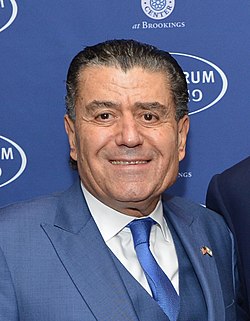
Israeli-American television producer Haim Saban saw Japanese Super Sentai footage during a trip to Japan and conceived the idea of adapting it for American audiences by filming new live-action scenes with Western actors intercut with the existing action sequences. The idea was initially rejected by multiple networks before finding a home at Fox.
Image source: Haim Saban
2001
% complete
As part of its purchase of Saban Entertainment, The Walt Disney Company acquired the Power Rangers brand. Disney produced the series through its ABC Networks and Jetix block from Wild Force onward, relocating production to New Zealand starting with Ninja Storm.
May 12, 2010
% complete
Haim Saban bought back the Power Rangers franchise from The Walt Disney Company for approximately $43 million. Production returned to Saban Brands, with new seasons airing on Nickelodeon beginning in 2011 and produced in New Zealand.
May 1, 2018
% complete
Toy giant Hasbro acquired Power Rangers in a deal valued around $498 million, taking over the brand from Saban Brands. Hasbro became the master toy licensee and later assumed television production, ushering in a new era for the property.
Image source: Hasbro
Aug 28, 1993
% complete
Mighty Morphin Power Rangers debuted on Fox Kids, adapting footage from Kyoryu Sentai Zyuranger. The series followed teenagers Jason, Kimberly, Billy, Trini, and Zack as they defended Angel Grove from Rita Repulsa. It became an instant pop culture phenomenon, spawning a massive toy line and merchandising empire.
Image source: Mighty Morphin Power Rangers
1994
% complete
Jason David Frank's character Tommy Oliver, previously the evil Green Ranger turned ally, returned as the new White Ranger and team leader. Tommy became the most iconic Ranger in franchise history, and Jason David Frank became synonymous with the role for decades.
Apr 20, 1996
% complete
Power Rangers Zeo adapted Chouriki Sentai Ohranger and introduced numbered Zeo powers to reflect the team's evolution. It continued the story after the destruction of the Command Center, with Tommy, Kat, Rocky, Adam, Tanya, and later Jason defending Earth from King Mondo's Machine Empire.
Image source: Power Rangers Zeo
Apr 19, 1997
% complete
Power Rangers Turbo adapted Gekisou Sentai Carranger, giving the Rangers car-themed powers to battle Divatox. Midway through the season, nearly the entire cast was replaced with new characters including T.J., Cassie, Ashley, and Carlos, continuing the franchise's tradition of cast turnover.
Image source: Power Rangers Turbo
Feb 6, 1998
% complete
Widely regarded as one of the best seasons, Power Rangers in Space adapted Denji Sentai Megaranger and concluded the story arcs from previous seasons. Andros, the Red Space Ranger, discovered his sister Karone was the villain Astronema, culminating in the epic finale 'Countdown to Destruction' where Zordon sacrificed himself to purge evil across the universe.
Image source: Power Rangers in Space
Feb 6, 1999
% complete
Lost Galaxy adapted Seijuu Sentai Gingaman and took the franchise in a darker direction aboard the space colony Terra Venture. It featured the death of the Yellow Ranger Kendrix, one of the first times an American Ranger died on screen, though she was later resurrected in spirit form.
Image source: Power Rangers Lost Galaxy
Feb 12, 2000
% complete
Power Rangers Lightspeed Rescue adapted Kyukyu Sentai GoGoFive and featured rescue workers rather than teenagers chosen by destiny. The Titanium Ranger, Ryan Mitchell, had no Sentai counterpart, making him the first Ranger whose costume was created entirely for the American show.
Image source: Power Rangers Lightspeed Rescue
Feb 3, 2001
% complete
Power Rangers Time Force adapted Mirai Sentai Timeranger and is frequently cited by fans as the strongest season ever. Its serialized storytelling, mature themes, and the tragic backstory of Alex, Wes, and Jen earned praise even years after broadcast.
Feb 9, 2002
% complete
Wild Force adapted Hyakuju Sentai Gaoranger and included 'Forever Red,' a landmark episode reuniting ten former Red Rangers, including Jason David Frank, Austin St. John, and Steve Cardenas, to battle the Machine Empire remnants.
Feb 15, 2003
% complete
Power Rangers Ninja Storm adapted Ninpuu Sentai Hurricaneger and marked the franchise's relocation from Los Angeles to Auckland, New Zealand, reducing production costs. It featured a comedic tone and a three-Ranger start before expanding the team.
Image source: Power Rangers Ninja Storm
Feb 14, 2004
% complete
Dino Thunder adapted Bakuryu Sentai Abarange and welcomed back Jason David Frank as Dr. Tommy Oliver, now a mentor and the Black Dino Ranger. His return delighted longtime fans and bridged the classic and modern eras of the franchise.
Image source: Power Rangers Dino Thunder
Feb 5, 2005
% complete
Power Rangers S.P.D. (Space Patrol Delta) adapted Tokusou Sentai Dekaranger, following futuristic police officers protecting Earth in 2025. It introduced Doggie Cruger, an alien Ranger mentor, and explored themes of family and loyalty.
Image source: Power Rangers S.P.D.
Feb 20, 2006
% complete
Mystic Force adapted Mahou Sentai Magiranger and centered on sorcery and magical realms. It was the final full season produced under Disney ownership and featured Nick, who discovered he was the son of the villainous Imperious-turned-ally storyline involving Leanbow.
Image source: Power Rangers Mystic Force
Feb 26, 2007
% complete
Operation Overdrive adapted GoGo Sentai Boukenger and included the two-part special 'Once a Ranger,' bringing back Adam Park (Johnny Yong Bosch), Tori, Kira, Bridge, Xander, and Tommy actor Jason David Frank references, celebrating fifteen years of the franchise.
Image source: Power Rangers Operation Overdrive
Feb 18, 2008
% complete
Jungle Fury adapted Juken Sentai Gekiranger with a martial arts focus, followed by Power Rangers RPM in 2009, which adapted Engine Sentai Go-Onger. RPM's post-apocalyptic setting and surprisingly dark tone made it a cult favorite, and it was intended as the final season amid uncertainty about the franchise's future.
Image source: Power Rangers Jungle Fury
Feb 14, 2011
% complete
Power Rangers Samurai adapted Samurai Sentai Shinkenger and launched the Saban era on Nickelodeon. It began Nickelodeon's practice of splitting seasons across two years, and its sequel season Samurai continued the fight against Master Xandred.
Image source: Power Rangers Samurai
Feb 2, 2013
% complete
Megaforce adapted Tensou Sentai Goseiger, and its second season, Super Megaforce (adapting Kaizoku Sentai Gokaiger), celebrated the franchise's twentieth anniversary. The finale, 'Legendary Battle,' featured dozens of returning past Rangers in a massive team-up.
Image source: Power Rangers Megaforce
Feb 7, 2015
% complete
Power Rangers Dino Charge adapted Zyuden Sentai Kyoryuger and was praised for its energetic cast, particularly Brennan Mejia as Tyler and Yoshi Sudarso as Koda. Its success helped rebuild enthusiasm for the franchise ahead of the movie reboot.
Image source: Power Rangers Dino Charge
Mar 2, 2019
% complete
Beast Morphers adapted Tokumei Sentai Go-Busters and was the last season produced by Saban Brands before Hasbro fully took over. Its second season aired in 2020 and included crossover episodes with Dino Charge characters, maintaining continuity between eras.
Image source: Power Rangers Beast Morphers
Feb 20, 2021
% complete
Power Rangers Dino Fury adapted Kishiryu Sentai Ryusoulger and became the first season produced entirely under Hasbro's ownership. It also moved the series to Netflix for later seasons, signaling another shift in distribution strategy for the long-running franchise.
Image source: Power Rangers Dino Fury
Sep 29, 2023
% complete
Power Rangers Cosmic Fury, the thirtieth season, used original suit designs rather than Sentai footage for the first time. It wrapped up the Dino Fury storyline and ended thirty consecutive years of new Power Rangers television, leaving the future of the franchise open for reinvention.
Image source: Power Rangers Cosmic Fury
Jun 30, 1995
% complete
The first theatrical Power Rangers film was released by 20th Century Fox, featuring new suits, sets, and a storyline involving the villain Ivan Ooze. Despite mixed reviews, the film was a box office success that further cemented the franchise's popularity among children worldwide.
Image source: Mighty Morphin Power Rangers: The Movie
Mar 28, 1997
% complete
The second theatrical film served as a bridge into the Power Rangers Turbo season, introducing the villain Divatox and the character Justin Stewart. Though less successful than its predecessor, it maintained the franchise's big-screen presence in the 1990s.
May 7, 2014
% complete
Lionsgate partnered with Saban Brands to develop a modern cinematic reboot of Power Rangers. The project aimed to launch a new film franchise with a darker, more grounded take on the teenage superheroes, drawing comparisons to The Breakfast Club meets Transformers.
Image source: Power Rangers (film)
Mar 24, 2017
% complete
Sabans Power Rangers, directed by Dean Israelite, reimagined the original team with a diverse cast including Dacre Montgomery, Naomi Scott, and RJ Cyler. Notably, it featured the franchise's first LGBTQ Ranger, Trini. Though it received mixed reviews and modest box office returns, it developed a dedicated following.
Apr 19, 2023
% complete
The Netflix special Mighty Morphin Power Rangers: Once & Always reunited original cast members including Walter Emanuel Jones and David Yost for an anniversary story honoring Thuy Trang, who passed away in 2001, and Jason David Frank, who died in late 2022. It paid tribute to three decades of the franchise.
Image source: Mighty Morphin Power Rangers: Once & Always
Nov 1995
% complete
Original cast members Austin St. John (Jason), Walter Emanuel Jones (Zack), and Thuy Trang (Trini) left the series over pay disputes. Their characters were written out and replaced by Rocky, Adam, and Aisha, marking one of the first major cast turnovers in the franchise's history.
Image source: Mighty Morphin Power Rangers
Or browse the full history timeline directory, with more than 2,000 topics.
This History of Power Rangers timeline was generated with the help of AI, using information found on the internet.
We work hard to keep these timelines accurate, but mistakes do get through. If you spot one, email us at [email protected] and we'll fix it for future visitors.
Generate yours with AI or build it from scratch, for free.
Export your timeline, add your own events, edit or remove AI-generated events, and much more
No credit card required.
Cancel anytime.
Cancel anytime.
You can create an unlimited number of timelines with up to 10 events on each one, customize how they look, export them to PDF, PNG, PowerPoint, CSV, and Excel, and share them with a link. Paid plans raise the event limit and add features like spreadsheet imports and collaborators.
Yes. You can cancel your subscription from your account page at any time, and you will not be charged again. Your subscription stays active for the rest of the period you already paid for.
Yes. We will email you a reminder before the annual renewal, and we will also email you a receipt.
Yes. You can email us within 15 days of any payment, and we will issue you a full refund.
Check out our pricing docs or send us an email anytime: [email protected].