-
Use Cases
-
Resources
-
Pricing
500
From at least the fifth century CE, Christian monasteries in the Eastern Mediterranean and western Europe developed strict but balanced regimens. Nutritious diets and disciplined lifestyles were explicitly intended to extend life and preserve communal health.
Image source: Christian monasticism
1346 - 1353
During and after the Black Death, inhabitants of the Eastern Mediterranean and Western Europe responded to catastrophic population decline using existing medical theories and protocols while also developing new practices. Responses included rules concerning meat consumption and burial.
Image source: Black Death

1620 - 1674
British citizen scientist John Graunt analyzed mortality data and helped establish the foundations of epidemiology. His work demonstrated how population records could reveal patterns of disease and death.
Image source: John Graunt
1700 - 1799
The eighteenth century saw rapid growth in voluntary hospitals in England. These institutions expanded organized medical care and helped establish models of charitable health provision.
1752
Sir John Pringle published observations on diseases in army camps and garrisons. He emphasized adequate ventilation in military barracks and the provision of latrines for soldiers.
1754
James Lind published his discovery that citrus fruit could prevent and mitigate scurvy among sailors on lengthy voyages. The Royal Navy later adopted the intervention, making it an important early example of evidence-based preventive health.
Image source: James Lind
1798
Thomas Malthus warned in 1798 that population growth could outstrip available resources. His ideas, together with those of Jeremy Bentham, became influential in early nineteenth-century government circles.
Image source: An Essay on the Principle of Population
1800 - 1840
In the first four decades of the nineteenth century, London’s population doubled, while new industrial towns such as Leeds and Manchester grew even faster. Overcrowding and insanitary conditions created urgent public health challenges.
1838
The Poor Law Commission reported in 1838 that the cost of adopting and maintaining preventive measures would ultimately be lower than the cost of disease continually being generated. The statement provided an economic argument for public sanitation.
1842 - 1843
Edwin Chadwick’s seminal report on the sanitary condition of the labouring population was published in 1842 and followed by a supplementary report in 1843. The reports documented poor and insanitary conditions and helped build support for government intervention.
1843
The Health of Towns Commission was established in 1843 under the chairmanship of Sir Edwin Chadwick. Its reports examined unhealthy conditions in British cities and helped propel national public health reform.
Dec 11, 1844
The Health of Towns Association was formed at Exeter Hall in London on 11 December 1844. It vigorously campaigned for public health development in the United Kingdom.
Image source: Health of Towns Association
1848
National and local reform movements culminated in Britain’s Public Health Act of 1848. The legislation established an important framework for addressing sanitation and health conditions through public administration.
Image source: Local board of health
1848 - 1869
Following the Liverpool Sanatory Act, James Newlands designed the world’s first integrated sewerage system in Liverpool. Construction took place from 1848 to 1869 and represented a major advance in urban sanitation.
1851
By 1851, more than half of Britain’s population lived in settlements with more than 2,000 people. As the first modern urban nation worldwide, Great Britain faced concentrated health problems that helped drive public health innovation.
Image source: Urbanization
1853
The Vaccination Act 1853 introduced compulsory smallpox vaccination in England and Wales. It marked a major expansion of state involvement in infectious-disease prevention.
1858 - 1875
Joseph William Bazalgette created a sewer network for central London in response to the Great Stink of 1858. The system, developed between 1858 and 1875, became a landmark of modern urban sanitation.
Image source: Joseph Bazalgette
1870 - 1930
Britain’s infant mortality rate fell from more than 15 percent in 1870 to 7 percent by 1930. The decline reflected the broad impact of sanitation, public health administration, and improvements in living conditions.
Image source: Infant mortality
1871
By 1871, British legislation required a comprehensive system of smallpox vaccination registration managed by appointed vaccination officers. The measure strengthened the administrative infrastructure supporting immunization.
1875
The Public Health Act 1875 was part of a series of subsequent interventions that developed Britain’s public health system. It reinforced the legal and administrative basis for local sanitary action.
1889
The Infectious Disease (Notification) Act 1889 expanded the reporting of infectious diseases. Notification systems gave public authorities information needed to monitor outbreaks and organize control measures.
1796
Edward Jenner created the world’s first vaccine against smallpox. Benjamin Waterhouse subsequently introduced smallpox vaccination in the United States, extending one of the earliest successful preventive interventions.
Image source: Smallpox vaccine
1854
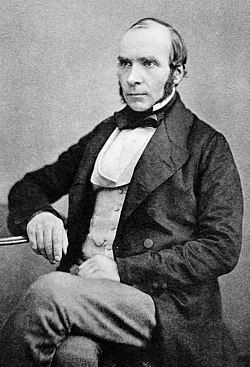
John Snow identified a polluted public water well as the source of a cholera outbreak in London. The investigation is regarded as a founding achievement of modern epidemiology and demonstrated the value of mapping disease against environmental exposures.
Image source: John Snow
1866
In 1866, New York City founded the first United States public health organization based on a state health department and local boards of health. It provided an early institutional model for American public health administration.
Image source: New York City Department of Health and Mental Hygiene
1870 - 1899
Led by Massachusetts, American states developed public health programs during the late nineteenth century. These programs expanded governmental responsibility for sanitation, disease control, and population health.
1880 - 1910
The pioneering bacteriological work of Louis Pasteur and Robert Koch led to methods for isolating disease-causing bacteria and developing vaccines. Koch’s discoveries provided direct evidence that germs could cause specific diseases, creating a scientific basis for public health.
Image source: Germ theory of disease
1912 - 1914
A $25,000 donation from businessman Samuel Zemurray established the School of Public Health and Tropical Medicine at Tulane University in 1912. The school conferred its first doctor of public health degree in 1914.
1915
Charles-Edward Amory Winslow founded the Yale School of Public Health in 1915. Its creation formed part of the expansion of specialized institutions for public health research and training.
Image source: Yale School of Public Health
1915
The Welch–Rose Report of 1915 became a basis for the institutional development of public health education in the United States. It contributed to the establishment of schools of public health supported by the Rockefeller Foundation.
1916
The Johns Hopkins School of Hygiene and Public Health was founded in 1916. It became an independent, degree-granting institution for public health research and training and grew into the largest public health training facility in the United States.
1922 - 1999
By 1922, schools of public health had been established at Columbia and Harvard on the Johns Hopkins model. By 1999, the United States had 29 schools enrolling around 15,000 students.
1900 - 1994
Nora Wattie led the development of public health services, sanitation, and education aimed at improving women’s and children’s health in Glasgow’s poorest slums. She received the OBE for this work.
1900 - 1999
As the epidemiological transition progressed and infectious diseases became less prevalent during the twentieth century, public health placed increasing emphasis on chronic diseases such as cancer and heart disease.
1950 - 1959
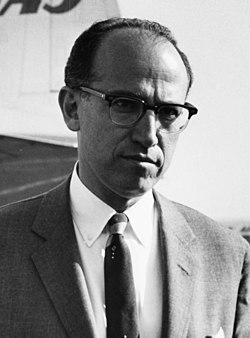
Jonas Salk developed one of the first polio vaccines and campaigned vigorously for mandatory vaccination. His work contributed to the expansion of mass immunization against a major infectious disease.
Image source: Jonas Salk
1952
Following Bolivia’s 1952 revolution, the country experienced a similar push toward expanded public health provision and improved health conditions for its population.
Image source: Health in Bolivia
1959
Since the 1959 Cuban Revolution, the Cuban government has devoted extensive resources to improving health conditions for the entire population through universal access to health care.
1960 - 1969
Ruth Huenemann became a pioneer in the study of childhood obesity during the 1960s. She examined the diet and exercise habits of Berkeley teenagers, helping establish obesity as a public health subject.
Image source: Ruth Huenemann
1990 - 2010
Total health aid from developed countries rose from $5.5 billion in 1990 to $26.87 billion in 2010. Wealthy countries continued donating billions of dollars annually with the goal of improving population health.
Image source: Global health
1995
Taiwan introduced its National Health Insurance system in 1995. The system provides nearly universal coverage, reaching an estimated 99.9 percent of residents, and anchors the island’s public health infrastructure.
Image source: Healthcare in Taiwan
2000 - 2010
HIV received an increase of more than $6 billion in funding between 2000 and 2010. This rise was more than twice the increase seen in any other health sector during those years.
Image source: HIV/AIDS
2002 - 2004
Taiwan developed strong public health institutions, including the Central Epidemic Command Center, after the 2002–2004 SARS outbreak. The infrastructure supported coordinated responses to subsequent infectious disease threats.
2002 - 2018
Spending supporting public health in the United States peaked in 2002 and declined during the following decade. Cuts made during the Great Recession of 2007–2008 were not restored, and by 2018 about 3 percent of government health spending went to public health and prevention.
Image source: United States Public Health Service
2009
In 2009, health aid from the OECD amounted to $12.47 billion, representing 11.4 percent of its total bilateral aid. The figure illustrates the growing role of international assistance in public health.
Image source: OECD
2009
In 2009, multilateral donors spent 15.3 percent of their total aid on improving public health. This spending supported international efforts to strengthen health systems and address population-level disease.
Jun 2010
A June 2010 Lancet editorial described the epidemic scale of largely preventable type 2 diabetes as a public health humiliation. The disease’s risk is closely linked to the growing problem of obesity.
Image source: Type 2 diabetes
2011
A 2014–2016 study estimated that one billion dollars in health aid was associated with 364,000 fewer deaths among children aged zero to five in 2011. The study also noted possible confounding because aid may have been directed to countries already improving.
2011
Antibiotic resistance, also known as drug resistance, was the theme of World Health Day 2011. The focus highlighted the growing threat posed by microbes that no longer respond effectively to medicines.
Image source: World Health Day
Sep 2011
In September 2011, the United Nations hosted its first General Assembly Special Summit on noncommunicable diseases. The meeting demonstrated a growing international focus on chronic conditions and their prevention.
2012
A 2012 panel of the US Institute of Medicine warned that the United States spent disproportionately more on clinical care than on public health. It argued that population-based activities offered efficient and effective approaches to improving national health.
2015 - 2030
The United Nations developed the Sustainable Development Goals to address current and future global health challenges, with completion targeted for 2030. The goals provide an international framework for improving health and development.
Image source: Sustainable Development Goals
Jun 2016
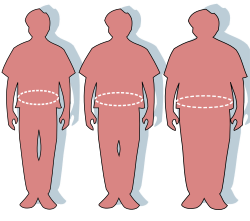
WHO estimates highlighted that approximately 1.9 billion adults worldwide were overweight in 2014, along with 41 million children under five. The figures emphasized the global scale of overweight and obesity as public health concerns.
Image source: Obesity
2020
Taiwan was recognized in 2020 as one of the world’s most effective pandemic responses, with minimal lockdowns and exceptionally low infection and death rates according to assessments by Wired, Time, the Commonwealth Fund, and others.
Image source: COVID-19 pandemic in Taiwan
2022
Taiwan’s continuing public health priorities included vaccine campaigns, with first-dose COVID-19 coverage exceeding 90 percent by 2022. The country also maintained immunization against infectious diseases and chronic disease management programs.
2022 - 2050
Taiwan faces a major demographic challenge as its population ages. Projections indicate that nearly 37 percent of the population could be over 65 by 2050, increasing pressure on public health and care systems.
Or browse the full history timeline directory, with more than 2,500 topics.
This History of Public Health timeline was generated with the help of AI, using information found on the internet.
We work hard to keep these timelines accurate, but mistakes do get through. If you spot one, email us at [email protected] and we'll fix it for future visitors.
Generate yours with AI or build it from scratch, for free.
Export your timeline, add your own events, edit or remove AI-generated events, and much more
No credit card required.
Cancel anytime.
Cancel anytime.
You can create an unlimited number of timelines with up to 10 events on each one, customize how they look, export them to PDF, PNG, PowerPoint, CSV, and Excel, and share them with a link. Paid plans raise the event limit and add features like spreadsheet imports and collaborators.
Yes. You can cancel your subscription from your account page at any time, and you will not be charged again. Your subscription stays active for the rest of the period you already paid for.
Yes. We will email you a reminder before the annual renewal, and we will also email you a receipt.
Yes. You can email us within 15 days of any payment, and we will issue you a full refund.
Check out our pricing docs or send us an email anytime: [email protected].