-
Use Cases
-
Resources
-
Pricing
The history of mental health treatment traces humanity's evolving understanding of mental illness—from ancient beliefs in demonic possession and harsh institutional care, through the moral treatment movement of the 18th–19th centuries, to the rise of psychoanalysis, psychotropic medications, deinstitutionalization, and today's emphasis on community-based care, evidence-based therapies, and patient rights. More Less
400 BCE
% complete
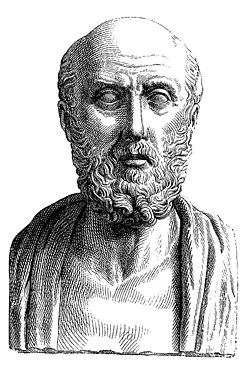
The Greek physician Hippocrates rejected supernatural explanations for mental illness, arguing instead that disorders like melancholia arose from imbalances of bodily humors. His naturalistic approach laid an early foundation for medical views of mental disease.
Image source: Hippocrates
300 BCE
% complete
In the ancient Mediterranean world, sufferers of mental distress visited Asclepieia, healing temples dedicated to the god Asclepius. Patients underwent incubation rituals involving sleep and dream interpretation, an early form of therapeutic rest and spiritual care.
Image source: Asclepieion
1563
% complete
Physician Johann Weyer published 'De Praestigiis Daemonum,' arguing that many women accused of witchcraft were suffering from mental illness rather than demonic possession. His work is considered an early milestone in medical skepticism toward supernatural explanations.
Image source: Johann Weyer
1247
% complete
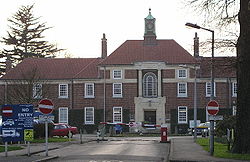
Bethlem Hospital, later infamous as 'Bedlam,' was founded in London and eventually became Europe's first institution devoted to housing people with mental illness. Conditions were often harsh, and by the 18th century public viewing of patients became a grim spectacle.
Image source: Bethlem Royal Hospital
1793
% complete
French physician Philippe Pinel famously ordered the removal of chains from patients at Paris's Bicêtre and Salpêtrière hospitals, pioneering humane 'moral treatment.' His reforms marked a turning point toward compassionate care of the mentally ill.
Image source: Philippe Pinel
1796
% complete
Quaker William Tuke founded the York Retreat in England, a facility built on kindness, rest, and moral treatment rather than restraint or punishment. It became an influential model for humane asylum care throughout Europe and America.
Image source: The Retreat
1841
% complete
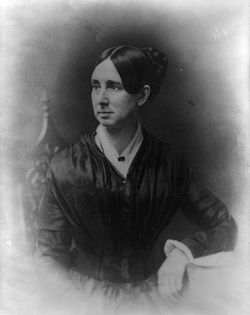
American reformer Dorothea Dix began a decades-long campaign exposing the cruel treatment of people with mental illness in jails and poorhouses. Her advocacy led to the founding or expansion of dozens of state hospitals across the United States and Europe.
Image source: Dorothea Dix
1895
% complete
Sigmund Freud and Josef Breuer published 'Studies on Hysteria,' introducing the 'talking cure' and the idea that unconscious conflicts underlie neurotic symptoms. The book launched psychoanalysis as a major school of psychological treatment.
Image source: Studies on Hysteria
Nov 1899
% complete
Freud's 'The Interpretation of Dreams' presented his theory that dreams reveal unconscious desires. The work cemented psychoanalytic theory and shaped how therapists approached the mind for much of the twentieth century.
Image source: The Interpretation of Dreams
1960 - 1969
% complete
Psychiatrist Aaron Beck developed cognitive therapy in the 1960s, proposing that distorted thinking patterns drive depression and anxiety. His structured, evidence-based approach grew into cognitive behavioral therapy (CBT), now among the most widely practiced psychotherapies.
Image source: Aaron Beck
1899
% complete
German psychiatrist Emil Kraepelin systematized the classification of mental illnesses, distinguishing dementia praecox (later schizophrenia) from manic-depressive illness. His diagnostic framework profoundly influenced modern psychiatric nosology.
Image source: Emil Kraepelin
1908
% complete
Swiss psychiatrist Eugen Bleuler introduced the term 'schizophrenia' to replace dementia praecox, emphasizing the splitting of psychic functions. He also described autism and ambivalence as core symptoms, reshaping psychiatric understanding of the disorder.
Image source: Eugen Bleuler
1908
% complete
After his own confinement in institutions, Clifford Beers published 'A Mind That Found Itself' and founded the Connecticut Society for Mental Hygiene, sparking a national movement for improved treatment and prevention of mental illness.
Image source: Clifford W. Beers
Apr 15, 1949
% complete
The United States created the National Institute of Mental Health (NIMH) to fund research into mental illness and coordinate national mental health policy, marking federal commitment to scientific study of psychiatric disorders.
Image source: National Institute of Mental Health
Oct 31, 1963
% complete
President John F. Kennedy signed the Community Mental Health Act, funding community-based centers to replace large state hospitals. The law accelerated deinstitutionalization, shifting care toward outpatient services, though underfunding left gaps in support systems.
Image source: Community Mental Health Act
1973
% complete
David Rosenhan published his famous study in which healthy pseudopatients were admitted to psychiatric hospitals and never detected. The experiment raised serious questions about the reliability of psychiatric diagnosis and contributed to reforms in diagnostic criteria.
Image source: Rosenhan experiment
1980
% complete
The American Psychiatric Association published DSM-III, introducing explicit diagnostic criteria and a descriptive, atheoretical approach. It standardized psychiatric diagnosis worldwide and aligned research and clinical practice more closely with medicine.
Image source: Diagnostic and Statistical Manual of Mental Disorders
Sep 26, 1996
% complete
The US Congress passed the Mental Health Parity Act, requiring that annual and lifetime dollar limits on mental health coverage match those for physical health in group health plans, an early step toward equal insurance treatment of mental illness.
2003
% complete
The completion of the Human Genome Project opened new avenues for understanding genetic contributions to mental illness. Subsequent genome-wide studies have identified risk variants for schizophrenia, bipolar disorder, and depression, informing future personalized treatments.
Image source: Human Genome Project
Mar 23, 2010
% complete
The Affordable Care Act designated mental health and substance use services as essential health benefits and extended parity protections to individual plans, greatly expanding access to behavioral health care for millions of Americans.
1917
% complete
Austrian physician Julius Wagner-Jauregg developed pyrotherapy, inducing fevers with malaria infection to treat general paresis caused by syphilis. He received the Nobel Prize in Medicine in 1927, the first awarded for a psychiatric treatment.
Image source: Julius Wagner-Jauregg
1927
% complete
Jakob Klaesi introduced prolonged barbiturate-induced narcosis at the Burghölzli clinic in Switzerland, sedating psychotic patients into deep sleep for days. Though risky, it was among the first somatic therapies adopted widely in European asylums.
Image source: Insulin shock therapy
1933
% complete
Austrian physician Manfred Sakel began inducing hypoglycemic comas with insulin to treat schizophrenia. Insulin shock therapy spread rapidly through psychiatric institutions in the 1930s and 1940s despite significant dangers and limited evidence of benefit.
Nov 12, 1935
% complete
Portuguese neurologist António Egas Moniz performed the first prefrontal leucotomy, a surgical disruption of brain connections intended to relieve severe mental illness. The procedure won him a Nobel Prize but left many patients severely impaired before falling out of favor.
Image source: Lobotomy
Apr 1938
% complete
Italian psychiatrists Ugo Cerletti and Lucio Bini performed the first successful electroconvulsive therapy (ECT) on a patient in Rome. ECT proved effective for severe depression and remains a treatment option today, though its early use was often crude and overextended.
Image source: Electroconvulsive therapy
1946
% complete
American neurologist Walter Freeman promoted the ice-pick transorbital lobotomy, performing thousands of procedures, often in office settings without surgical facilities. The widespread harm from lobotomies later fueled demands for stricter oversight of psychiatric interventions.
Image source: Walter Jackson Freeman II
1949
% complete
Australian psychiatrist John Cade discovered lithium's calming effect on manic patients, publishing his findings in 1949. Lithium became the first effective mood stabilizer and transformed the long-term treatment of bipolar disorder after its approval in the following decades.
Image source: Lithium (medication)
1952
% complete
French researchers introduced chlorpromazine, the first antipsychotic medication, dramatically reducing hallucinations and agitation in patients with schizophrenia. Its success enabled many patients to leave hospitals and sparked the psychopharmacology revolution.
Image source: Chlorpromazine
1957
% complete
Swiss researchers discovered that imipramine relieved depression, leading to its introduction as the first tricyclic antidepressant. Alongside monoamine oxidase inhibitors discovered around the same time, it demonstrated that depression could be treated pharmacologically.
Image source: Imipramine
1960
% complete
The approval of chlordiazepoxide (Librium) ushered in the benzodiazepine era, offering safer alternatives to barbiturates for anxiety and insomnia. Drugs like Valium became among the most prescribed medications in the world during the 1960s and 1970s.
Image source: Chlordiazepoxide
Dec 1987
% complete
The FDA approved fluoxetine, the first selective serotonin reuptake inhibitor (SSRI), offering a safer side-effect profile than older antidepressants. Prozac's enormous popularity brought antidepressants into mainstream culture and expanded treatment for depression and anxiety.
Image source: Fluoxetine
1990
% complete
Clozapine's approval in the United States marked the arrival of second-generation atypical antipsychotics, which offered benefits for patients unresponsive to earlier drugs while reducing some motor side effects, renewing hope for treatment-resistant schizophrenia.
Image source: Clozapine
2000 - 2099
% complete
Clinical studies in the 2000s showed that low doses of ketamine could rapidly reduce severe depression within hours, unlike traditional antidepressants. This discovery spurred development of new fast-acting treatments, including esketamine nasal spray approved in 2019.
Image source: Ketamine
Mar 5, 2019
% complete
The FDA approved esketamine (Spravato), a ketamine-derived nasal spray for treatment-resistant depression. It was the first novel mechanism antidepressant approved in decades, offering rapid relief for patients who had failed other treatments.
Image source: Esketamine
Or browse the full history timeline directory, with more than 2,000 topics.
This History of Mental Health Treatment timeline was generated with the help of AI, using information found on the internet.
We work hard to keep these timelines accurate, but mistakes do get through. If you spot one, email us at [email protected] and we'll fix it for future visitors.
Generate yours with AI or build it from scratch, for free.
Export your timeline, add your own events, edit or remove AI-generated events, and much more
No credit card required.
Cancel anytime.
Cancel anytime.
You can create an unlimited number of timelines with up to 10 events on each one, customize how they look, export them to PDF, PNG, PowerPoint, CSV, and Excel, and share them with a link. Paid plans raise the event limit and add features like spreadsheet imports and collaborators.
Yes. You can cancel your subscription from your account page at any time, and you will not be charged again. Your subscription stays active for the rest of the period you already paid for.
Yes. We will email you a reminder before the annual renewal, and we will also email you a receipt.
Yes. You can email us within 15 days of any payment, and we will issue you a full refund.
Check out our pricing docs or send us an email anytime: [email protected].