-
Resources
-
Pricing
This timeline traces Quebec’s history from the Indigenous peoples who first inhabited the region through French colonization, British conquest, political transformation, the Quiet Revolution, and contemporary debates over language, culture, and sovereignty. More Less
Build a timeline like this one in minutes, for free. Start Yours →
Jun 9, 1534 - Jul 24, 1534
Jacques Cartier's first voyage entered the Gulf of Saint Lawrence and mapped parts of the Gaspé Peninsula. He encountered Mi'kmaq communities and claimed the region for France, beginning sustained French interest in the waterway and its surrounding territories.
1535 - 1536
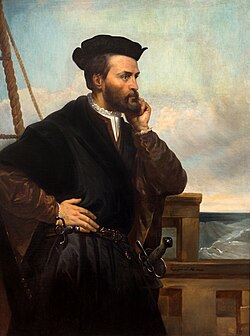
On his second voyage, Cartier sailed up the Saint Lawrence to the Indigenous settlements of Stadacona, near present-day Quebec City, and Hochelaga, near present-day Montreal. His accounts provided Europeans with important information about the river and its inhabitants, while the expedition suffered a harsh winter and scurvy.
Image source: Jacques Cartier
1541 - 1543
Cartier and Jean-François de la Roque de Roberval attempted to establish a permanent French colony at Charlesbourg-Royal near present-day Cap-Rouge. The settlement struggled with food shortages, disease, conflict, and difficult relations with local Indigenous peoples before being abandoned.
Image source: Charlesbourg-Royal
Jul 3, 1608
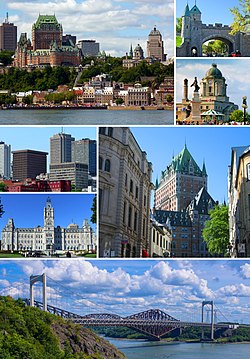
Samuel de Champlain founded Quebec at a strategically important site along the Saint Lawrence River. The settlement became the principal base of French colonization and the administrative center of New France.
Image source: Quebec City
Aug 4, 1701
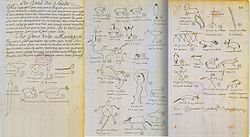
The Great Peace of Montreal ended decades of warfare involving New France and numerous Indigenous nations. The agreement stabilized the Great Lakes and Saint Lawrence region, expanded diplomatic and trading relationships, and helped secure French influence in the interior.
Image source: Great Peace of Montreal
Sep 13, 1759
British forces under James Wolfe defeated the French army commanded by Louis-Joseph de Montcalm on the Plains of Abraham outside Quebec City. The short battle led to the capitulation of Quebec and became the decisive military episode in the British conquest of New France.
Image source: Battle of the Plains of Abraham
Sep 8, 1760
French authorities surrendered Montreal to the British, completing the military conquest of New France during the Seven Years' War. The terms of capitulation transferred most of the colony to British control while preserving elements of French civil, religious, and property law.
Image source: Montreal
Oct 7, 1763
Following the Treaty of Paris, Britain reorganized the former French colony as the Province of Quebec. The Royal Proclamation established British governance, recognized certain Indigenous territorial rights, and defined a restricted colonial territory.
Image source: Royal Proclamation of 1763
Jun 22, 1774
The Quebec Act enlarged the province's territory and allowed the continued practice of Catholicism and the use of French civil law. It preserved the seigneurial system and was intended to accommodate the colony's French-speaking Catholic majority, but angered many British American colonists.
Image source: Quebec Act
Dec 31, 1775
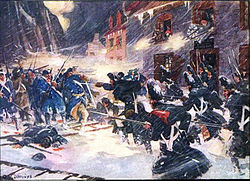
During the American Revolutionary War, Continental Army forces attacked Quebec City in an effort to bring the province into the rebellion. British and Canadian defenders repelled the assault, killing American commander Richard Montgomery and wounding or capturing many of the invaders.
Image source: Battle of Quebec (1775)
1791
The Constitutional Act divided the Province of Quebec into predominantly French Lower Canada and predominantly English Upper Canada. It created elected legislatures while retaining substantial appointed authority for governors and councils.
Nov 1837 - Dec 1838
Patriotes in Lower Canada rebelled against the colonial political system, demanding responsible government and greater control by the elected assembly. British forces and loyalist militias defeated the movement, and several leaders were executed or exiled.
Image source: Lower Canada Rebellion
1839
Lord Durham's report investigated the rebellions and recommended responsible government as well as the union of Upper and Lower Canada. It controversially described French Canadians as a nation without a history or literature, and proposed assimilation alongside constitutional reform.
Feb 10, 1841
The Act of Union merged Upper and Lower Canada into the Province of Canada, with Canada East corresponding largely to present-day Quebec. The new political structure attempted to address colonial instability but produced recurring conflicts over representation and language.
Image source: Act of Union 1840
1848
The British government accepted responsible government in the Province of Canada, allowing ministries to depend on the confidence of the elected assembly. This marked a major step toward parliamentary self-government in Quebec and the other Canadian colonies.
Jul 1, 1867
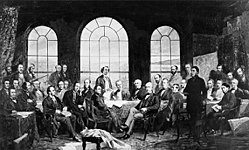
The Constitution Act, 1867 created the Dominion of Canada and established Quebec as one of its founding provinces. Quebec retained jurisdiction over education, civil law, and other provincial matters, while French and English received constitutional recognition in federal institutions.
Image source: Canadian Confederation
1869 - 1870
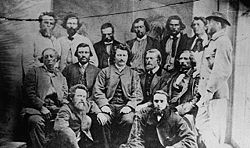
Métis resistance under Louis Riel opposed the transfer of Rupert's Land to Canada without local consent. The movement led to the Manitoba Act, but the federal response and the execution of Thomas Scott intensified conflict between French Catholic and English Protestant communities, including in Quebec.
Image source: Red River Rebellion
Mar 1885 - Nov 1885
Métis and First Nations communities in the Northwest resisted federal policies and the erosion of land and political rights. The defeat and execution of Louis Riel provoked a major crisis in Quebec, where many viewed him as a defender of French Canadian and Catholic interests.
Image source: North-West Rebellion
1890 - 1896
Manitoba's abolition of publicly funded Catholic and French-language schooling generated a national constitutional dispute. Quebec public opinion strongly opposed the reduction of minority rights, sharpening debates about bilingualism, federalism, and the place of French Canada.
Image source: Manitoba Schools Question
1896 - 1911
Wilfrid Laurier became Canada's first French Canadian prime minister and led a period of economic expansion and western settlement. His governments balanced competing French and English Canadian interests while Quebec nationalism increasingly emphasized cultural survival and provincial autonomy.
Image source: Wilfrid Laurier
1917 - 1918
The federal government's decision to impose military conscription during the First World War triggered intense opposition in Quebec. Riots erupted in Quebec City in 1918, and the crisis deepened divisions between Quebec and English Canada over war, citizenship, and national identity.
Image source: Conscription Crisis of 1917
1929 - 1939
The Great Depression brought unemployment, poverty, farm failures, and industrial hardship to Quebec. The crisis encouraged new social movements, increased criticism of traditional political elites, and contributed to support for state intervention and nationalist reform.
Image source: Great Depression in Canada
Aug 17, 1936 - Nov 7, 1939
Maurice Duplessis and the Union Nationale first took power in 1936, combining Quebec nationalism, fiscal conservatism, and close ties with the Catholic Church and business interests. After a brief Liberal interlude, Duplessis returned in 1944 and dominated provincial politics until his death.
Image source: Maurice Duplessis
Feb 14, 1949 - Jun 23, 1949
Workers in the asbestos mines of Asbestos and Thetford Mines struck for higher wages, better conditions, and union rights. The confrontation exposed class and linguistic inequalities and is widely regarded as a turning point in the development of Quebec's modern nationalist and social-democratic movements.
Jun 22, 1960 - 1966
The election of Jean Lesage's Liberal government in 1960 initiated the Quiet Revolution. Quebec rapidly expanded public education, social services, state economic planning, and secular institutions, reducing the political role of the Catholic Church and strengthening a modern Quebec state.
Image source: Quiet Revolution
1962 - 1963
Jean Lesage's government nationalized privately owned electricity utilities and consolidated them under Hydro-Québec. The project made electricity a central instrument of economic development, public ownership, and Quebec nationalism.
Image source: Hydro-Québec
1963 - 1971
The federal commission examined relations between English- and French-speaking Canadians during a period of rising Quebec nationalism. Its recommendations influenced official bilingualism and federal language policy, while Quebec increasingly argued for a distinct national status.
Apr 27, 1967 - Oct 29, 1967
Montreal hosted the world's fair Expo 67 during Canada's centennial year. The event attracted millions of visitors, showcased Quebec's cultural and technological modernization, and presented Montreal as an internationally important city.
Image source: Expo 67
Oct 5, 1970 - Dec 28, 1970
The Front de libération du Québec kidnapped British diplomat James Cross and Quebec cabinet minister Pierre Laporte. Prime Minister Pierre Trudeau invoked the War Measures Act, troops were deployed in Quebec, Laporte was killed, and the crisis ended with arrests and the exile of FLQ members.
Image source: October Crisis
Nov 15, 1976
René Lévesque's Parti Québécois won the 1976 provincial election, forming the first sovereignist government in Quebec. Its victory transformed the constitutional debate and brought language, identity, and possible independence to the center of Canadian politics.
Aug 26, 1977
Quebec adopted the Charter of the French Language, commonly known as Bill 101, declaring French the province's official language. The law established French-language requirements for public administration, education, and commercial signs, and sought to make French the common language of public life.
May 20, 1980
The Parti Québécois government asked voters to authorize negotiations for sovereignty-association with Canada. The proposal was rejected by approximately 59.6 percent of voters, although the campaign permanently reshaped federal-provincial relations and Quebec's constitutional debate.
Apr 17, 1982
Canada patriated its Constitution and adopted the Canadian Charter of Rights and Freedoms without the consent of Quebec's government. Quebec's refusal to sign the constitutional agreement became a lasting source of political tension and a central issue for later constitutional negotiations.
Jun 23, 1990
The Meech Lake Accord sought to secure Quebec's acceptance of the constitutional settlement by recognizing Quebec as a distinct society and changing federal-provincial arrangements. It failed when Manitoba and Newfoundland did not ratify it before the deadline, intensifying constitutional dissatisfaction in Quebec.
Image source: Meech Lake Accord
Oct 26, 1992
Canadians rejected the Charlottetown Accord, a broad constitutional package that included provisions concerning Quebec, Indigenous peoples, the Senate, and federalism. The defeat demonstrated the difficulty of achieving constitutional consensus across Canada and reinforced support for sovereignty in Quebec.
Oct 30, 1995
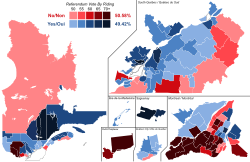
The Parti Québécois government held a second referendum on sovereignty. The proposal was defeated narrowly, with the No side receiving about 50.6 percent of the vote, making it one of the closest and most consequential votes in Canadian history.
Image source: 1995 Quebec referendum
Jun 29, 2000
The federal Parliament passed the Clarity Act after the Supreme Court's 1998 opinion on secession. The act established that any future referendum question and majority would have to be clear before the federal government could negotiate secession, while Quebec's National Assembly rejected its approach.
Image source: Clarity Act
Jun 16, 2019
Quebec adopted the Act respecting the laicity of the State, commonly called Bill 21. The law declared state laicity and restricted certain public employees from wearing religious symbols while exercising authority, continuing long-running debates about secularism, minority rights, and Quebec identity.
Mar 2020 - 2022
Quebec experienced major health, social, and economic disruption during the COVID-19 pandemic. The province introduced emergency measures, restrictions, vaccination programs, and public-health interventions, while high mortality in some long-term-care facilities prompted scrutiny of the health and elder-care systems.
Build a timeline like this one in minutes, for free. Start Yours →
Or browse the full history timeline directory, with more than 2,500 topics.
This History of Quebec timeline was generated with the help of AI, using information found on the internet.
We work hard to keep these timelines accurate, but mistakes do get through. If you spot one, email us at [email protected] and we'll fix it for future visitors.
Generate yours with AI or build it from scratch, for free.
Export your timeline, add your own events, edit or remove AI-generated events, and much more
No credit card required.
15-day money-back guarantee.
You can create an unlimited number of timelines with up to 10 events on each one, customize how they look, export them to PDF, PNG, PowerPoint, CSV, and Excel, and share them with a link. Timelines made with Timeline Maker AI keep every event the generator created, and you can add up to 5 events of your own. Paid plans remove the event limit, add spreadsheet imports and hide Preceden's branding, and the higher-priced plan also adds collaborators, a custom logo and a custom domain.
Yes. You can cancel your subscription from your account page at any time, and you will not be charged again. Your subscription stays active for the rest of the period you already paid for.
Yes. We email you a reminder 15 days before your annual renewal, and we email you a receipt after every payment.
Yes. You can email us within 15 days of any payment, and we will issue you a full refund.
Check out our pricing docs or send us an email anytime: [email protected].